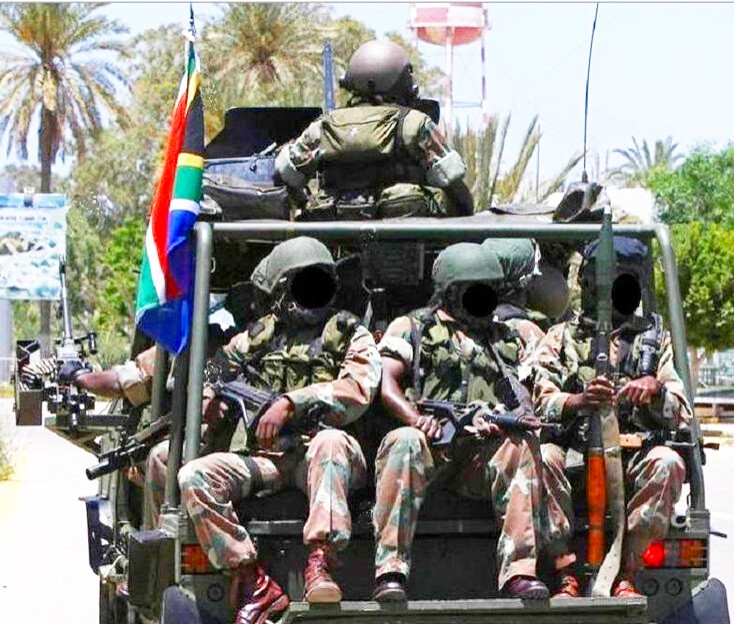
South Africa has launched one of its most significant domestic military operations in recent memory, deploying thousands of soldiers and police officers to dismantle the illegal mining networks that have long bled the country of billions in mineral wealth.
Authorised by President Cyril Ramaphosa, the deployment puts approximately 2,200 troops from the South African National Defence Force (SANDF) alongside the South African Police Service (SAPS) in a sweeping joint operation targeting illegal mining syndicates, gang violence, and organised crime across multiple provinces.
The crackdown — which the government had been planning for some time before its full nationwide rollout this year — now covers Gauteng, North West, Free State, Western Cape, and Eastern Cape, placing security forces at the heart of communities and abandoned mine shafts that have become strongholds for criminal networks.
Boots on the Ground:
As of April 1, 2026, soldiers are actively patrolling abandoned mines and crime-prone areas, with orders to destroy illegal mining camps and seize the equipment that keeps those operations running — generators, drills, and other machinery. Beyond physical dismantling, troops are supporting police in arrests, weapons confiscation, and the systematic dismantling of the criminal syndicates behind the trade.
The operation is expected to run through March 2027, though authorities have left the door open for extended deployments depending on conditions on the ground.
Fuseini Pushes For Direct DCE Performance Targets In Anti-Galamsey Drive
The military’s involvement reflects just how entrenched illegal mining — known in South Africa as zama zama operations — has become. An estimated 30,000 illegal miners currently work inside abandoned mine shafts across the country, with organised criminal groups controlling much of the activity and the communities surrounding it.
The financial damage is staggering. The South African government estimates that illegal mining syndicates siphon off more than $4 billion worth of gold every year — a haemorrhage that has made the crackdown not just a law enforcement priority, but an economic one.
The challenge is not unlike what Ghana confronts with galamsey, its own illegal small-scale mining crisis. Both countries are grappling with the same uncomfortable reality: that illegal mining is rarely a lone-operator problem. It is organised, well-resourced, and deeply embedded in local economies — making military force a drastic but, for many governments, increasingly unavoidable response.