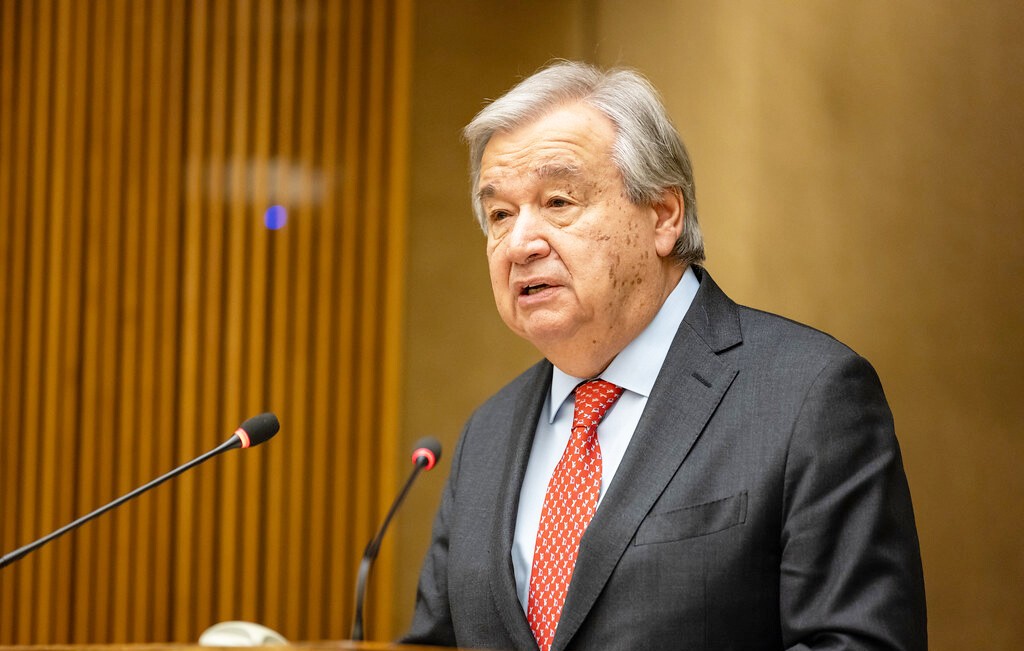
During the opening of the 39th Ordinary Session of the African Union (AU) Assembly in Addis Ababa, UN Secretary-General António Guterres delivered a compelling speech calling for sweeping reforms to global institutions, greater economic fairness, and immediate action on climate and peace challenges.
He stressed the critical need to modernize outdated international governance frameworks that date back to the post-World War II era.
Guterres described Africa’s lack of permanent representation on the UN Security Council as “indefensible,” declaring: “This is 2026 – not 1946.” He insisted that whenever decisions affecting Africa—or the world—are made, Africa must have a seat at the table.
On conflicts plaguing the continent, the Secretary-General made direct appeals for urgent steps:
▪︎ An immediate halt to fighting in Sudan, coupled with a return to negotiations for a lasting ceasefire and Sudanese-led political transition.
▪︎ Renewed political dialogue in South Sudan to advance stability.
▪︎ Full respect for the Democratic Republic of the Congo’s territorial integrity, honoring existing commitments including an immediate ceasefire.
He reiterated strong backing for African-led peace initiatives in areas like the Sahel, Libya, and the Horn of Africa, while highlighting the deepening UN-AU partnership as essential for addressing these crises.
A New AI Training Programme For Ghanaian Students
Turning to development, Guterres pointed to the massive $4 trillion annual financing shortfall facing developing countries in pursuit of the Sustainable Development Goals (SDGs). He noted that Africa loses far more through debt servicing and illicit financial outflows than it gains in aid, branding the global economic system as “totally unjust.” To correct this, he advocated:
▪︎ Tripling the lending capacity of multilateral development banks.
Reducing borrowing costs for developing nations.
▪︎ Giving developing countries greater voice in global financial governance.
Guterres emphasized that Africa’s economic destiny must be built on equity and justice, breaking free from systems that disproportionately benefit wealthier nations.
A powerful segment of his address centered on Africa’s abundant natural resources—from critical minerals vital for the global energy transition to immense renewable energy opportunities. He stated firmly:
“No more exploitation. No more plundering. The people of Africa must benefit from the resources of Africa.”
He encouraged African countries to develop equitable and sustainable value chains, moving beyond raw material exports toward processing and manufacturing. Such a transformation, he argued, would generate jobs, build industrial strength, and deliver stronger, more inclusive economic growth for the continent.