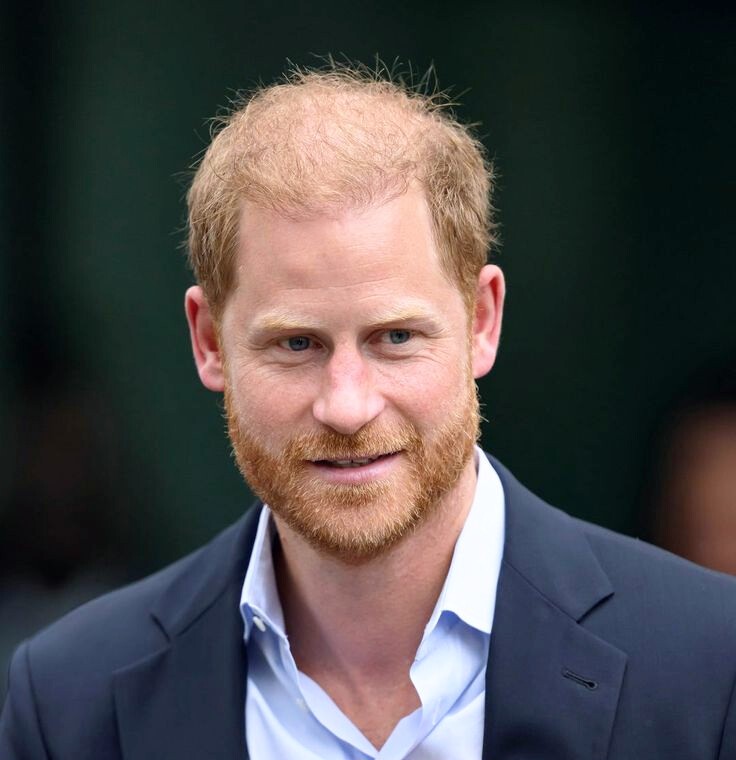
For years, Prince Harry wore his association with Sentebale like a badge of honour — a living tribute to his mother, Princess Diana, and a tangible expression of his commitment to Africa’s most vulnerable children. Today, that same charity has taken him to court.
In a dramatic and deeply personal legal escalation, Sentebale has filed a defamation lawsuit against the Duke of Sussex at the High Court in London, accusing him and former trustee Mark Dyer of orchestrating a “coordinated adverse media campaign” that allegedly damaged the organisation’s reputation and disrupted its operations. What began as an internal governance dispute has now become one of the most extraordinary legal confrontations in recent British royal history.
To understand the weight of this moment, one must first understand what Sentebale represents. Founded in 2006 by Prince Harry and Prince Seeiso of Lesotho, the charity was conceived as a tribute to two mothers — Princess Diana and Queen Mamohato of Lesotho — both of whom had championed the cause of children living with HIV/AIDS in southern Africa. For nearly two decades, Sentebale has operated primarily in Lesotho and Botswana, delivering healthcare support, education, and youth development programmes to some of the region’s most marginalised young people.
Prince Harry was not merely a patron in name. He was a hands-on figurehead, a passionate fundraiser, and for much of the charity’s existence, its most recognisable face internationally. That history makes the current legal confrontation all the more striking.
What the Lawsuit Alleges:
According to court filings submitted to the High Court, Sentebale claims that statements and actions connected to Prince Harry contributed directly to reputational harm, disrupted the charity’s day-to-day activities, and triggered a wave of online harassment directed at members of its leadership.
At the heart of the complaint is the allegation that Harry and Mark Dyer — a former trustee and long-time confidant of the Duke — engaged in a deliberate, coordinated effort to shape negative public perception of the organisation. The charity argues that this campaign caused measurable damage to an institution that exists solely to serve children and young people affected by HIV/AIDS.
The falling-out did not happen overnight. Relations between Prince Harry and Sentebale’s leadership are reported to have deteriorated over a period of years, amid growing disagreements over governance structures, fundraising direction, and internal management culture.
Tensions came to a head during the tenure of the charity’s chair, Sophie Chandauka, whose time in the role coincided with a series of internal conflicts that gradually spilled into the public domain. The fallout was significant — multiple board members resigned, and in 2025, Prince Harry formally stepped away from his role with the organisation he had helped build from the ground up.
The UK Charity Commission had already been drawn into the dispute before it reached the courts. Following an investigation into governance concerns at Sentebale, the regulator stopped short of finding systemic wrongdoing or misconduct by any party. However, it issued a pointed rebuke to all involved, criticising the manner in which a private institutional dispute had been allowed to play out publicly — warning that the ongoing conflict posed a real risk to the charity’s core mission.
That finding of no misconduct will likely feature in Harry’s defence. But the fact that the Commission found fault with the public escalation of the row may equally complicate narratives on both sides.
Prince Harry has moved swiftly to deny the allegations. Representatives for the Duke have characterised the lawsuit as “offensive and damaging,” asserting that it fundamentally misrepresents his actions and the motivations behind them. His legal team is preparing to mount a vigorous challenge as proceedings advance through the courts.
There is an unmistakable irony in the current situation that legal observers and royal watchers alike have been quick to note. Prince Harry has, in recent years, become one of the most litigious figures in the British public sphere — successfully pursuing cases against tabloid newspapers and media organisations over phone hacking, unlawful information gathering, and privacy violations. He has, in many respects, positioned himself as a crusader against institutional wrongdoing.
Atlanta Shooting: Pregnant Detroit Rapper Siditty Found Dead
Now, for perhaps the first time, he finds himself on the other side of the courtroom — not as the claimant, but as the defendant. Legal experts suggest the outcome of this case could carry implications well beyond the individuals involved, potentially shaping conversations around governance, accountability, and the responsibilities of high-profile figures within the charitable sector.
The High Court is expected to set out a formal timetable for proceedings in the months ahead, with both parties gearing up for what promises to be a closely scrutinised legal battle. For now, the case sits at a painful intersection of royal legacy, philanthropic purpose, and personal fallout.
The children of Lesotho and Botswana — for whom Sentebale was always supposed to exist — remain at the centre of a dispute that, by any measure, was never supposed to reach this point.