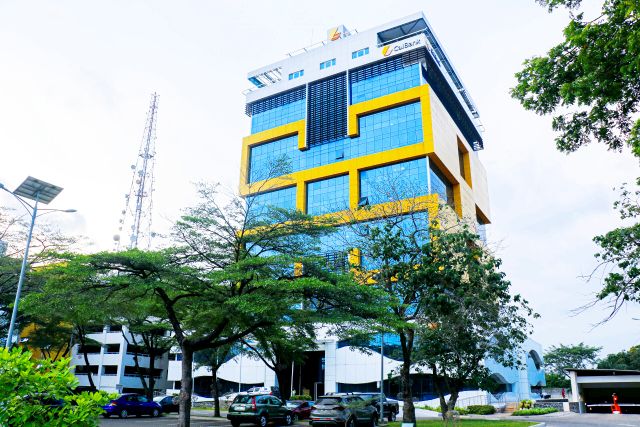
CalBank PLC has opened 2026 with its strongest quarterly showing in recent memory, delivering a near-threefold surge in net profit and sweeping improvements across virtually every measure of financial health — a result that signals the bank’s recovery from a turbulent prior year is no longer tentative.
The headline numbers are striking. Net interest income more than doubled at the Group level, rising from GHS 86.3 million in Q1 2025 to GHS 171.1 million — a jump driven not merely by higher interest earnings, but by a meaningful compression of funding costs. That CalBank is borrowing cheaper while lending more productively speaks to a quiet but consequential shift in how the institution is managing its balance sheet.
Total revenue crossed GHS 326.7 million for the quarter, representing year-on-year growth of over 110%. Net trading income contributed GHS 89.3 million to that figure, while net fees and commissions climbed to GHS 66.3 million — a steady, recurring income stream that points to genuine customer activity rather than one-off windfalls.
Profitability: From Recovery to Momentum
Profit before tax reached GHS 163.8 million, translating into a net profit of GHS 106.8 million — nearly three times what the bank reported in the same quarter last year. For an institution that spent much of 2025 rebuilding its foundations, this is not merely an encouraging data point; it is a statement of direction.
The bank’s capital adequacy ratio climbed to 17.2%, hauled back from negative territory in 2025 — a turnaround that, not long ago, would have seemed optimistic to even the most charitable analyst. The NPL ratio, once a glaring 45.5%, has been brought down to 15.1%, reflecting more rigorous credit management and, likely, significant portfolio cleanup work carried out over the past year.
Liquidity, meanwhile, remains a clear strength. A liquidity ratio of 90.7% gives CalBank ample buffer to meet short-term obligations and the operational confidence to pursue growth without one eye perpetually on the funding tap.
A Balance Sheet Rebuilt on Customer Trust:
Total assets expanded to GHS 13.4 billion, supported by increased securities investment and, crucially, by a surge in customer deposits — now standing at GHS 10.3 billion. That deposit growth is arguably the most consequential number in the entire results package.
Developing Nations Using Wrong Tools For Industrial Growth – World Bank
Deposits do not grow on sentiment alone; they grow when customers actively choose to bring their money back. After the anxiety that gripped Ghana’s banking sector in the aftermath of the domestic debt exchange and the economic turbulence that followed, renewed depositor confidence at that scale is both a commercial achievement and a vote of institutional trust.
CalBank’s Q1 performance is an individual success story, but it also carries a broader message. Ghana’s banks entered this decade under severe strain — capital erosion, bloated loan books, and a sovereign debt restructuring that forced every institution to confront the fragility of its own foundations.
The pace at which CalBank has reversed those pressures, rebuilding capital ratios, slashing NPLs, and regrowing its deposit base, offers a credible early indication that the sector’s structural repair work is yielding results.
With a strengthened capital base, growing customer confidence, and an income engine clearly in better shape than it was twelve months ago, CalBank heads into the remaining quarters of 2026 with something it did not have a year ago: momentum.