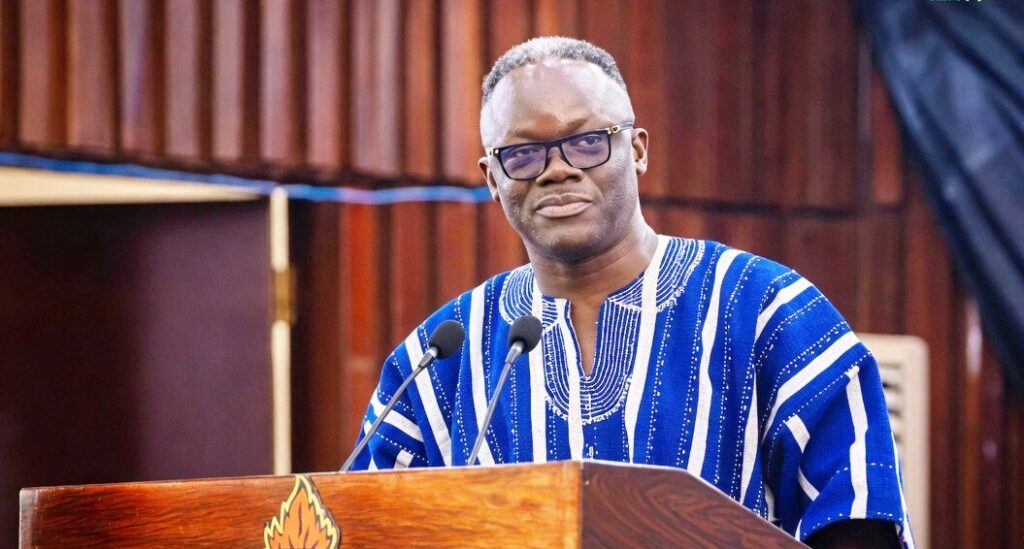
One of Ghana’s most prominent legal voices is sounding an alarm. Lawyer, broadcaster, and public intellectual Samson Lardy Anyenini has issued a pointed call to action, urging Ghanaian authorities to move swiftly against what he describes as repressive legal provisions that pose a direct threat to constitutional freedoms — warning that delay is itself a form of complicity.
His intervention targets two specific provisions that have long unsettled lawyers, journalists, and civil liberties advocates: Section 208 of the Criminal Offences Act, 1960 (Act 29) and Section 76 of the Electronic Communications Act, 2008 (Act 775).
“Pray — Let’s work on repressive section 208 of Act 29, 1960 and section 76 of Act 775, 2008 fast,” Anyenini wrote on Facebook, in a post that was short in length but unmistakable in urgency.
The Two Laws at the Centre of the Storm:
To understand why Anyenini’s call is resonating, it helps to understand what these provisions actually say — and, more importantly, how they have been applied.
Section 208 of Act 29 criminalises conduct deemed offensive and conducive to a breach of the peace. On paper, it was designed as a public order measure. In practice, critics argue, its language is so broad and subjective that it functions as a legal trap — one that can be sprung on anyone whose words or actions are interpreted, by whoever holds the power of prosecution, as sufficiently “offensive.”
The absence of clear, objective thresholds is precisely what makes it dangerous. Individuals have faced arrest and prosecution not for causing concrete harm, but for making statements that offended someone in authority.
Section 76 of Act 775 targets the transmission of false or misleading information through electronic communication platforms. Its original intent — curbing the spread of dangerous misinformation — is legitimate and widely understood. The problem, Anyenini and others argue, lies in its application.
In a media environment where the line between dissent and disinformation is frequently contested, the provision has been invoked in ways that critics say amount to the suppression of online speech. Journalists, activists, and ordinary citizens who express unpopular or politically inconvenient views have found themselves in the crosshairs of a law ostensibly aimed at protecting the public.
Recent cases in which individuals were questioned or detained over social media posts have sharpened the debate considerably, lending Anyenini’s call a timeliness that goes beyond academic legal discourse.
For Anyenini, the stakes extend beyond individual cases. Ghana has built and jealously guarded its reputation as one of Africa’s most stable and open democracies — a country where press freedom is respected, political transitions happen peacefully, and civil society operates with genuine independence.
That reputation, he argues, is not self-sustaining. It requires constant maintenance, and laws that enable arbitrary enforcement are corrosive to the foundation on which it rests.
The concern is not hypothetical.
Legal analysts point to three compounding risks posed by the unreformed provisions: a chilling effect on free expression, particularly in politically sensitive periods when citizens most need to speak freely; the potential for selective enforcement that produces unequal justice; and the long-term erosion of Ghana’s credibility as a democratic benchmark on the continent.
MP Tells Kojo Sheldon To “Be Careful” In Public Remarks
Supporters of the existing laws argue that they remain necessary — that public order must be defended, and that the digital age, with its capacity to amplify misinformation at scale, demands robust legal tools. It is not an entirely unreasonable position. But Anyenini and his fellow advocates counter that the solution is not the retention of blunt, over-broad instruments. It is the crafting of better ones.
Legal experts suggest the path forward need not be radical to be effective. Reform options range from targeted amendments that tighten and clarify the vague language currently enabling overreach, to judicial interpretation that establishes binding limits on how the provisions can be applied, to full repeal and replacement with legislation that is both rights-sensitive and operationally fit for purpose.
The common thread across all these approaches is precision — laws that identify and address genuine threats without sweeping up legitimate dissent in the same net.
Anyenini’s position is that Ghana does not need to choose between security and freedom. What it needs are laws carefully enough written to protect both — and the political will to make that happen before the next controversy forces the issue.
That will, he is arguing, must be found now. Not after another detention. Not after another press freedom ranking drops. Now!.