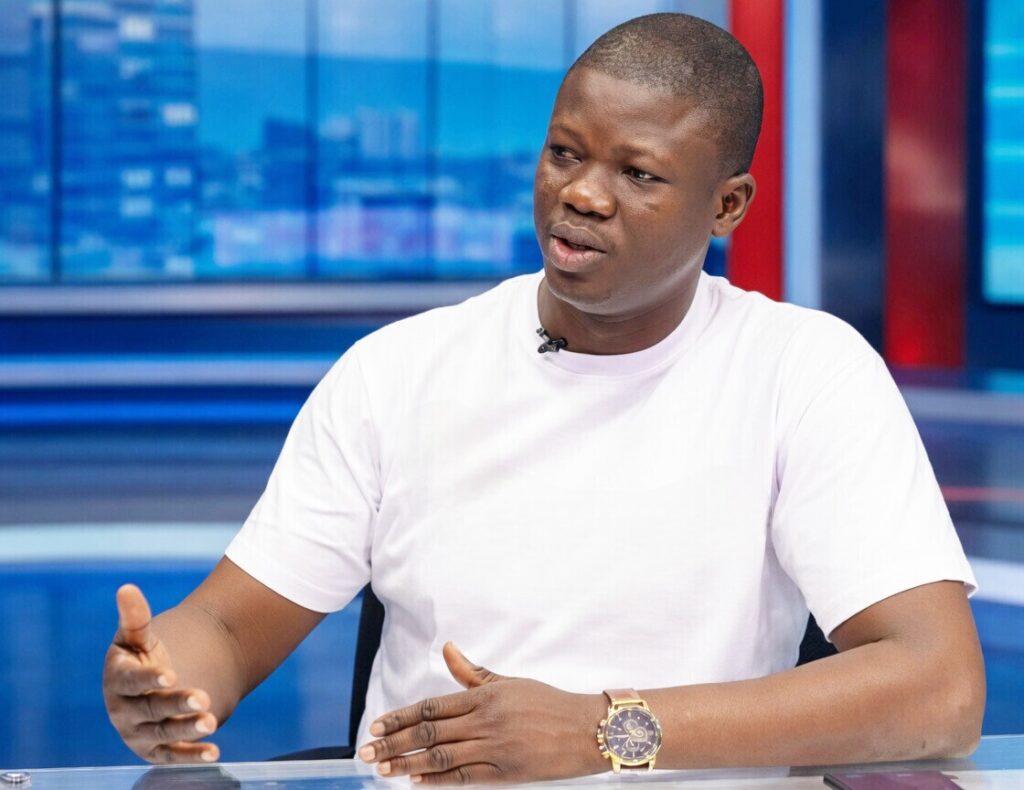
There is a particular kind of humour that only the best communicators can pull off — the kind that makes you laugh out loud while quietly saluting someone else’s greatness. Veteran Ghanaian journalist Abdul Hayi Moomen delivered exactly that this week, with a social media post so perfectly crafted in mock outrage that it went viral almost instantly.
The target of his theatrical distress? His colleague and fellow journalist Manasseh Azure Awuni, who has received formal recognition from the University of Nebraska–Lincoln in the United States — a prestigious acknowledgement of his contributions to journalism and society that has added yet another international feather to an already heavily decorated cap.
In a post that has since spread across Facebook, X, and WhatsApp groups with the speed only truly relatable content achieves, Moomen declared himself a man in crisis.
“I am deeply, personally, and spiritually wounded by this award to Manasseh Azure Awuni,” he wrote, setting a tone that was equal parts absurdist theatre and genuine admiration.
He continued, with the precision of a seasoned satirist:
“Out of all the people in this world, it is the other guy that this prestigious, world-class university has decided to recognise? Why? What did I do to deserve this level of emotional damage? Since the announcement, I have not been myself. I can’t eat. I can’t sleep. Even my shadow has stopped following me out of disappointment. As we speak, my confidence has packed its things and relocated without notice. Ah! This is painful!”
The image of a man so devastated by a colleague’s success that even his shadow abandoned him is the kind of writing that reminds you why Moomen has endured as one of Ghana’s most respected media voices. The wit is sharp, the timing impeccable, and the affection for Awuni unmistakable beneath every word.
Why the Recognition Matters:
To fully appreciate the joke, one must first appreciate the achievement that sparked it. Manasseh Azure Awuni is not simply a well-known journalist — he is, by any objective measure, one of the most consequential investigative reporters Ghana has ever produced. Currently pursuing studies at the University of Nebraska–Lincoln, he has received a formal spotlight from the institution that goes beyond the academic — it is a recognition of professional impact, societal contribution, and the kind of journalism that changes things.
African Journalists And Editors Can Now Apply For MTN’s Pan-African Media Innovation Programme
And Manasseh’s journalism has changed things. His investigations have led directly to laws being enacted in Ghana, triggered the cancellation of major government contracts worth millions of dollars, and resulted in the prosecution and dismissal of public officials. His work, which consistently targets corruption and governance failures, has not merely won awards — it has moved the needle of accountability in a country where holding power to account remains a daily act of courage.
Being spotlighted by a major American university elevates that body of work to a global stage, signalling to international audiences that the investigative journalism being done in Ghana is not peripheral — it is world-class. His multiple honours at the West Africa Media Excellence Awards have long confirmed his standing on the continent. The Nebraska recognition confirms it beyond the continent.
More Than a Joke:
What made Moomen’s post resonate so deeply across Ghana’s media landscape is what it communicated without saying it directly: this is a big deal, and we know it.
The exaggerated grief, the relocated confidence, the shadow walking out in protest — all of it is the language of genuine respect dressed in the costume of comedy. In Ghana’s media space, where journalists have long wielded satire as both sword and olive branch, this kind of exchange is a cultural institution. It celebrates without fawning, acknowledges without being sycophantic, and invites the public into a professional community that, for all its competition, is bound by shared purpose.
Reactions online have reflected exactly that understanding. Readers praised Moomen’s creativity while simultaneously celebrating Awuni’s achievement — two things that, in this instance, are impossible to separate.
For younger journalists watching from the sidelines, the moment carries a quiet but powerful message: excellence in this profession is seen, it travels, and it matters — even when your colleague pretends it has ruined his life.
Moomen’s confidence may have relocated. But his pen, clearly, is still very much at home.
That’s why Abdul Hayi Moomen’s dramatic reaction landed so well—it’s a playful way of saying:
“This is a big deal… and yeah, I wish it were me too.”