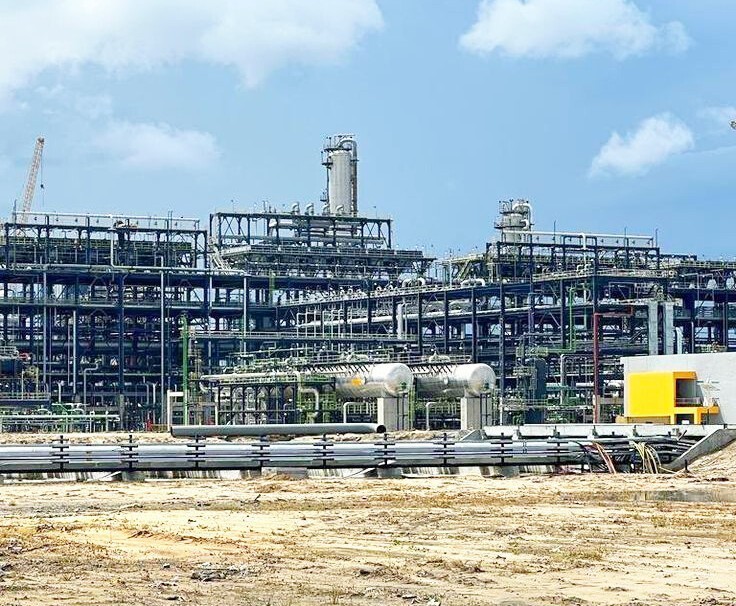
Nigeria’s state oil corporation, the Nigerian National Petroleum Company (NNPC), has struck back at Dangote Petroleum Refinery in court, accusing the privately-owned plant of attempting to strangle competition and seize monopoly control over the country’s downstream fuel market.
The counter-offensive, detailed in court documents reviewed by Reuters, marks a significant escalation in a dispute that now threatens to reshape Nigeria’s entire energy supply chain.
In a proposed defence filed at the Federal High Court in Lagos, NNPC argued that granting Dangote’s request to void or curtail fuel import licences issued to rival marketers would expose Africa’s largest oil producer to dangerous consequences — supply disruptions, price volatility, and a fundamental threat to national energy security.
The Lawsuit That Started It All
Dangote Petroleum Refinery fired the opening shot in April, filing a lawsuit against Nigeria’s attorney general and challenging the validity of import licences issued or renewed by the Nigerian Midstream and Downstream Petroleum Regulatory Authority (NMDPRA) to fuel marketers and NNPC itself.
The refinery’s legal team contends the licences undermine the viability of domestic refining and violate the provisions of Nigeria’s Petroleum Industry Act — a landmark law designed, in part, to incentivise local production.
The case has since drawn in the regulator itself. The NMDPRA has applied to join the proceedings, transforming what began as a bilateral dispute into a three-way legal battle over import policy, regulatory discretion, and the commercial positioning of the 650,000-barrel-per-day refinery.
Fuel marketers have also weighed in, opposing Dangote’s suit and warning that restricting import licences could damage both market competition and supply security.
NNPC’s Counter-Argument
NNPC’s defence goes directly for the jugular. The state oil firm rejected Dangote’s legal reasoning, insisting that Nigerian law expressly permits the issuance of import licences to companies that hold local refining licences or have established track records in international crude and petroleum product trading. Regulators, NNPC argued, retain the discretion to manage imports under Nigeria’s broader backward-integration policy, and no mandatory ban on imports exists unless a domestic supply shortfall is formally established.
Venezuela Turmoil Could Unlock $100B+ In Oil And Foreign Investment Opportunities
More pointedly, NNPC challenged the refinery’s own claims to market dominance, stating that Dangote had failed to provide “credible, independent or verifiable evidence” that its plant could meet Nigeria’s total national fuel demand or guarantee uninterrupted supply across the country. It is a charge that cuts to the heart of Dangote’s regulatory argument — and one that the refinery will now need to answer in court.
NNPC also pushed back on separate allegations that it had deliberately sabotaged Dangote’s operations or withheld crude oil allocations, insisting that such decisions are driven by operational, commercial, security, and logistical considerations — not corporate rivalry.
Dangote Petroleum Refinery declined to comment while the litigation remains active.
The timing of the legal battle carries significant commercial weight. Dangote’s refinery is eyeing a planned IPO of its refining business in September, and the unresolved questions over import competition and regulatory policy introduce fresh uncertainty for prospective investors assessing the plant’s revenue potential and market position.
How courts ultimately rule on the scope of import licences — and whether domestic refiners can legally challenge their existence — could have lasting implications for how the refinery is valued and how Nigeria’s downstream sector is structured for years to come.
A hearing in the case has been scheduled for the coming weeks.
Credit: Reuters