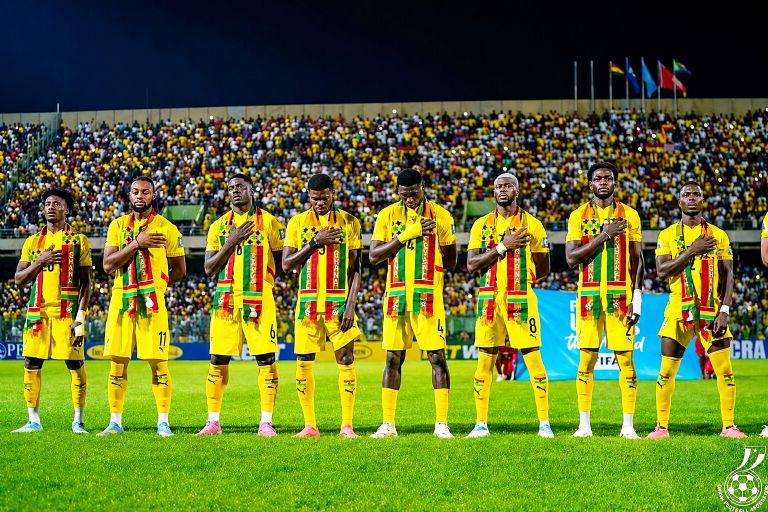
For a nation of Ghana’s size, the Black Stars have punched well above their weight on football’s grandest stage. Five World Cup appearances, a quarter-final run that came agonisingly close to making continental history, and a growing pool of diaspora talent have made Ghana one of Africa’s most compelling World Cup stories. But the full picture is one of brilliance interrupted — a team capable of stunning any opponent on a given day, yet still searching for the consistency that separates good tournament sides from truly great ones.
The Record at a Glance
Ghana have made five World Cup appearances — 2006, 2010, 2014, 2022, and the upcoming 2026 tournament — accumulating a record of five wins, three draws, and seven losses across fifteen matches. They have scored 18 goals and conceded 23, returning a goal difference of minus five and a win rate of approximately 33 percent. Asamoah Gyan remains the nation’s all-time World Cup top scorer with six goals, with André Ayew, Mohammed Kudus, and Sulley Muntari among the other notable contributors to that tally.
Tournament by Tournament
2006 — Germany (13th Place)
Ghana’s debut was a confident one. They won their group with victories over the Czech Republic (2–0) and the United States (2–1), before falling to Brazil (0–3) in the Round of 16. It was an encouraging first appearance that signalled a team ready to compete at the highest level.
2010 — South Africa (7th Place)
This remains the defining chapter of Ghana’s World Cup story — and one of the most emotionally charged narratives in African football history. The Black Stars navigated the group stage with a win over Serbia (1–0) and a draw against Australia (1–1), before defeating the United States (2–1 after extra time) in the Round of 16. In the quarter-final against Uruguay, they came within seconds of becoming the first African side to reach a World Cup semi-final.
FIFA Makes New Football Laws Ahead Of 2026 World Cup
With the score level and seconds remaining in extra time, Luis Suárez’s infamous deliberate handball on the goal line denied Ghana what seemed a certain winner. Asamoah Gyan stepped up for the penalty — and struck the bar. Uruguay prevailed on penalties, 4–2. FIFA ranked Ghana seventh in the tournament. The wound has never fully healed.
2014 — Brazil (25th Place)
After the highs of 2010, Brazil was a sobering experience. A creditable draw against Germany (2–2) offered early promise, but defeats to the United States (1–2) and Portugal (1–2) ended their campaign in the group stage. Off-pitch tensions over player bonuses cast a long shadow over the squad’s performance, and Ghana exited without the cohesion their talent deserved.
2022 — Qatar (24th Place)
A dramatic 3–2 win over South Korea offered a brief lift, but losses to Portugal (2–3) and Uruguay (0–2) meant another early exit. The campaign underlined a persistent vulnerability: Ghana can beat anyone on their day, but sustaining that level across three matches has proved difficult.
2026 — Canada/USA/Mexico
Ghana have qualified and been drawn into Group L alongside England, Croatia, and Panama — a group that will test every dimension of their game. Two of their three group opponents are European sides with strong World Cup pedigrees, making the draw simultaneously challenging and rich with opportunity.
Ghana vs European Opposition: The Defining Challenge
Of Ghana’s fifteen World Cup matches, seven have come against UEFA nations — and the record makes for honest reading. They have claimed two wins, against the Czech Republic in 2006 and Serbia in 2010, drawn once with Germany in 2014, and lost four times, to Italy, Germany, Portugal (twice). Against European opposition, Ghana’s record stands at two wins, one draw, and four defeats, with eight goals scored and ten conceded.
Player Spotlight: The Stars Of The Wales vs Ghana Friendly
Crucially, both European wins came against sides that, while strong, were not at the absolute peak of continental power at the time. Ghana have yet to defeat a tournament heavyweight such as Germany, Italy, or Portugal when it has mattered most. England and Croatia in 2026 will represent the sternest test yet of whether that can change.
What Makes Ghana Dangerous — and Where the Gap Remains
Ghana’s World Cup identity has been built on athleticism, individual brilliance, and a passionate footballing culture that produces talent far beyond what the nation’s resources might suggest. The diaspora pipeline — players born or raised in Europe who choose to represent the Black Stars — has consistently elevated the squad’s technical ceiling.
But the gap between Ghana and Europe’s most organised, tactically disciplined sides has been real. Defensive structure in high-pressure moments, squad unity under stress, and the mental resilience to see out close matches against elite opponents have all been areas where the Black Stars have come up short at critical junctures.
The 2010 quarter-final remains the towering, unresolved symbol of all that Ghana’s World Cup journey could have been. It was not just a near miss — it was a near making of history. And it is that proximity to greatness, as much as anything else, that keeps the Black Stars’ story compelling heading into 2026.
The unfinished business is very much alive.