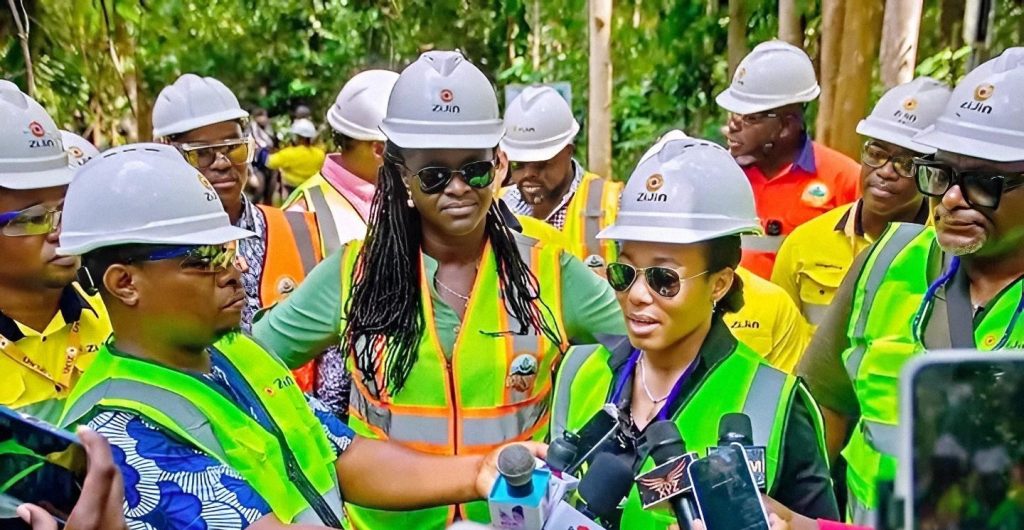
Ghana’s Minister for Environment, Science and Technology, Dr Zanetor Agyemang-Rawlings, has been on the ground in the Eastern Region, inspecting how one of the country’s mining firms manages its environmental footprint. Her stop at Zijin Mining’s operations in New Abirem was part of a wider field tour aimed at gauging what mining really does to the land, and what it can do to repair it.
The trip carried added weight because of what came before it. Having seen the devastation left behind by illegal mining at Osino, the minister and her team arrived at New Abirem with a stark point of comparison in mind.
At the site, Dr Agyemang-Rawlings and her delegation were walked through the measures Zijin Mining has put in place to limit the damage its work causes. These include:
- Land reclamation: restoring ground that has been disturbed by extraction
- Rehabilitation of mined-out areas: bringing exhausted pits and worked sections back into a usable, healthier state
- Tree planting: replacing vegetation lost to mining
- Other mitigation efforts: additional steps designed to reduce the operation’s wider environmental effects
Together, these activities showed that mining need not leave a permanent scar. With the right measures built into daily operations, degraded land can be restored and the surrounding environment protected.
Two Sites, Two Very Different Realities
The difference between what the delegation saw at New Abirem and what it witnessed at Osino was hard to miss. One site demonstrated structured, regulated management of environmental risk. The other showed the damage that follows when extraction is carried out with no safeguards at all.
That contrast underlined a simple lesson: environmental management and compliance with responsible mining standards are what separate productive mining from destructive mining.
Beyond Government: Who Else Can End Ghana’s Illegal Mining Crisis?
Mining remains a pillar of Ghana’s economy. It generates revenue, creates jobs and opens up wider economic opportunities. But the same sector can inflict serious harm when operations proceed without adequate protections.
Illegal mining, widely known as galamsey, has been tied to:
- The destruction of forests
- Pollution of rivers and other water bodies
- Degradation of farmland
- Damage to natural ecosystems
These consequences have fuelled louder demands for tougher enforcement of environmental regulations and for greater accountability from every individual and company operating in the mining space.
The central takeaway from the tour was that Ghana’s mineral resources should not be exploited at the expense of the environment or the wellbeing of generations yet to come.
Reclamation, tree planting and the rehabilitation of mined-out land can meaningfully reduce long-term harm, but only when they are properly carried out and carefully monitored.
Good intentions on paper are not enough, either. Responsible mining demands more than environmental policies. It requires steady monitoring, genuine compliance with the rules and firm enforcement, so that promises made by operators translate into measurable results on the ground.
As the country continues to wrestle with illegal mining, safeguarding its rivers, forests, farmlands and other natural resources remains a vital national duty.
The wider message from the minister’s visit is unmistakable: responsible mining should never be the exception in Ghana’s extractive industry. It must become the norm for every operation, with environmental protection sitting at the heart of the nation’s mineral development agenda.