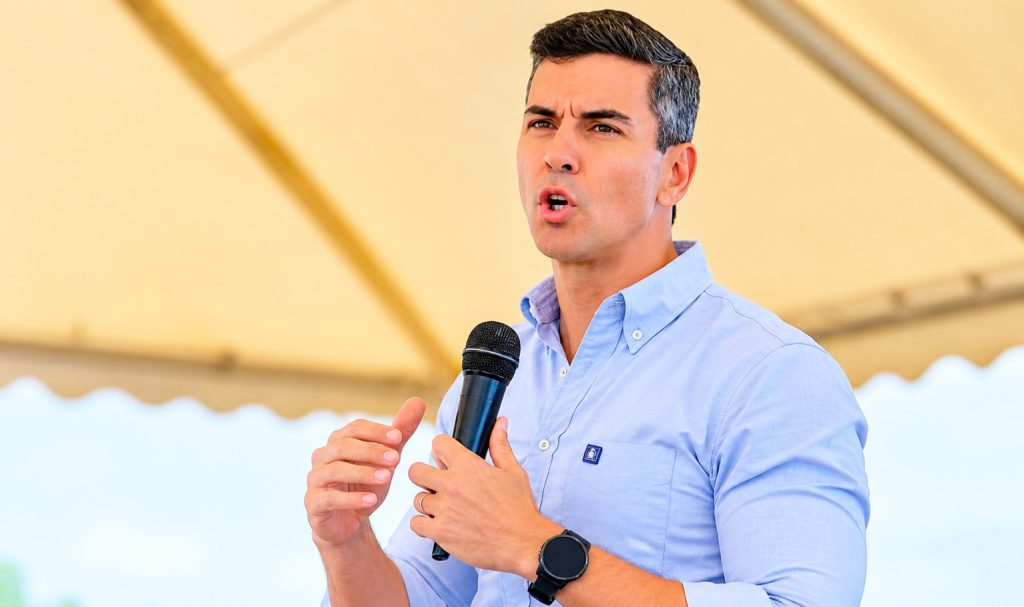
The sudden fall of Paraguayan President Santiago Peña marks one of the most dramatic political collapses in South America’s recent history. On Thursday, November 5, 2026, the 47-year-old former finance minister resigned from office, brought down by a systemic banking collapse that dissolved public trust and ignited widespread outrage across the nation.
At the nucleus of the crisis is Ueno Bank, an institution that underwent a meteoric transformation in a matter of years. Tracing its origins back to a 1970s finance firm, the institution was acquired in 2021 by Grupo Vázquez, one of Paraguay’s major industrial conglomerates. In 2023, under Peña’s incoming administration, regulatory approval was granted for Ueno to operate as a full digital bank.
Through aggressive marketing—including lucrative consumer cash-back programs on daily groceries and high-profile sponsorships like the national football team—Ueno rapidly scaled its user base. At its height, the digital lender claimed to serve over 60% of the adult population in Paraguay.
However, the rapid expansion unspooled within days.
Following signs of insolvency, Paraguay’s central bank intervened and placed Ueno into resolution, immediately freezing customer accounts.
Hundreds of thousands of citizens found themselves abruptly cut off from their primary funds, leaving families unable to pay for basic necessities.
Public anger peaked when players from the national football team released an open letter on November 4 demanding decisive legal and governmental action.
Allegations of Favoritism and Conflict of Interest
As law enforcement detained top executives at Ueno, massive demonstrations erupted in the streets. For many citizens, the bank’s failure was not merely an isolated commercial default, but evidence of institutional corruption between state officials and corporate elites.
Critically, Ueno managed approximately $800 million in public sector funds, including assets from state institutions and national pension reserves. This concentration of public capital drew intense scrutiny due to Peña’s prior financial ties to Ueno Holding.
While Peña maintained that his former stake was simply a personal financial investment made in his capacity as an economist—and emphasized that he had liquidated his shares—reports from Paraguayan media alleged that state deposits were funneled to the institution through insider favoritism. Peña rejected these investigative reports as a coordinated slander campaign designed to undermine his leadership, denying allegations that he ignored prior warnings from regulators and journalists.
South Korea Nominates First Female Prime Minister In 20 Years
Political opposition quickly turned into a coalition against the president. On Wednesday, November 4, opposition lawmakers, backed by factions within Peña’s own Colorado Party, filed formal impeachment charges.
The political tide turned irreversibly on Thursday morning when former president Horacio Cartes, historically a core political ally, publicly endorsed the impeachment push.
As floor debates began in the legislature, Peña broadcast a pre-recorded address announcing his decision to step down to preserve public peace and democratic continuity.
In his resignation statement, Peña expressed remorse to the electorate:
“Dear compatriots, today I address you at one of the most difficult moments of my life. With my heart set on Paraguay and with the conviction that our republic must always come before any person or circumstance, I have decided to submit my resignation as president of the republic… I also want to apologise to the people if at any point I failed them … But today my priority is only one thing: the peace of mind of Paraguayans who trusted their savings to our financial system … My greatest wish is that the return of those funds is guaranteed.”
Opponents offered a scathing assessment of the president’s tenure. Opposition Senator Rafael Filizzola labeled the scandal “the biggest fraud carried out from political power in the democratic era,” asserting that the financial institution was leveraged specifically to enrich politically connected entities with state funds.
The fallout interrupts a presidential term that was slated to run through August 2028. Internationally, Peña had positioned himself as a key partner to the United States in Latin America, establishing strong ties with the Trump administration and engaging in trade discussions around critical minerals with U.S. officials.
Pursuant to Paraguay’s constitution, Vice-President Pedro Alliana automatically assumes the presidency to complete the remainder of the term through 2028.
Meanwhile, despite Peña’s voluntary resignation, the lower house of Congress voted unanimously to pass the impeachment motion to the Senate. Should the Senate convict, Peña will forfeit the lifetime senatorial immunity normally afforded to former presidents, exposing him directly to potential criminal prosecution in standard courts.
One thought on “Paraguay President Steps Down Amid $800M Ueno Bank Collapse”