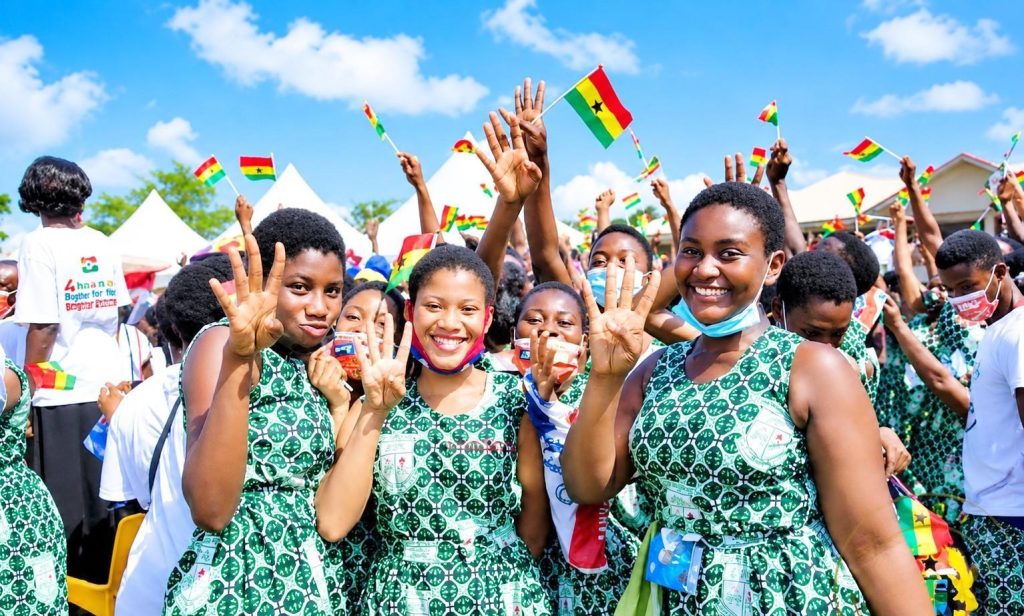
Ghana’s Free Senior High School (Free SHS) programme continues to command strong approval among the nation’s youth, according to recent insights shared by prominent pollster and political research consultant Mussa Dankwa. Taking to Facebook, Dankwa—who also works as a financial expert and risk analyst—revealed that the education initiative has secured a 63 percent satisfaction rating among young voters.
In his update, Dankwa noted that this signature intervention of the New Patriotic Party (NPP), introduced during the presidency of Nana Addo Dankwa Akufo-Addo, currently ranks as the highest-rated policy among the youth demographic. Crucially, he emphasized that the programme has remained intact despite a shift in political power, writing:
“NPP’s Free Education, which has not been cancelled yet, gets the highest satisfaction score by young voters with 63%”
His remarks have reignited national conversation around the programme’s social footprint, how everyday citizens perceive its value, and the decisive role it continues to play in Ghanaian electoral politics.
Assuming the polling metric accurately reflects broader sentiment, a 63 percent approval rating signals remarkably durable support among young Ghanaians. Given that Free SHS has been the subject of intense political and economic scrutiny for years, maintaining majority backing is no small feat—especially among the very demographic whose lives, opportunities, and academic trajectories are most directly impacted by secondary school access.
The Origins Of A Landmark Reform
Rolled out in September 2017 under the Akufo-Addo administration, Free SHS was conceived to eliminate the financial roadblocks preventing Ghanaian families from enrolling their wards in public second-cycle institutions. By absorbing tuition and related fees, the policy sought to ensure that academic potential—rather than household income—determined whether a student progressed beyond junior high school. Widely regarded as one of the boldest social interventions in Ghana’s modern history, the initiative dramatically expanded classroom enrollment nationwide.
Education Minister Earns Opposition Applause For An Awesome Crisis Action
From its inception, the policy has sparked vigorous debate across the political and educational spectrums. While supporters celebrate the unprecedented surge in enrollment and relief for struggling parents, critics have consistently raised red flags regarding execution bottlenecks, long-term fiscal sustainability, overcrowded school facilities, and the potential dilution of teaching and learning standards.
Despite these ongoing friction points, the sheer scale of access it unlocked has cemented Free SHS as the defining legacy project of the NPP.
With the National Democratic Congress (NDC) now at the helm of government, the survival of Free SHS speaks volumes about its entrenched status in Ghanaian society. Rather than dismantling the policy, the current administration has maintained its operation, keeping the programme squarely at the forefront of national policy discussions. Politically, this creates a dual dynamic: the NPP continues to claim ownership of the policy as a cornerstone of its governance record, while the sitting government faces the practical test of sustaining funding and resolving operational inefficiencies to elevate its quality.
While the 63 percent figure makes for a compelling headline, it warrants a measured interpretation. Dankwa’s social media post did not include key methodological disclosures—such as the total sample size, when the fieldwork was conducted, the regional spread of respondents, or the exact phrasing of the survey prompt. Because those variables determine how reliably data can be projected onto the wider population, the statistic is best viewed as a directional snapshot rather than a peer-reviewed empirical report.
Methodological caveats aside, Dankwa’s post has succeeded in placing the enduring popularity of Free SHS back under the spotlight. It serves as a clear reminder that tangible social interventions—particularly in education—carry immense weight in shaping how young voters evaluate political leadership. Moving forward, questions surrounding the financial durability, classroom quality, and long-term outcomes of Free SHS will remain unavoidable priorities for every political party vying for the trust of Ghana’s youth.