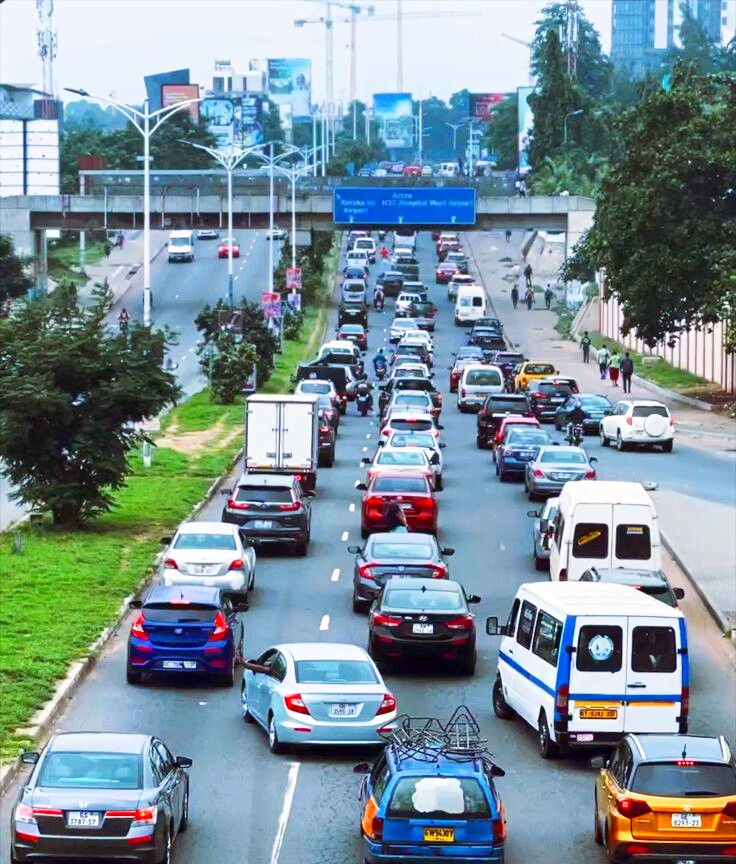
Ghana’s roads are about to come under intense scrutiny. The Driver and Vehicle Licensing Authority (DVLA), acting in concert with the Motor Traffic and Transport Department (MTTD) of the Ghana Police Service, has announced a sweeping nationwide enforcement exercise targeting one of the most persistent — and costly — irregularities on Ghanaian roads: the abuse of DV registration plates and fraudulent vehicle documentation.
The joint operation commences on 4th May 2026, and motorists across the country have been put firmly on notice.
What Are DV Plates — and Why Are They Being Abused?
In Ghana, “DV” — or Duty Vehicle — plates are a legitimate and strictly regulated licensing instrument. They are issued exclusively to licensed automobile dealers for narrow, well-defined purposes: test-driving vehicles prior to sale, moving unregistered units between locations, and demonstration activities. Their use is temporary and tightly bound to the commercial operations of authorised dealerships.
They are emphatically not a workaround for private use — and yet, authorities say, that is precisely how a growing number of individuals have been deploying them.
According to the DVLA, the abuse has taken multiple forms. Some motorists have been using DV numbers as a deliberate strategy to evade proper vehicle registration and the taxes that come with it. Others have gone further, operating vehicles fitted with outright fake or duplicated DV plates. In more brazen cases, vehicles have been found running on forged or entirely unverified documentation — a problem that goes well beyond a simple administrative lapse.
Officials are clear that this is not a bureaucratic exercise — the consequences of unchecked DV plate abuse are tangible and serious. The practice directly undermines road safety enforcement, as vehicles without proper registration are effectively invisible to regulatory and law enforcement systems.
Beyond safety, it facilitates criminal activity by allowing individuals to operate vehicles that cannot be traced through standard channels. And at the national level, it represents a significant drain on government revenue — taxes and levies that go uncollected every time a vehicle skirts proper registration.
From 4th May, joint teams drawn from the DVLA and the MTTD will fan out across major cities and highways, mounting roadblocks and conducting routine checks with a specific mandate to identify and prosecute violations.
Officers will verify vehicle ownership records and cross-reference registration documents in real time. Number plates will be inspected closely, and all supporting paperwork will be subject to rigorous scrutiny. The operation is designed to be both visible and sustained — not a one-day blitz, but an ongoing enforcement posture.
Drivers found to be in breach face serious consequences. Immediate arrest is on the table, as is the outright seizure of offending vehicles. Where the evidence warrants it, individuals will face prosecution under Ghana’s road traffic laws — a process that carries the potential for significant penalties.
Legal 500 Rankings: Ghanaian Firms Secure Big Tier 1 Position
The DVLA is urging every vehicle owner to take stock of their documentation now, before enforcement teams hit the roads. Those using DV plates without proper authorisation are being told plainly: stop. All motorists are being directed to ensure their papers are genuine, current, and complete — and to regularise any outstanding irregularities without delay.
Crucially, authorities have made clear that ignorance will not be entertained as a defence once the operation is underway. The announcement has been public, the start date is known, and the window to get affairs in order is rapidly closing.
For legitimate automobile dealers operating within the bounds of their authorisation, the message is equally direct: use DV plates only for their intended purposes, and be prepared to demonstrate that compliance at any checkpoint.
Ghana’s roads, authorities insist, are not a grey area. From 4th May, that position will be enforced.