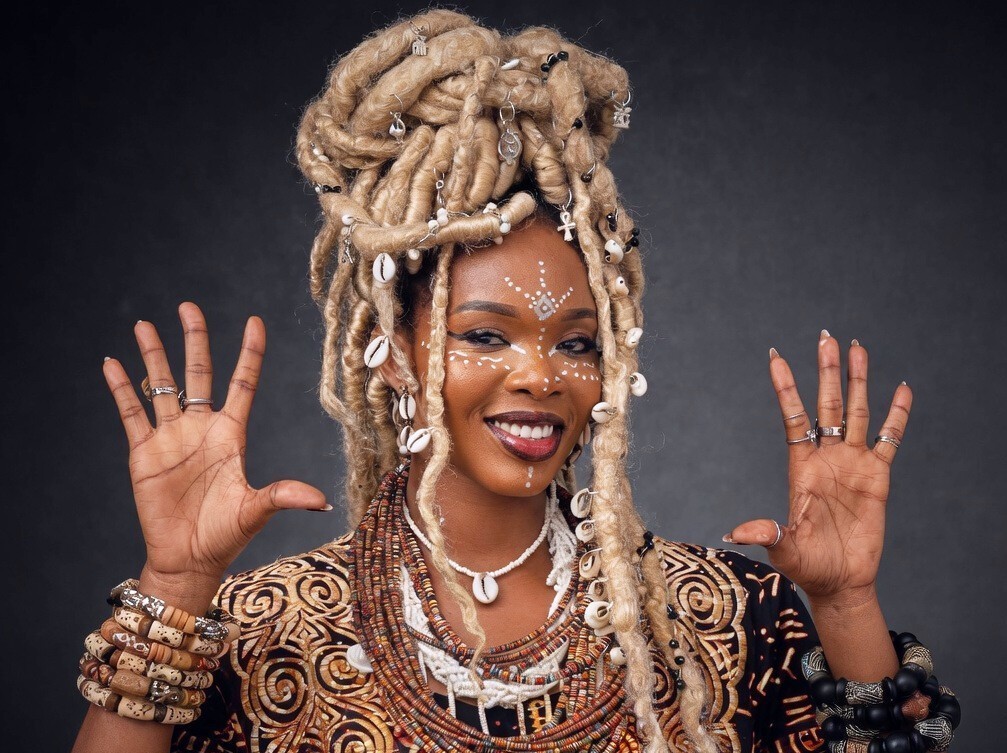
Ghanaian singer Enam has had enough of the whispers — and she is speaking directly to them. In a candid recent interview, the spiritually expressive artist confronted and flatly dismissed circulating rumours that she deploys “juju” or occult forces to fuel her music and career success.
Her response was measured but firm: what critics are labelling as dark manipulation is, she insists, something far older, far richer, and entirely misunderstood.
At the heart of the controversy is a fundamental misreading of what Enam’s art actually represents. The singer — born Angela Enam Keteku — has built her creative identity around African spirituality, ancestral reverence, and indigenous belief systems.
Her music draws on chants, symbolism, and spiritual themes that root themselves in traditions practised across the African continent long before the word “juju” became a shorthand for fear.
She is clear-eyed about why the confusion arises. For many audiences, particularly those shaped by religious frameworks that treat traditional African belief as inherently suspect, the imagery and sonic language she employs can feel unfamiliar — even threatening. But unfamiliarity, she argues, is not evidence of wrongdoing.
“It is African spirituality, culture, and personal belief — not manipulation,” she stated, drawing a deliberate line between artistic and cultural expression on one hand, and the harmful practices the rumours imply on the other.
Enam’s catalogue makes her philosophy plain. Her acclaimed work Afa — a deeply layered piece exploring redemption and divine intervention through the lens of African tradition — is emblematic of what she has always sought to do: not mystify, but illuminate. Through her music, she reaches toward themes of healing, identity, and the reconnection of modern Ghanaian audiences with the ancestral wisdom their grandparents carried.
Camidoh Aims to Make Timeless Music Like Africa’s Greats
The chants are intentional. The symbolism is deliberate. The spiritual themes are chosen — not to conjure, but to narrate. In Enam’s own framing, her art is an act of cultural reclamation in a world that has long pathologised African spiritual expression as primitive or dangerous.
Beyond defending herself, Enam used the moment to issue a wider challenge to the Ghanaian public. The tendency to slap the “juju” label on any expression of traditional African spirituality, she argued, is rooted less in truth than in misinformation — and in a deep-seated discomfort with beliefs that fall outside mainstream religious norms.
She urged audiences to approach such expressions with curiosity rather than suspicion, and to resist the impulse to reduce a continent’s rich spiritual heritage to a single, fear-laden word.
For Enam, the music was never about power over others. It has always been about power reclaimed — for herself, for her culture, and for the audiences she hopes to bring home to themselves.