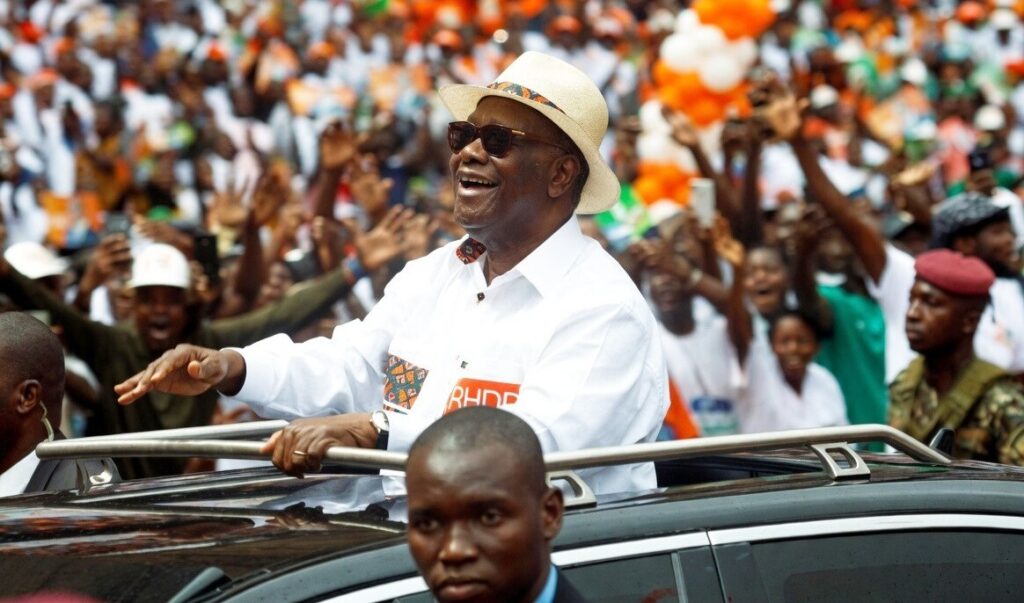
Ivory Coast has announced the dissolution of its Independent Electoral Commission — known by its French acronym, CEI — in a significant if cautious concession to opposition forces who have long argued that the body operates as an instrument of the ruling party rather than an impartial arbiter of democratic competition.
The decision was taken at cabinet level and announced by government spokesperson and Communications Minister Amadou Coulibaly, who acknowledged the volume of criticism the institution had drawn.
“In view of the reservations expressed about this institution, as well as the criticism it has faced, the Council of Ministers has decided to dissolve it,” Coulibaly said — offering little elaboration on what structural form its replacement would take, beyond a commitment to determining a new electoral mechanism through government-level consultations.
The stated goal, he added, was to “ensure, in a lasting way, the organisation of peaceful elections by creating greater trust and reassuring all Ivorians and the political class” — language that struck many observers as aspirational without being concrete.
The CEI has been a flashpoint in Ivorian political life for years. Mandated to organise elections, apply the electoral code, and maintain the electoral roll, the commission has faced persistent accusations from opposition parties and civil society that its composition and conduct favour President Alassane Ouattara’s ruling establishment.
Those accusations reached boiling point around last October’s presidential election, which returned Ouattara to power for a fourth term while several high-profile opposition figures — including former prime minister Pascal Affi N’Guessan — were barred from the ballot entirely.
The election was widely condemned by opposition leaders and civic groups as falling short of the standards required for a credible democratic exercise.
N’Guessan responded to the dissolution announcement by urging the government to treat the moment as something more than an administrative reset. He called on authorities to “open a dialogue with political and civil society organisations to rebuild the electoral system, in the name of peace and stability” — a framing that positions genuine electoral reform not as a technical matter, but as a condition for national cohesion.
How Europe Is Rethinking Its Relationship With Africa
The announcement revives deeper anxieties about the trajectory of Ivorian democracy. A contentious 2016 constitutional amendment allowed Ouattara to reset his term count, enabling him to contest what critics described as an illegitimate third term in an election that a large section of the opposition boycotted.
His fourth-term victory last October only intensified those grievances, with opponents arguing that the rules governing candidacy eligibility and electoral oversight have been systematically shaped to entrench the incumbent’s advantage.
Whether the CEI’s dissolution signals a genuine willingness to rebalance Ivory Coast’s democratic architecture — or amounts to a carefully managed gesture designed to ease political pressure without delivering structural change — is a question that will be answered by what comes next.
For now, the opposition, civil society, and international observers are watching closely to see whether the government’s stated ambition for “lasting” reform survives contact with the reality of institutional design.