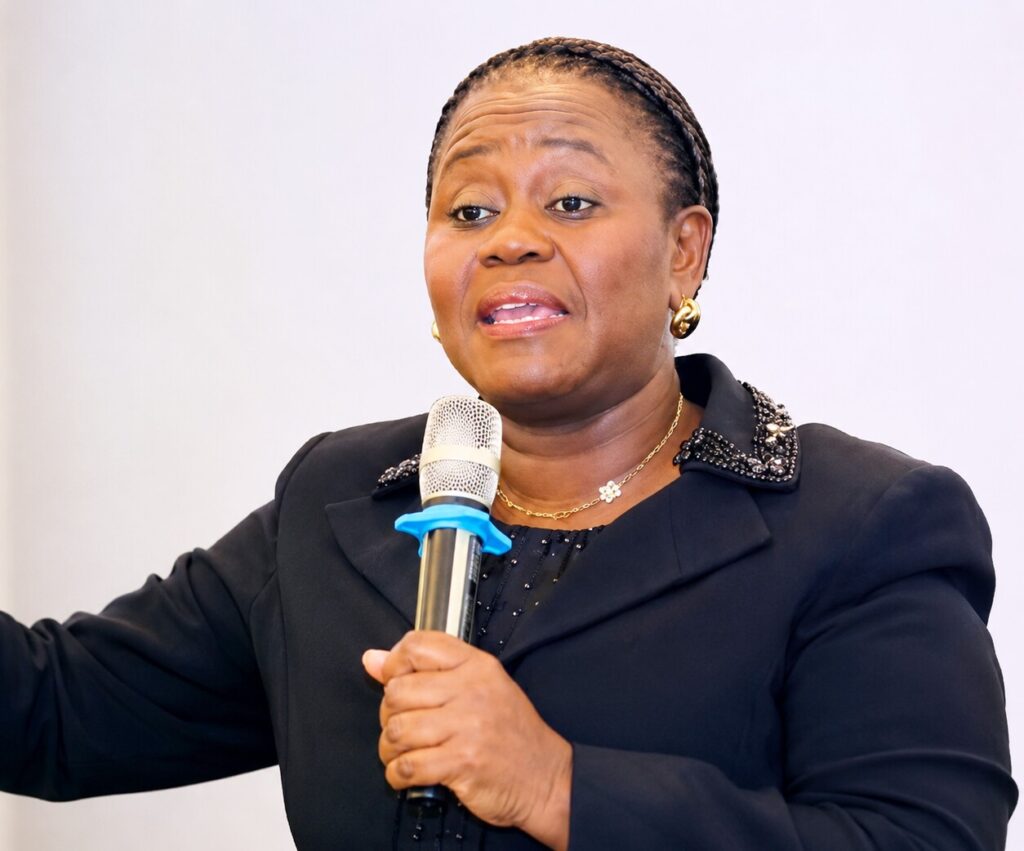
After months of political firestorm, courtroom battles and public controversy, Ghana’s former Chief Justice has secured a significant legal vindication — and the reverberations are already being felt across the country’s judicial landscape.
Justice Gertrude Araba Esaaba Sackey Torkornoo has recorded a landmark legal victory following a Supreme Court ruling connected to one of Ghana’s most closely watched corporate disputes — the long-running legal battle between Ecobank Ghana and prominent businessman Daniel Ofori.
The development marks a significant turn in what has become an extraordinary chapter in Ghanaian judicial history, intertwining high-stakes commercial litigation, allegations of bias, questions of judicial independence and the politically charged circumstances surrounding Justice Torkornoo’s suspension and removal from the nation’s highest judicial office.
The Ecobank-Daniel Ofori dispute has for years occupied a prominent place in Ghana’s corporate legal consciousness. At its core, the matter centres on contested financial and brokerage transactions tied to Ecobank shares — a dispute that has wound its way through multiple judicial stages and accumulated a significant body of legal argument, public commentary and national attention along the way.
What elevated the case to an entirely different level of public interest, however, was the controversy surrounding Justice Torkornoo’s earlier involvement. During her tenure as a High Court judge, she had presided over matters connected to the broader dispute. When the case subsequently arrived at the Supreme Court — where she sat as a justice — lawyers representing Daniel Ofori moved to have her recused, arguing that her prior involvement created an irreconcilable conflict of interest.
Justice Torkornoo stepped down from the Supreme Court panel hearing the matter — a withdrawal that, in the highly charged atmosphere of Ghanaian judicial politics, became far more than a routine procedural development. For her critics, it fed a broader narrative. For her supporters, it was an unfair and politically motivated pressure campaign dressed in legal clothing.
The latest Supreme Court outcome has now reportedly swung decisively in Justice Torkornoo’s favour.
Legal observers have described the decision as a substantial boost to her legal standing — a development that her supporters are interpreting as a formal reaffirmation of her judicial integrity after one of the most turbulent periods in the career of any senior Ghanaian jurist in recent memory.
For a woman who served as Ghana’s 15th Chief Justice from June 2023 until September 2025 — and who since her removal has fought back through the Ghanaian courts and at the ECOWAS Court of Justice — the ruling carries weight that extends well beyond the specifics of the Ecobank matter. It arrives as a public statement, however indirect, about the strength of the legal arguments that have surrounded her throughout this period.
Ghana’s ‘Strange’ Corruption Epidemic: How Billions Vanish From The Public Purse Every Year
Legal analysts say the implications of the ruling stretch beyond the fortunes of one individual, however prominent. The manner in which the recusal issue was handled, the political environment in which it unfolded, and now the Supreme Court’s latest pronouncement have all combined to push fundamental questions about Ghana’s judicial architecture into sharp public focus.
How should recusal standards be applied? What safeguards exist when politically sensitive disputes intersect with the careers of serving judges? And how does a nation’s highest court maintain — and demonstrate — its independence when the cases before it touch on figures at the very apex of the justice system?
These are questions that Ghana’s legal community, civil society observers and the broader public are now actively engaging with — questions that the Torkornoo ruling has made impossible to ignore.
Background: A Chief Justice Who Refused to Quietly Depart
Justice Torkornoo’s removal from the position of Chief Justice was never going to be the end of the story. A jurist of her seniority, experience and evident willingness to contest decisions she considers unjust was always likely to pursue every available legal avenue — and that is precisely what she has done.
Her challenges to the processes surrounding her suspension and dismissal, mounted simultaneously in domestic courts and at the regional ECOWAS level, have kept her case in the public eye and ensured that the circumstances of her departure from office remain subject to legal scrutiny.
The Supreme Court’s latest ruling in the Ecobank matter now adds another chapter — one that, for now at least, reads in her favour.
The Ecobank-Daniel Ofori litigation itself remains one of Ghana’s most consequential commercial cases, with outstanding questions over banking transactions, share acquisitions and judicial procedures still requiring resolution. The case will continue its journey through Ghana’s legal system, carrying with it the accumulated weight of years of argument and public attention.
For Justice Torkornoo, however, this latest development offers something that the months of political controversy and public debate could not — a judicial outcome, delivered by Ghana’s highest court, that her legal team and supporters can point to as concrete evidence of her vindication.
In a season of fierce legal and political battles, it is, for now, a significant score.