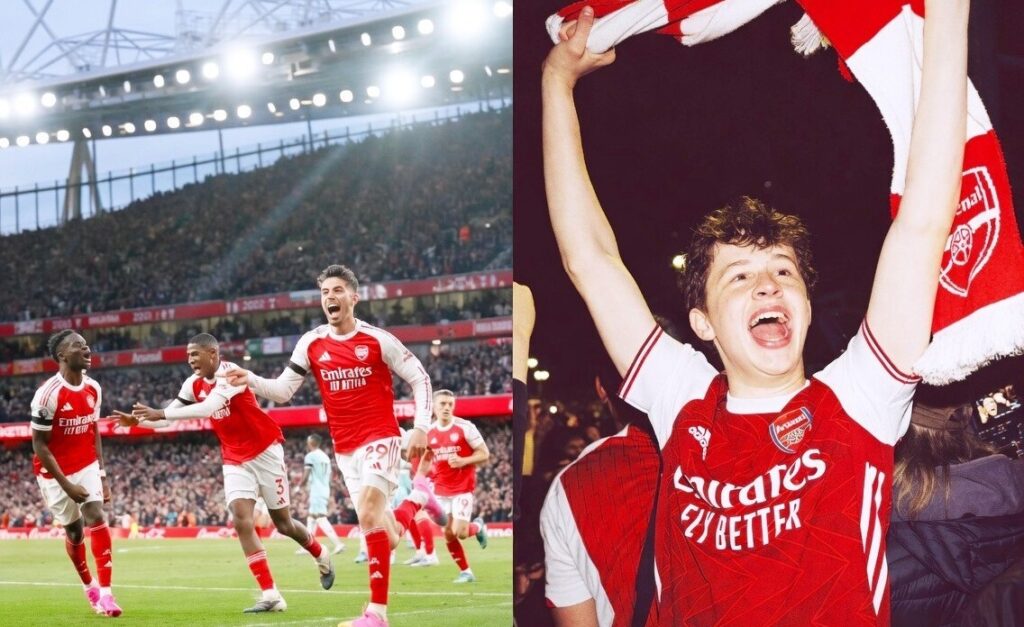
It has finally happened. Arsenal Football Club are Premier League champions — ending a 22-year wait that has spanned generations of supporters, managerial regimes, and near-misses too painful to recount. The last time the Gunners lifted the league title was during the iconic 2003/04 “Invincibles” season under Arsène Wenger, a campaign so extraordinary it has lived in football folklore ever since.
Now, under Mikel Arteta, Arsenal have written a new chapter worthy of standing beside it.
Arteta Vindicated, Completely and Utterly
There were plenty of doubters. When Arteta — a relative managerial novice who had never led a top-flight club before his appointment — began tearing down and rebuilding Arsenal from the foundations up, the scepticism was understandable. Seasons of transition, early exits, and agonising near-misses in the title race kept the questions alive: could he really do it? Could this young, idealistic coach restore Arsenal to the summit of English football?
The answer, delivered across the course of this season, is an emphatic yes. The rebuild worked. The philosophy held. The faith in youth paid off. Players like Bukayo Saka, Martin Ødegaard, and William Saliba — developed, trusted, and elevated under Arteta’s watch — are now not merely Premier League winners, but legendary figures in the club’s history. Their names will be spoken of in the same breath as the Invincibles who came before them.
For Arsenal supporters, this title carries a weight of emotion that goes well beyond football. An entire generation of fans has grown up watching Manchester City, Liverpool, and Chelsea accumulate silverware while Arsenal looked on. Younger supporters have never known what it feels like to see their club lift the league trophy. That changes now.
Seven Things You Need To Know About Manchester City’s Historic 2026 FA Cup Win
The scenes that greeted the final whistle — in the stadium, in living rooms, in the streets — reflected the depth of that accumulated longing. Twenty-two years is not just a number. It is childhoods spent watching near-misses, seasons of hope dissolving into disappointment, and the quiet, persistent faith that one day, it would be Arsenal’s turn again. That day has arrived.
What This Title Changes
The commercial and competitive implications of this moment are significant. Winning the Premier League fundamentally alters how Arsenal are perceived — by the world’s best players weighing their next move, by global sponsors assessing partnership value, and by the wider footballing community judging where the power in English football now resides.
For too long, a damaging narrative clung to this Arsenal side: that they were nearly men, a team that threatened but could not deliver when it mattered most. That story is now dead. This title was won in a genuine, competitive race — and Arsenal handled the pressure. That matters, because it tells the dressing room something profound about itself: that they are not pretenders, but champions.
History suggests that one title, won the right way with a young and hungry squad, is rarely the end of the story — it is often the beginning. The mentality shift that accompanies a first championship is difficult to overstate. A club stops chasing success and starts expecting it. Standards recalibrate. Ambition compounds. That is how dynasties are built.
Arsenal are, once again, a true football powerhouse. And on the evidence of what Arteta has constructed — the spine of the squad, the identity of the football, the culture within the building — there is every reason to believe that this Premier League title is not a destination, but a point of departure.
One thought on “Premier League Champions Arsenal Now Rank Among The Most Attractive Clubs In World Football”