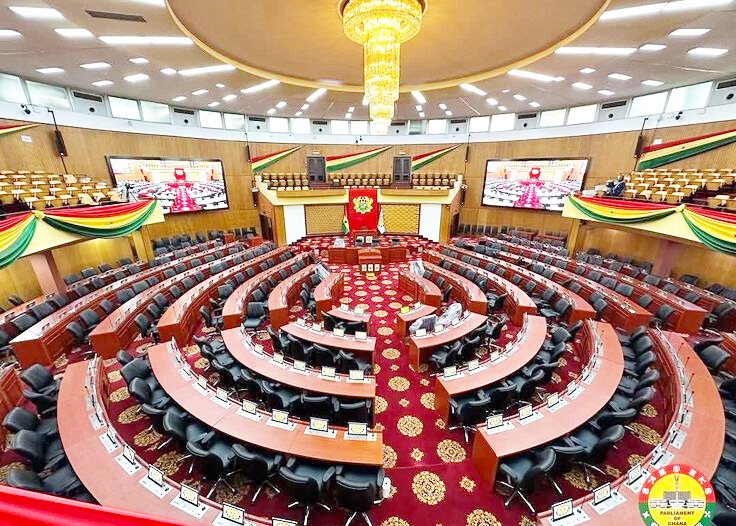
A piece of legislation that refuses to quietly disappear has once again thrust Ghana into the centre of a heated domestic and international debate — and this time, its fate may finally be decided.
When Ghana’s Parliament first passed the Human Sexual Rights and Family Values Bill in February 2024, it sent shockwaves well beyond the country’s borders. Now, with a new Parliament in session and the bill back on the legislative agenda, the questions surrounding it are more urgent than ever: What does Ghana stand for? And who gets to decide?
At its core, the legislation — popularly, and controversially, known as the anti-LGBTQ bill — seeks to impose sweeping restrictions on same-sex relationships, LGBTQ advocacy, and any form of promotion or funding of activities deemed to fall within that sphere. Individuals found engaging in same-sex relations could face prison sentences under the law.
Organisations or individuals accused of financing or promoting LGBTQ causes would also face sanctions. Proponents frame the bill not as an attack on individuals, but as a legal shield for what they describe as Ghanaian family values, cultural identity, and moral tradition — a sovereign assertion of who Ghana is and what it believes.
How It Got Here
Despite its initial passage in Parliament in early 2024, the bill stalled before it could become law. The dissolution of the previous Parliament ahead of the December 2024 general elections effectively halted its progress, and former President Nana Akufo-Addo departed office without signing it into law — leaving its legal status in a peculiar limbo.
That pause, however, proved temporary. Lawmakers in the newly constituted Parliament have moved swiftly to reintroduce the legislation, reigniting a debate that many had hoped — or feared — was behind them.
Few issues have exposed the fault lines in Ghanaian society quite like this one. On one side stand a powerful coalition of religious institutions, traditional leaders, and a significant portion of the public, all of whom argue that the bill reflects deeply held national convictions. For them, the legislation is not bigotry — it is the democratic expression of a majority worldview.
NPP Communicator Threatens To Quit If Mahama Signs Anti-LGBTQ+ Bill
On the other side, human rights organisations, civil society groups, and international observers have raised pointed concerns. Critics warn that the bill, if enacted, could open the door to widespread discrimination, curtail freedom of expression, and expose vulnerable communities to violence and stigmatisation. The threat to Ghana’s global standing has also been a recurring theme — international financial institutions and development partners have previously indicated that the legislation’s passage could have consequences for investor confidence and aid relationships.
What makes this debate so difficult to resolve is precisely that it sits at the intersection of sovereignty, religion, human rights, and economics — areas where reasonable people, and reasonable nations, frequently disagree.
Members of Parliament backing the bill are unyielding, arguing that they speak for the silent majority of Ghanaians who want their cultural and religious values protected in law. Their opponents counter that the protection of minority rights is not subject to majority vote — and that Ghana’s obligations under international human rights frameworks cannot simply be legislated away.
As the bill advances through the new Parliament, the conversations are spilling out of the chamber and into pulpits, newsrooms, family dining tables, and social media timelines across the country.
Ghana has faced defining moments before. The question now is whether this Parliament will bring the long-running saga to a conclusion — and what kind of conclusion that will be.