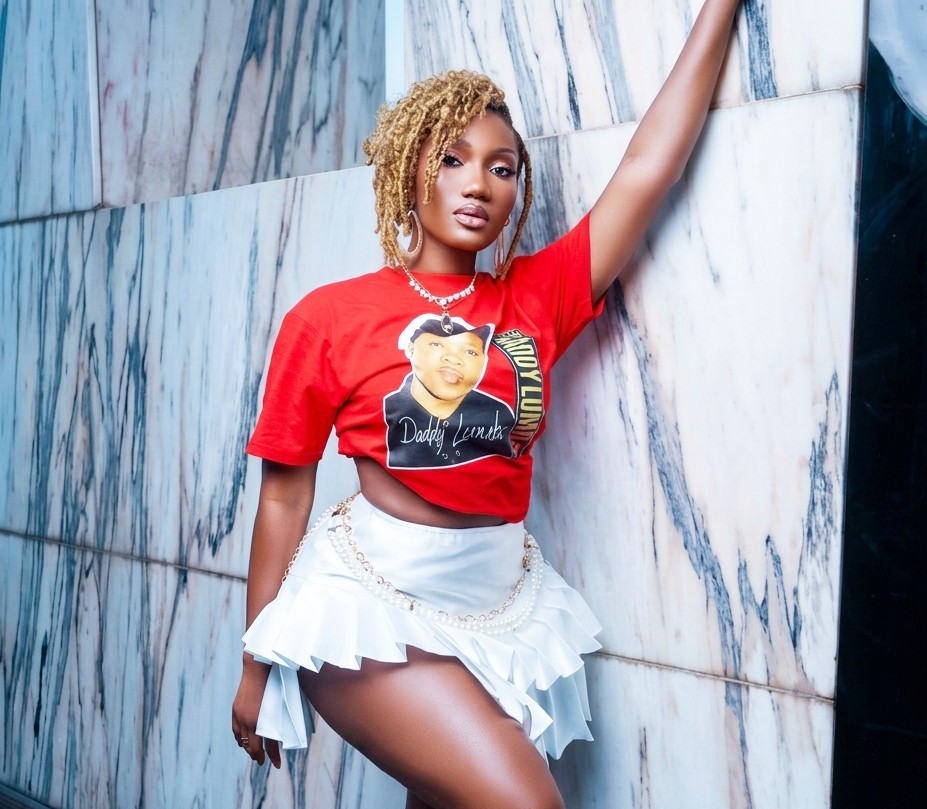
After voicing her concerns about what she perceives to be the unfair treatment of women in the music industry, Ghanaian singer Wendy Shay has spurred a new discussion on gender and fairness.
The “Uber Driver” hitmaker expressed her annoyance on X, implying that her long-standing worries about the difficulties faced by female musicians might be more significant than she had previously believed.
Wendy Shay wrote in a succinct yet forceful post:
“This music Industry does Not favour women AT ALL !!! I always knew this but after hearing what I just heard it’s SERIOUS !!!”
Despite being brief, the message has drawn attention because the artist did not reveal the precise details of what she heard that caused the emotion.
The larger issue of gender equality in Ghana’s entertainment sector has come back into focus as a result of Wendy Shay’s remarks.
For many years, female artists have had to negotiate a field where challenges including visibility, opportunity access, financial assistance, industry recognition, and public image concerns can become part of their career path.
The experiences of female musicians might be very different from those of their male counterparts, despite the fact that women still contribute significantly to Ghanaian music.
It seems from Wendy Shay’s most recent post that there are more serious problems in the sector that need to be discussed.
Nevertheless, the artist has not named any person, group, or particular incident as the focus of her grievance in the post.
She has released a number of commercially successful songs and amassed a sizable fan base since entering the mainstream. Thus, her choice to bring up the matter in public is significant, especially at a time when discussions around the experiences of women in Ghana’s creative sectors are still expanding.
Why Ghana’s Entertainers Deserve A Special Hall Of Fame
Her post’s use of capital letters, especially the phrases “AT ALL” and “SERIOUS,” emphasized how strongly she felt.
Wendy Shay’s remarks also bring up more general concerns about whether female musicians have equal chances to be successful and maintain long-term careers.
The music industry is highly competitive, and success can depend on a combination of talent, investment, promotion, industry relationships, media exposure, streaming performance and audience support.
For female musicians, additional social expectations and scrutiny can sometimes add another layer to an already demanding career.
The question, therefore, is not simply whether women are producing successful music, but whether the structures supporting the industry provide an environment in which female artistes can compete and thrive on equal terms.
Until Wendy Shay provides further clarification, it would be premature to attach a specific allegation or incident to her statement.
For now, her words have succeeded in drawing attention to an important conversation: does Ghana’s music industry truly provide a level playing field for women?