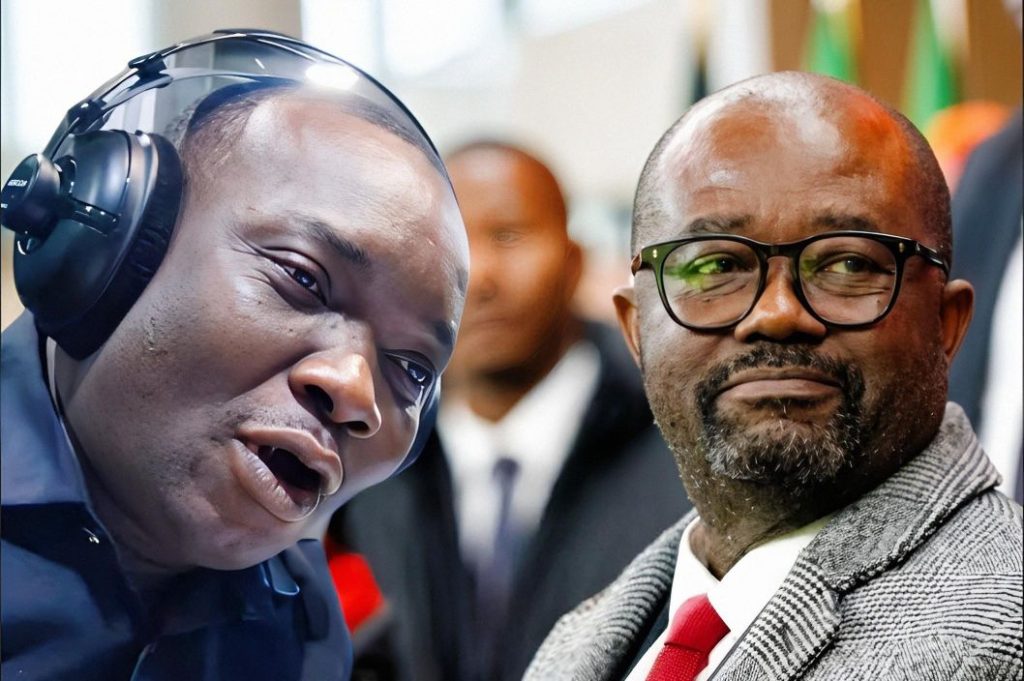
Despite Media journalist Nana Yaw Kesseh has launched a scathing attack on Ghana Football Association (GFA) President Kurt Edwin Simeon-Okraku, branding him the worst leader ever to head the country’s football governing body.
The outspoken broadcaster made the claim on Peace FM on Monday, November 9, 2026, while discussing the state of Ghana football and the way the GFA is being run.
Kesseh was blunt in voicing his displeasure with Okraku’s tenure, and his words are already stirring conversation among supporters, sports journalists and other stakeholders in the local game.
Looking Back at Past GFA Leaders
To drive his point home, Kesseh pointed to earlier football chiefs who, in his view, ran the game with real quality, at a time when the Black Stars and the domestic league both thrived. He named Nana Brew-Buttler, Ben Coffie and Kwasi Nyantakyi, among others, as formidable administrators who kept Ghana football entertaining.
Calling Okraku the worst in the association’s history is a heavy verdict, particularly given the high hopes that surrounded his arrival in office. The remark also feeds an ongoing debate about where Ghana football is headed, how the national teams are managed, and whether the leadership is producing the results fans expect. Because the GFA presidency carries enormous responsibility, and football is so tied to Ghana’s sporting identity and national pride, such a judgment carries extra weight.
Okraku took office on October 25, 2019, stepping into one of the most influential roles in Ghanaian sports administration. He succeeded Kwesi Nyantakyi, whose exit followed the 2018 Number 12 investigative exposé, which uncovered alleged corruption in Ghana football.
His administration was initially seen as the start of a new era. Ghanaians hoped for better governance, stronger domestic competitions, improved facilities and renewed confidence in the national teams. Over time, however, sections of the football fraternity, media practitioners and other public figures have raised concerns about how the sport is being managed and developed.
In October 2023, he won a fresh four-year mandate at the GFA elective congress in Tamale, collecting 117 of the 120 votes cast, or 97.5 per cent. The result gave him another chance to pursue his development agenda and tackle the challenges facing the game. Even so, his second term has continued to draw public scrutiny, especially regarding the performance of Ghana’s football structures and the expectations of supporters.
For many followers of the game, a GFA administration cannot be judged only by international appointments or the activities of its leaders. The quality of domestic competitions, the nurturing of young talent, the state of football facilities, effective administration and the results of the national teams all matter. These are the issues that keep surfacing whenever the future of Ghana football is discussed.
Kesseh is not the first prominent figure to question Okraku’s leadership in public. In September 2026, Old Tafo MP Vincent Ekow Assafuah also described him as the worst-performing GFA President in Ghanaian football history.
Ghana Football Is In Tatters Under Kurt Okraku— Coach Nimley
Assafuah took issue with aspects of the GFA’s leadership style and voiced concern over how people who question the association’s operations are treated. He also insisted that his criticism was aimed at Okraku’s leadership, not his personality.
The similarity between the two statements shows how heated the debate over the GFA presidency has become. It also shows that football administration now sits firmly in the national conversation, well beyond the usual talk of match results and player performances.
Several other pundits and football administrators have criticised Kurt’s style of administration.
Kesseh’s remarks are likely to provoke responses from the GFA President’s supporters, his critics and stakeholders who believe the game needs major improvements. Backers of Okraku may point to developments and achievements under his watch, while detractors argue that the association’s leadership must face constant scrutiny.
Ultimately, the discussion should move past personal exchanges and focus on measurable progress in Ghana football.
For now, Kesseh’s position is unmistakable. By calling Okraku the worst GFA President in the country’s history, the Despite Media journalist has joined a growing and increasingly visible debate about the leadership and future of Ghanaian football. Whether Okraku’s legacy ends up defined by his achievements or by the criticisms surrounding his administration is something the wider football community will have to decide.