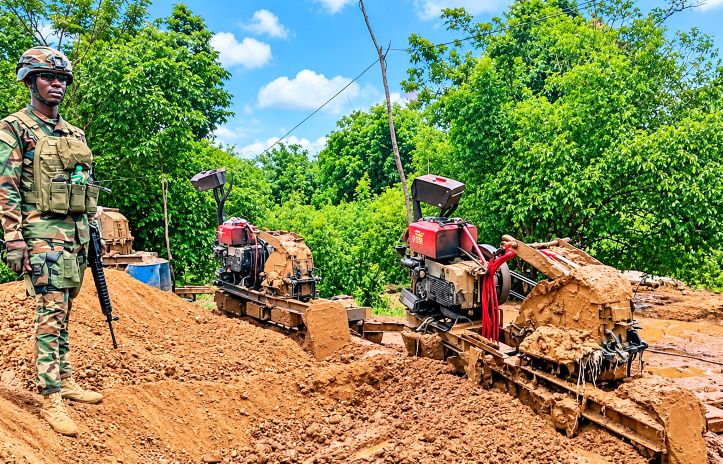
A confrontation over seized mining equipment in Ghana’s Ashanti Region has reportedly ended in tragedy, with two people dead after illegal miners and community members clashed with personnel of the National Anti-Illegal Mining Operations Secretariat (NAIMOS) at Manso Keniago.
How the standoff began
According to reports, the trouble started when NAIMOS operatives, backed by soldiers, set about hauling away excavators they had seized during an operation in the area. The machines, the heavy-duty tools of the galamsey trade, were being moved out of the community when a crowd of residents and people believed to be connected to illegal mining activities moved to stop the convoy.
Accounts indicate that the crowd blocked the path of the seized equipment, refusing to let it leave. Tension rose quickly. Some of the protesters reportedly hurled stones at the security personnel in a bid to force them to abandon the excavators or turn back.
What began as a tense roadblock then spiralled into violence. By the time the dust settled, two people were reportedly dead. At this stage, it is not yet clear exactly how the two lost their lives or at what point in the confrontation the fatalities occurred.
Ghana Seems To Have Lost The Fight Against Galamsey
The deaths have thrown a fresh and uncomfortable light on the struggle to bring illegal mining, widely known as galamsey, under control in Ghana. The practice has long been blamed for polluting rivers and streams, stripping forests and damaging farmlands, and it has become one of the most heated national issues in recent years.
NAIMOS has been a central player in the government’s response. The secretariat leads operations to shut down illegal mining sites, confiscate machinery used in the trade, and safeguard the country’s water bodies, forest reserves and other natural resources.
Yet the Manso Keniago episode underlines a troubling reality: enforcement in galamsey-affected areas is increasingly volatile. Seizing equipment that represents a livelihood, or a lucrative business, for some in these communities can provoke fierce resistance, and the relationship between security personnel and local residents appears to be growing more strained. The incident raises serious questions about the safety of operatives and civilians alike when anti-galamsey operations move into communities where mining is deeply entrenched.
Much about the incident is still unclear. The circumstances surrounding the two deaths have not been fully established, the identities of the deceased have not been made public, and there is no confirmation yet on whether any arrests have been made. Further updates are expected as more information emerges from the Ashanti Region.