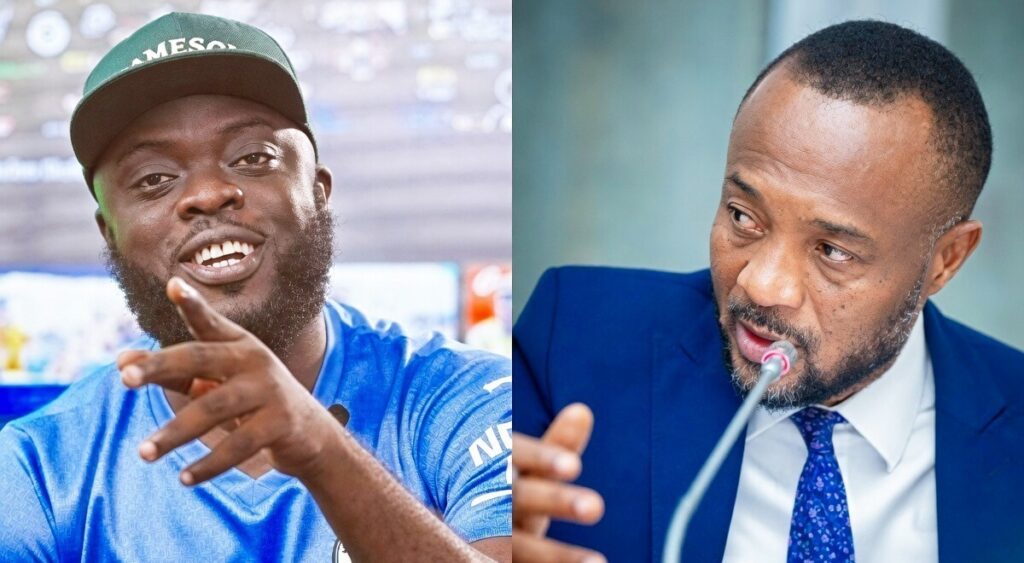
The Member of Parliament for Weija-Gbawe, Jerry Ahmed Shaib, has issued a pointed warning to popular Ghanaian YouTuber Kojo Sheldon, urging the digital creator to exercise greater caution in his public commentary as political temperatures in the country continue to rise.
Speaking during a media interaction monitored by local outlets, the lawmaker suggested that outspoken content creators risk making themselves targets in Ghana’s increasingly charged political environment if they fail to temper their approach.
“Kojo Sheldon should be careful…,” Shaib said, indicating that the prevailing political climate demands a measure of restraint — particularly from influencers whose platforms command vast audiences and carry significant weight in shaping public sentiment.
Though the MP stopped short of identifying the precise content that prompted his remarks, observers widely believe the statement was sparked by recent commentary from Sheldon that ignited considerable debate across digital platforms.
Shaib’s comments appear to hint at deeper concerns: that outspoken critics — especially those perceived to align with or clash against entrenched political interests — could find themselves exposed to political backlash or deliberate targeting.
Who Is Kojo Sheldon?
Kojo Sheldon has emerged as one of Ghana’s most recognisable YouTube personalities, building a devoted following largely among the country’s youth. His content is a blend of sharp satirical commentary, reaction videos, and incisive breakdowns of trending national issues — delivered with a brand of humour that renders complex political and social matters accessible to a younger generation.
“No More Boundaries” – Omanhene Kwabena Asante Slams Toxic Ghana Politics
That same style has earned him both admiration and criticism in equal measure. Supporters praise him for speaking truth to power and filling a gap that traditional media has often left open. Detractors, however, argue that his approach can veer into the sensational, amplifying tensions rather than tempering them.
His rise reflects a generational shift in how Ghanaians consume news and political commentary — one in which YouTube channels and social media feeds increasingly rival, and in many cases outpace, conventional broadcast and print outlets in reach and influence.
The MP’s warning has reignited a debate that cuts to the heart of Ghana’s democratic fabric: where does responsible commentary end and censorship begin?
While some commentators agree that digital influencers must be mindful of the outsized impact their platforms carry — and avoid content that inflames rather than informs — others are pushing back firmly.
Voices like Sheldon’s, they argue, are indispensable in a functioning democracy, serving as a check on power and a vehicle for public accountability and transparency in governance.
The episode underscores the rapidly evolving intersection between politics and digital media in Ghana. As content creators occupy an ever more prominent role in shaping national narratives, questions about freedom of expression, editorial responsibility, and the limits of political influence over digital spaces are likely to grow louder — not quieter.