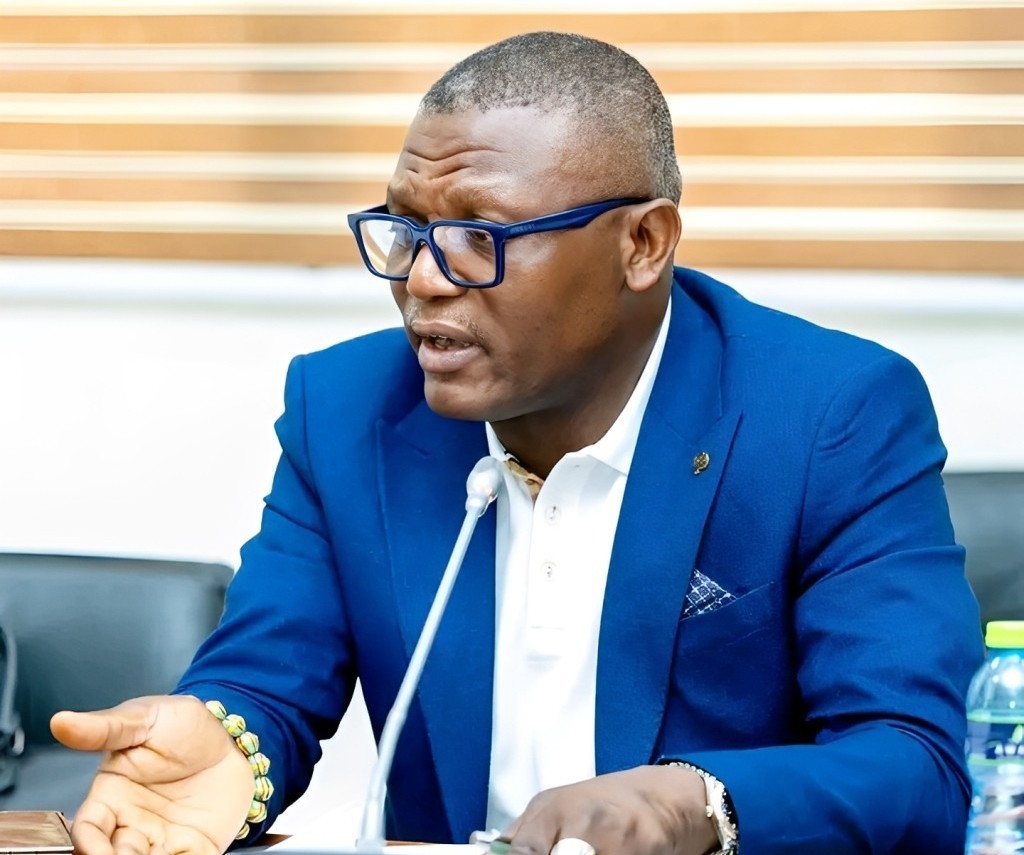
Ghana’s Sports Minister Kofi Adams has drawn a clear line in the sand: Carlos Queiroz must select his World Cup squad based purely on merit — and that means freedom from political interference, including from the minister himself.
Speaking during a studio interview with sports broadcaster Patrick Osei Agyemang on Asempa FM on Friday, Sports Minister Kofi Adams delivered a message that Ghana’s football public has long wanted to hear from someone in his position — that the Black Stars’ coaching staff must be free to do their jobs without interference from the corridors of power.
Adams was unambiguous. Carlos Queiroz, the vastly experienced coach brought in to lead Ghana’s charge at the 2026 FIFA World Cup, must make his selection decisions independently — guided by merit, performance and his own professional judgement, and insulated from the influence of politicians, football administrators, and any external pressure group.
Crucially, Adams included himself in that list. For a sitting Sports Minister to explicitly state that even he should have no bearing on which players wear the Black Stars jersey is a notable declaration — one that acknowledges a tension that has quietly undermined Ghanaian football for years.
The perception that squad selection can be shaped by connections, lobbying or political relationships has long frustrated fans and analysts alike. Adams appeared determined to signal, at least publicly, that this era should be different.
At the heart of the minister’s argument is a simple logic: Ghana appointed Carlos Queiroz precisely because of what he brings to the table. With nearly three decades of football experience spanning some of the world’s most demanding coaching environments — including stints with Real Madrid, the Portugal national team, and Iran — Queiroz carries a depth of knowledge and a professional pedigree that few coaches available to African football associations can match.
Adams stressed that it would be counterproductive — and frankly disrespectful to the appointment itself — for anyone to then attempt to second-guess or manipulate the decisions of a man hired for exactly that expertise. The country entrusted Queiroz with the Black Stars not to rubber-stamp choices made elsewhere, but to apply his understanding of the modern game to Ghana’s unique player pool and competitive challenges.
Equal Opportunity for Every Deserving Player
The minister also broadened his message beyond just the question of external interference. He made a point of emphasising that every Ghanaian player who has the quality to represent the national team should have a genuine and equal opportunity to earn selection — not through connections or favouritism, but through hard work, consistency and performance.
It is a principle that sounds straightforward but has not always been the lived reality of Black Stars selection. The dual-eligibility debate, the question of home-based versus foreign-based players, and the perennial discussions about which players are truly being given a fair chance have all been recurring sources of tension in Ghanaian football discourse.
Carlos Queiroz’s World Cup Record: Can He Do Better With Ghana’s Black Stars In The 2026 Edition?
Adams’ remarks, delivered at a moment of renewed national focus on the Black Stars ahead of the World Cup, appear designed to set expectations — for the coaching staff, for football administrators, and for the public — about the standard of professionalism the current dispensation intends to uphold.
The context for Adams’ comments is important. Public discussion around player invitations, squad composition and the overall direction of the national team has been intensifying as Ghana’s World Cup preparations gather momentum. The appointment of Queiroz himself generated significant debate, as did questions about which players from the diaspora and the local league deserve consideration.
With the 2026 FIFA World Cup — co-hosted by the United States, Canada and Mexico — approaching, the stakes for Ghanaian football are high. The Black Stars have not progressed beyond the group stage since their iconic 2010 run on home soil, and the pressure to deliver a meaningful tournament performance weighs heavily on everyone connected to the team.
If Ghana is to have a genuine chance at the World Cup, Adams’ prescription — professional selection, merit-based decisions, zero political interference — is not merely aspirational. It is foundational.
Whether the principle holds when the pressure of actual squad announcements arrives will be the real test of the standard the minister has set.