Some records don’t age. They settle into the culture like landmarks — fixed points against which everything that follows is measured. “Ayekoo” is one of those records.
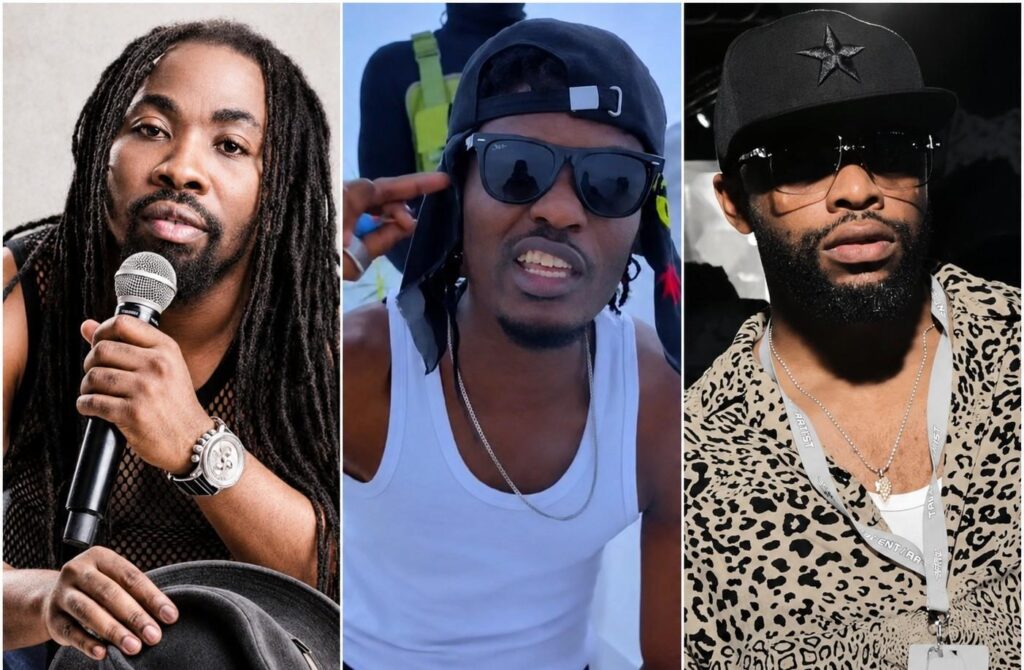
The collaboration brought together three of Ghana’s most formidable rap voices — Obrafour, Okra Tom Dawidi, and Tinny — on a production crafted by Hammer of The Last Two, and the result was something that transcended the moment it was made.
Decades on, “Ayekoo” remains one of the most referenced, respected, and beloved hip-hop records to come out of Ghana — a song that still commands conversation whenever the golden era of Ghanaian rap is invoked.
Much of the record’s power begins with Hammer. His production carried a signature that was impossible to mistake — raw and soulful, built from rhythms that felt unmistakably Ghanaian, yet arranged with an instinct for hard rap that gave his beats universal weight. “Ayekoo” showcased that balance at its finest, providing a sonic foundation sturdy enough to hold three very different artists without any of them feeling crowded out.
And those three artists could not have been more distinct. Obrafour arrived with the gravitas and poetic depth that had already made him a revered figure in the culture — his verses carrying the weight of someone who understood rap as a form of oral history.
Okra Tom Dawidi brought energy and a playful lyricism that cut through with its own kind of precision. Tinny, meanwhile, wove his Ga-inflected flow through the track with the sharpness that had established him as one of the most stylistically unique voices in the game. Together, the three did not simply share a track — they built something whose chemistry felt organic and inevitable, each voice complementing rather than competing with the others.
Kuami Eugene Mastered Old Highlife To Break Into Ghana Music, But Now Shifting—Mark Okraku-Mantey
What elevated “Ayekoo” beyond a strong collab into genuine classic territory was its spirit. The song was a celebration — of artistry, of creative kinship, of a moment in Ghanaian music when lyrical depth and cultural authenticity were the primary currencies. It arrived before commercial pressures began to reshape the industry’s priorities, and in that sense it captured something pure: a snapshot of what Ghanaian hip-hop looked like when it was most fully itself.
Beyond its sound, “Ayekoo” stood out because of its message of respect and acknowledgment. The title itself, which translates to praise or appreciation, reflects the song’s spirit—celebrating skill, effort, and artistic excellence. This made the track relatable not just to rap fans, but to a wider audience who appreciated its cultural depth.
That purity is precisely why the record endures. In an era where the benchmark for excellence in local rap is still being debated, “Ayekoo” stands as settled argument — proof of what Ghanaian hip-hop was capable of when the right producers, the right artists, and the right moment converged.