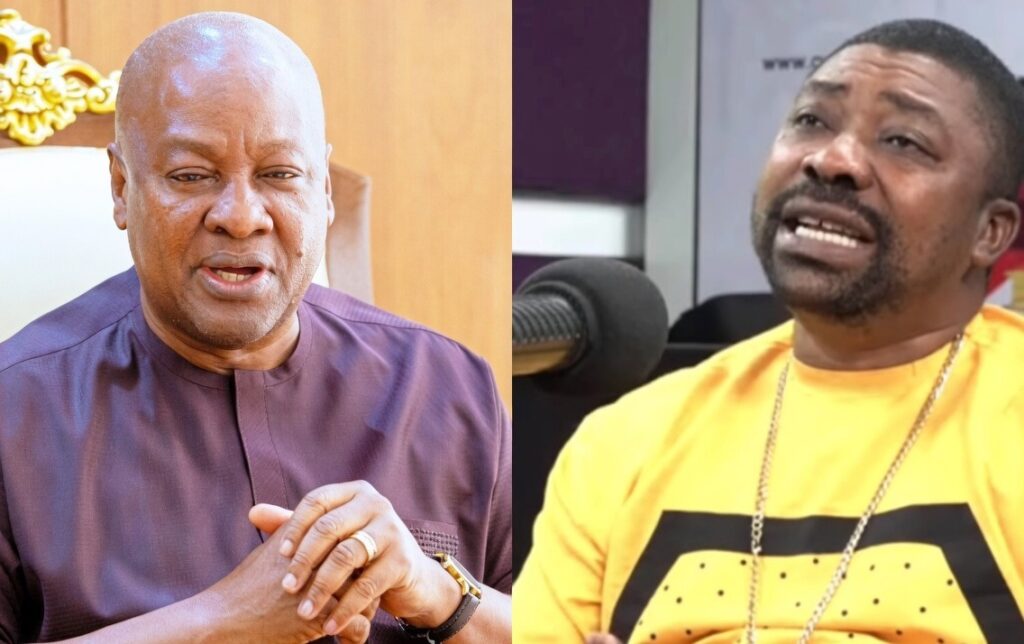
A self-styled prophet has ignited a fresh wave of political controversy after claiming that the spirit of the late President John Evans Atta Mills appeared to him with a direct instruction for President John Dramani Mahama— seek a third term in office when the current mandate expires.
Akwasi Danso made the claims during a live appearance on Angel FM Monday, May 25, in a conversation with media personality Ohemaa Woyeje, sending shockwaves through Ghanaian social media and political circles almost immediately.
The Prophecy:
According to Danso, the visitation was not merely a private spiritual experience but carried weighty national consequences. He alleged that Atta Mills specifically tasked him to deliver the third-term message to the sitting president, warning that Ghana’s economic progress could grind to a halt for an extended period if the instruction was disregarded.
The prophet went further, disclosing what he described as a “water ritual” that members of the ruling National Democratic Congress would need to perform for the prophecy to materialise — a claim that added another layer of controversy to an already incendiary interview.
Danso’s prophecy, however, runs headlong into one of the most firmly settled provisions of Ghana’s governance architecture. The 1992 Constitution is unambiguous: a Ghanaian president is limited to two terms in office, full stop. President Mahama, who returned to the presidency following the December 2024 general election, is already serving what would constitutionally be his second and final term.
Drop Underperforming Ministers Now– Omanhene Advises President Mahama
The prophecy has consequently drawn sharp reactions from legal and political commentators, many of whom have dismissed the third-term suggestion as not only spiritually dubious but constitutionally impossible without a fundamental rewriting of the nation’s foundational law — a process that would require a referendum and the broadest possible national consensus.
Online reaction has been swift and largely sceptical, with Ghanaians questioning both the ethics of invoking a deceased former president in active political prophecy and the broader culture of self-proclaimed prophets inserting themselves into the country’s political conversation.
For many observers, the controversy is less about the spiritual claims themselves and more about what they reflect — the enduring intersection of religion, prophecy culture, and partisan politics in Ghana’s public life, a dynamic that shows little sign of fading regardless of the constitutional realities involved.