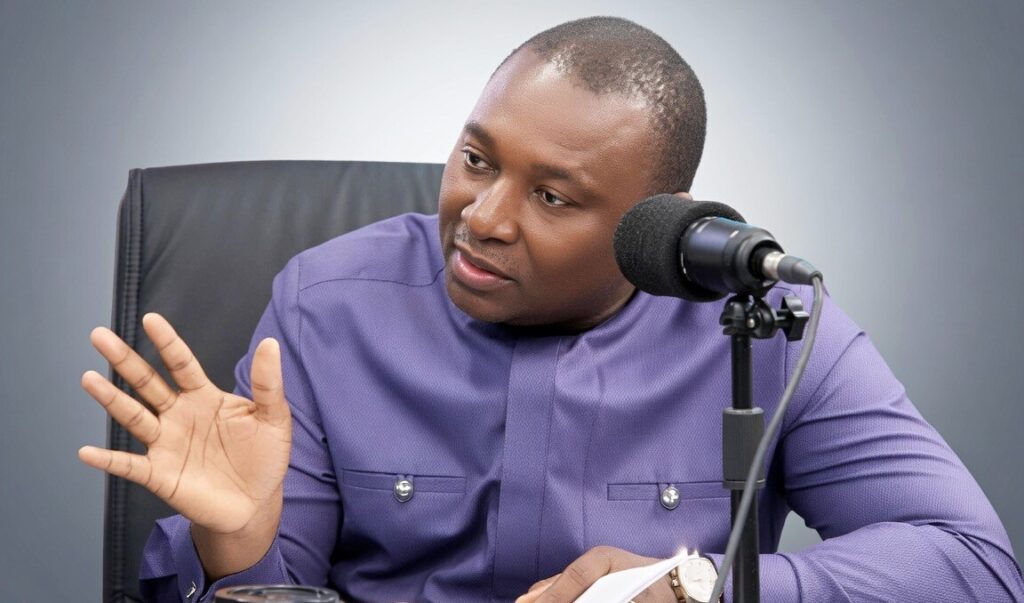
Political commentator Solomon Owusu has issued one of the most direct challenges to Ghana’s football establishment in recent memory, declaring his intention to spearhead a nationwide campaign for the wholesale dissolution of the Ghana Football Association’s leadership and administrative structure once the 2026 FIFA World Cup concludes.
Speaking on Angel FM on Monday, June 8, Owusu made clear that his frustration runs far deeper than the Black Stars’ results on the pitch — and that he believes the rot begins at the top of the country’s football governance.
Owusu’s central argument is one that a growing number of Ghanaian football observers have come to share: that years of persistent underperformance cannot be explained away by the quality of coaches or the abilities of players alone. Ghana has changed both repeatedly, he argued, yet the results have remained stubbornly disappointing. The logical conclusion, in his view, is that the problem is structural — embedded within the administrative machinery of the GFA itself.
It is a damning diagnosis. If the governing body overseeing Ghanaian football is the primary obstacle to progress, then no amount of tactical reshuffling or squad rebuilding will produce the transformation the nation desperately wants to see.
Owusu has been deliberate about his timing. Rather than calling for immediate disruption during an active World Cup campaign, he has set his sights on the aftermath of the tournament — framing it as the moment of accountability that Ghana football can no longer defer.
His plan is to mobilise football stakeholders, fans, and like-minded advocates to mount coordinated pressure for a complete overhaul of the GFA’s leadership. Officials who have presided over years of stagnation and successive Black Stars disappointments, he argues, must be held directly accountable — and must go.
Kofi Adams Warns Against Fake World Cup Travel Deals
In their place, Owusu envisions a new generation of football administrators equipped with fresh ideas, modern management philosophies, and the ambition to genuinely transform both the national team’s fortunes and the health of the domestic game.
Owusu’s remarks do not exist in a vacuum. His intervention taps into a frustration that has been simmering among Ghanaian football supporters for years — a sense that the Black Stars, for all their individual talent, have consistently failed to fulfil their potential on the continental and global stage, and that those at the administrative helm have escaped the scrutiny routinely directed at coaches and players.
Not everyone agrees with his proposed solution. There are those within the football community who caution that wholesale administrative upheaval carries its own risks — that genuine football development demands institutional continuity, long-term planning, and stability rather than repeated cycles of revolution and rebuilding.
What gives this debate its urgency is the broader context. The 2026 FIFA World Cup represents a significant opportunity for the Black Stars — and for Ghana to reassert itself as a serious footballing nation on the world stage. How the team performs under Carlos Queiroz will inevitably shape the conversation about what comes next.
If the tournament ends in disappointment, voices like Owusu’s will grow louder and harder to dismiss. If Ghana impresses, the case for radical administrative change becomes more complicated. Either way, the GFA’s leadership faces a moment of reckoning — and Solomon Owusu has made it clear he intends to be at the forefront of demanding it.