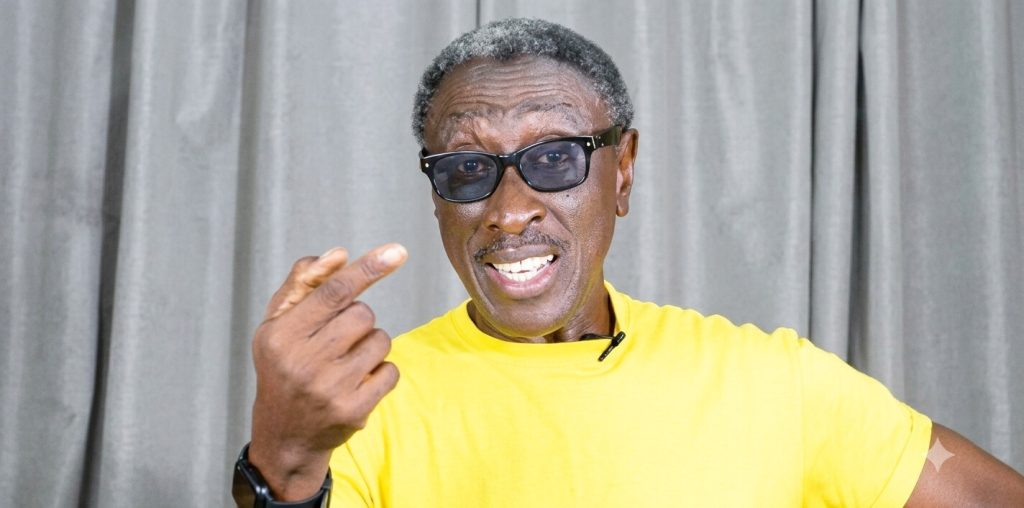
Satirist and media personality Kwaku Sintim-Misa, popularly known as KSM, has once again turned his sharp wit into a pointed rebuke — this time targeting Ghana’s self-styled prophets in the wake of the country’s recent devastating floods.
KSM accused a section of the prophetic community of reducing God’s name to a punchline through what he called selective, self-serving revelations.
“It is unfortunate that idiotic prophets in Ghana have turned God into a clown,” he said. “They claim God reveals the scorelines of World Cup matches to them, but somehow none of them saw the deadly floods coming.”
KSM’s frustration taps into a broader pattern that has played out publicly throughout Ghana’s 2026 World Cup campaign. Several prophets made bold, specific predictions about the Black Stars’ fortunes in the tournament — from scorelines to own goals to the fate of rival nations — many of which have since unraveled in embarrassing fashion.
Yet, as floodwaters swept through Ghanaian communities, displacing families and destroying livelihoods, no comparable warning came from the same prophetic circles.
That contrast is at the heart of KSM’s criticism. According to him, if these prophets genuinely receive divine revelations, their gift should be directed toward matters that protect lives — not entertainment-adjacent predictions about football results.
The implicit question resonating with many Ghanaians: why does divine insight so often arrive in time for a match, but never in time to save a community?
The floods that prompted KSM’s remarks were triggered by heavy seasonal rains that overwhelmed drainage systems in several parts of the country, leaving communities submerged and families displaced.
Homes, businesses, and public infrastructure sustained significant damage, reviving long-standing calls for improved urban drainage and stronger disaster preparedness systems — concerns that resurface almost every rainy season but rarely translate into lasting infrastructural change.
MC Yaa Yeboah Calls Out Public Prophecies In Ghana
KSM’s comments have reignited a debate that flares up periodically in Ghana: the credibility and social responsibility of self-declared prophets. Many social media users have echoed his frustration, arguing that prophetic ministry has increasingly drifted toward spectacle — headline-grabbing predictions about sports, celebrities, and politics — while remaining conspicuously silent on matters of genuine national urgency.
Others have pushed back, defending the broader prophetic tradition and cautioning against painting all religious leaders with the same brush. They argue that the excesses of a few sensationalist figures shouldn’t be used to discredit the sincere work of genuine men and women of faith.
As the conversation continues to spread online, KSM’s remarks have become something of a lightning rod — forcing a wider reckoning with how prophecy is practiced, marketed, and consumed in contemporary Ghanaian public life. With the popularity of sports and political prophecies showing no signs of slowing, the tension between spiritual authority and public accountability that KSM has spotlighted seems likely to resurface again the next time tragedy strikes without warning.