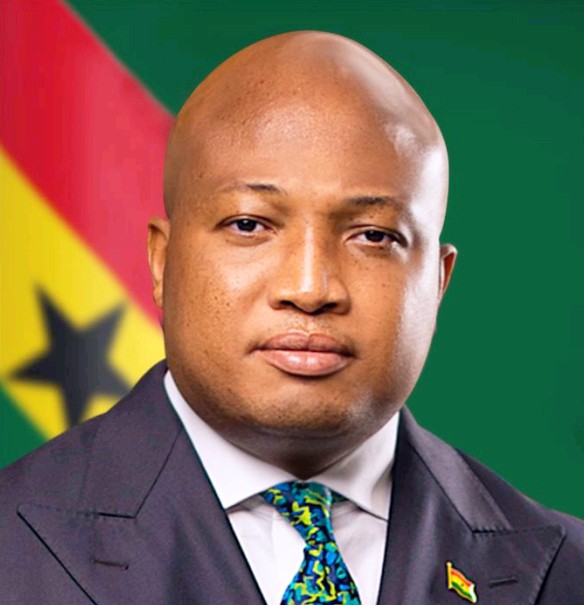
Ghana is facing a deeply troubling human cost from the Russia-Ukraine war, with 62 Ghanaian citizens confirmed dead and another 15 reported missing after travelling to Russia and becoming involved in the conflict.
The disclosure by Foreign Affairs Minister Samuel Okudzeto Ablakwa has renewed concerns over the recruitment of Ghanaian youth into Russia’s military, particularly allegations that some citizens were lured to the country with promises of employment before finding themselves involved in military operations.
The revelation came after Ablakwa held bilateral discussions with Russian Foreign Minister Sergey Lavrov in Moscow, where Ghana pressed for an end to what it describes as the illegal recruitment of its citizens.
Ghana says Russia has pledged to work with the country to prevent further recruitment. However, Moscow’s position on the matter appears considerably different, raising questions about how effectively the two countries’ commitments can be implemented.
According to the Foreign Affairs Minister Samuel Okudzeto Ablakwa, the number of Ghanaian deaths connected to the conflict has risen to 62, while 15 citizens who travelled to Russia remain missing.
The latest figure represents a significant increase from the 55 deaths previously reported by Ghana earlier in 2026.
The growing casualty figures have transformed what was initially viewed largely as a foreign employment and migration concern into a serious national security and diplomatic issue. For the families involved, the numbers represent much more than statistics. Behind every reported death or disappearance is a Ghanaian family potentially dealing with grief, uncertainty, financial hardship and unanswered questions about how their loved one ended up on a battlefield thousands of kilometres from home.
How Ghanaians are allegedly being recruited
Ghanaian authorities have expressed particular concern about recruitment schemes targeting young people. The government says some Ghanaians are allegedly attracted to Russia by promises of employment and other opportunities, only to subsequently find themselves enlisted or drawn into military activities connected to the war.
This has prompted calls for greater scrutiny of overseas employment offers, recruitment agencies and intermediaries operating between Ghana and Russia.
The concern is especially serious in an environment where unemployment and the search for better economic opportunities can make young people vulnerable to seemingly attractive overseas job offers.
Ghana’s government has therefore described the issue not simply as a foreign-policy matter, but as a question involving the protection of Ghanaian youth from exploitation and dangerous recruitment networks.
Ghana secures Russian commitment
Following his meeting with Lavrov, Ablakwa said Ghana had secured a commitment from Russia to cooperate with Accra to stop the recruitment of Ghanaian youth into the conflict.
The minister described the issue as a major concern for Ghana and stressed that the country should not continue losing its citizens in a war that is not its own.
Ghana’s position is straightforward: its young people should not be deceived, exploited or recruited into a foreign conflict under the guise of legitimate employment.
The government has indicated that it will continue diplomatic and advocacy efforts aimed at disrupting recruitment networks and protecting Ghanaian citizens.
Moscow’s Position Tells Another Story:
Despite Ghana’s announcement, Russia has not publicly adopted Accra’s characterization of all such recruitment as illegal. Russian Foreign Minister Sergey Lavrov has maintained that foreign nationals serving in the Russian military entered into military contracts voluntarily and that the contracts are governed by Russian law.
Russian authorities have argued that the terms of military service are overseen by the country’s Ministry of Defence and that foreigners who sign such contracts do so legally. Lavrov also cited different motivations among foreign recruits, including financial reasons and what he described as solidarity with Russia. This creates a crucial difference between the positions of Accra and Moscow.
Ghana is focused on alleged deception and illegal recruitment, while Russia emphasizes the legality of military contracts signed by foreign nationals. That distinction could become important in determining how the two countries verify individual cases and prevent future recruitment.
Ukrainian officials have previously reported that more than 272 Ghanaians have been drawn into the conflict since Russia’s full-scale invasion of Ukraine in 2022. The figure places Ghana among the African countries whose citizens have become involved in Russia’s military campaign.
Ukraine has also alleged that Russia has recruited Africans through various methods, including promises of civilian employment, education, citizenship and high salaries.
Ukrainian officials have reported thousands of African nationals being recruited into Russia’s armed forces from dozens of countries. These claims remain contested, but they underline the scale of the broader African dimension of the conflict.
This developments should serve as a major warning to Ghanaians seeking employment abroad. International job opportunities can be legitimate and life-changing, but desperate job seekers can also become targets for fraudulent recruiters who conceal the true nature of contracts.
Anyone offered employment in a foreign country—particularly in a conflict-affected country—needs to establish exactly what the job involves, who the employer is, what the contract says and whether the recruitment process has been verified by the relevant Ghanaian authorities.
Why Many Ghanaians Still Refuse Insurance Policies – The Untold Truth
The growing death toll also raises broader questions about Ghana’s system for protecting citizens who travel overseas for employment. Diplomatic missions, recruitment agencies, government institutions and law-enforcement authorities may need to work more closely to identify suspicious recruitment patterns before citizens leave Ghana.
Public Education Is Equally Important:
Many young Ghanaians may not understand the legal implications of signing foreign military contracts or the possibility that a seemingly civilian job could ultimately place them in a military environment. Government warnings must therefore reach ordinary people—not only through official statements, but also through social media, radio, television, recruitment agencies, schools and community networks.
Perhaps the most painful part of the situation is the fate of the 15 Ghanaians still missing. For their families, the absence of confirmed information can be more devastating than a clear answer. The government must therefore make the identification, tracing and possible repatriation of missing citizens a priority in its engagement with Moscow.
Where deaths have been confirmed, families should also receive timely information and appropriate assistance with documentation, repatriation and other necessary processes. Beyond diplomacy, accountability is needed
Diplomatic assurances are important, but Ghana will ultimately need evidence that recruitment networks are actually being dismantled.
Ghana Welcomes The Largest Hospital Ship In The World
If Ghanaian citizens are being recruited through intermediaries operating in Ghana, those networks should be identified and investigated.If fraudulent employment advertisements are being used to lure citizens abroad, the authorities should trace the people behind them.
And if citizens knowingly sign military contracts, they should be provided with clear information before departure about the risks and legal consequences. The central issue should be preventing vulnerable Ghanaian citizens from making potentially irreversible decisions without understanding what they are signing up for.
The figure of 62 deaths and 15 missing citizens should not be allowed to become another statistic in the long-running Russia-Ukraine conflict. These are Ghanaian sons, daughters, brothers, sisters, fathers and mothers whose lives have been profoundly affected by a war taking place far beyond Ghana’s borders.
As Ablakwa has emphasized, the Russia-Ukraine war is not Ghana’s war. The country should therefore do everything within its diplomatic and legal capacity to ensure that the search for employment does not become a pathway to the battlefield—and that no more Ghanaian families have to receive news that another loved one has been lost in a foreign war.