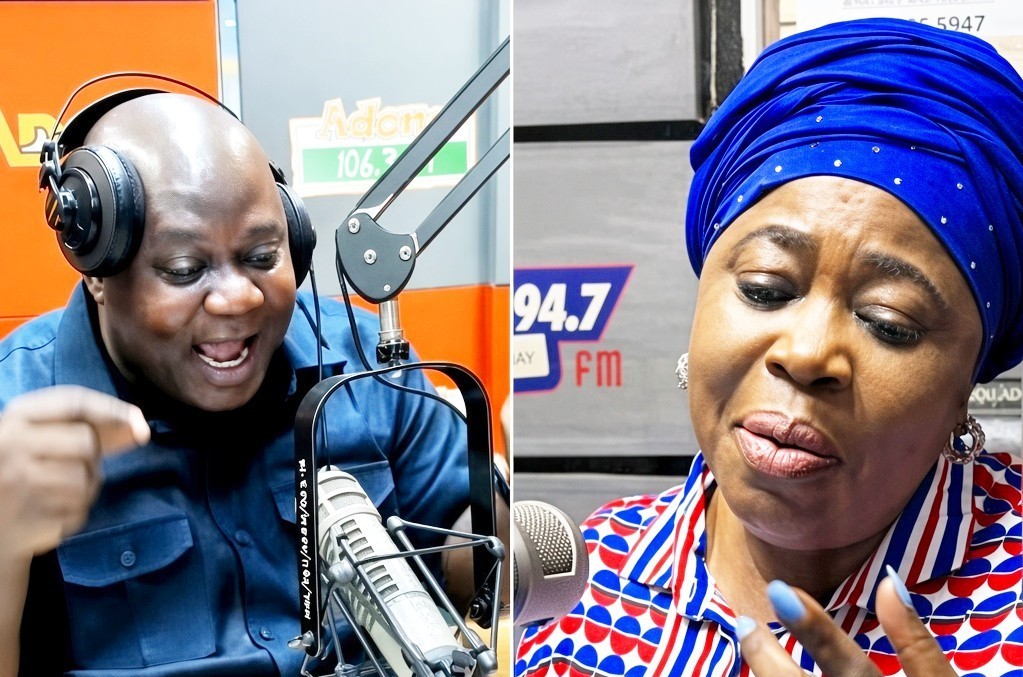
Broadcast journalist Omanhene Kwabena Asante has delivered a stinging verdict on the tenure of Kate Gyamfua, the New Patriotic Party’s National Women’s Organiser, calling her the worst person ever to hold the position in the party’s history.
Speaking on the regular “Ekosii Sen” programme on Monday, September 14, 2026, Asante built his case on two main pillars: Gyamfua’s entanglement in illegal small-scale mining, popularly known as galamsey, and what he characterised as consistently weak public speeches. In his telling, her mining connections proved especially damaging at a moment when Ghana was reeling from the environmental toll of galamsey, turning her into a recurring liability for the party’s public image.
This is not a new terrain for Gyamfua. The mining question first exploded into national headlines in May 2021, when soldiers attached to the military’s anti-galamsey task force, “Operation Halt,” raided sites in Larbikrom, Dompem and Pamen in the Eastern Region’s Atiwa District and torched equipment belonging to Xtra-Gold Mining Limited — a company where Gyamfua served as Ghana General Manager.
Reports from the time put the toll at roughly sixteen excavators and a bulldozer burned, with the task force returning days later to destroy additional machinery the initial raid had missed.
Xtra-Gold, which described itself as a licensed operator running five legitimate concessions, expressed outrage at the destruction, insisting it had properly notified the Lands Ministry of its operations beforehand and had been paying royalties, taxes and fees all along. The company vowed to pursue legal redress, while Gyamfua’s spokesperson maintained the firm had done nothing unlawful.
Because the woman at the centre of the storm sat near the top of the governing party’s own executive structure — at the very moment the government was publicly waging war on illegal mining — the episode generated an outsized political echo that has never fully faded.
For Asante, the lasting damage lies less in the legal merits of the case than in the optics. His underlying argument is that anyone occupying a senior leadership post in a political party carries an added burden: personal business entanglements and controversies inevitably bleed into the reputation of the organisation they represent.
NPP Has A Strong Chance Of Winning Back Ghanaians In 2028 – Sheila Bartels
A National Women’s Organiser role is not a peripheral one — it sits at the heart of the NPP’s national executive, tasked with mobilising women across the country, reinforcing grassroots structures and shaping how the party courts female voters. Criticism of the person holding that seat, almost by design, becomes a referendum on the party’s broader leadership culture.
Illegal mining has remained one of the most politically charged issues in Ghana, with its toll on rivers, forests and farmland fuelling sustained public anger. Gyamfua herself has waded directly into that debate before. In 2024, she questioned the timing of intensified anti-galamsey protests in the run-up to that year’s elections, suggesting the surge in activism carried political motives.
Academic analysis of the 2024 campaign later identified her as a small-scale gold miner in her own right and flagged her position — that the galamsey conversation was being pressed too close to polling day — as a contentious one.
Taken together, these threads have kept alive a wider national conversation about how politics, mining interests and Ghana’s environmental crisis intersect — a conversation Gyamfua has found herself repeatedly, and often uncomfortably, at the centre of.
For Omanhene Kwabena Asante, the verdict needs no further deliberation. Between the mining controversies, the public-speaking missteps and what he sees as the cumulative reputational cost to the NPP, he places Kate Gyamfua at the very bottom of the list of women who have ever held the party’s National Women’s Organiser role.