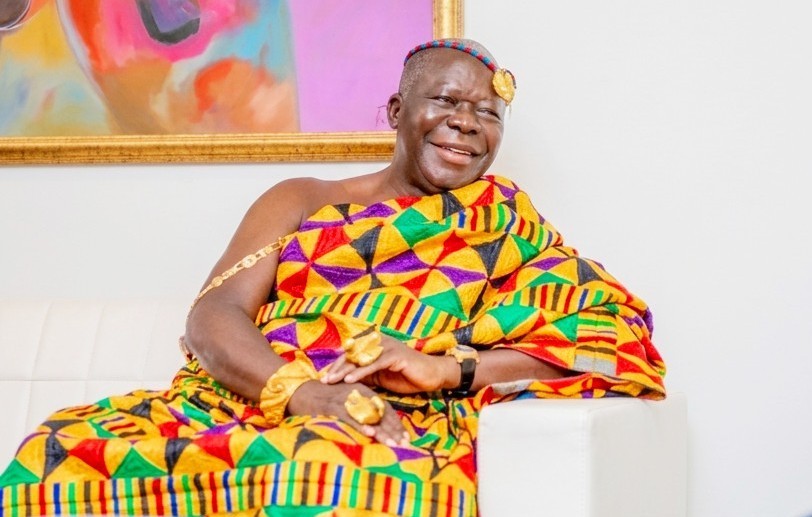
Long before Ghana had a constitution, it had a stool. Not a chair — a covenant. And nowhere is that covenant more visible than in Kumasi, where centuries of war, colonization, and political upheaval have failed to loosen the grip of Asante tradition on the life of its people.
At the center of it all sits the Asantehene, the Asante king, whose office is wrapped in customs that can look, to the uninitiated, like theatre. They are not. Each gesture, each garment, each silence carries centuries of meaning about power, memory, and the bond between the living and those who came before them.
A Stool That Fell From the Sky
No object explains Asante kingship better than the Golden Stool — Sika Dwa Kofi. According to Asante oral tradition, it descended from the heavens in the late 17th century during the founding of the Asante state under Osei Tutu I, summoned through the priest Okomfo Anokye. From that moment, the stool was understood not as furniture but as the living vessel of the Asante nation’s soul.
This is why the stool is never sat upon — not even by the king. Its sanctity became painfully clear in 1900, when the British colonial governor, Frederick Hodgson, demanded the right to sit on it. To the Asante, this was not diplomatic overreach; it was an assault on the nation’s soul itself. The demand helped ignite the war led by Yaa Asantewaa, Queen Mother of Ejisu, one of the most defiant uprisings against colonial rule in West African history.
When a King Dies, “A Stool Has Fallen”
Among the Akan, kingship and stools are so intertwined that a ruler’s death is spoken of in stool language: a stool has fallen. Installing a new chief is not a coronation in the European sense — it is an enstoolment, a ritual binding the new ruler to the ancestors and authority of those before him, often marked by ceremonial state swords known as afena, symbols of loyalty and command passed down through generations.
Feet That May Never Touch the Ground
One of the more startling customs concerns the king’s feet. Tradition holds that once enthroned, an Asante ruler’s bare feet must never touch bare earth — doing so, it was believed, could bring misfortune upon the land itself, even famine. This is the quiet logic behind the ornate sandals of Asante royalty, some adorned with gold lions symbolizing strength and judicial authority. They are not fashion. They are protection — for the king, and for the nation he embodies.
What Does The Unique Leaf In Asantehene’s Mouth Mean?
Gold as Language, Not Just Luxury
The staggering quantities of gold worn during Asante royal ceremonies are often misread as displays of wealth. In truth, gold carries spiritual weight in Akan cosmology — tied to the sun and to kra, the life force. Every gold ornament, staff, sword, or crown worn by the Asantehene speaks a language older than the objects themselves: vitality, protection, legitimacy.
The Voice Beside the Throne
The Okyeame — the king’s official linguist — is far more than a translator. A skilled Okyeame weaves proverbs and historical allusion into the king’s words, elevating royal speech into something closer to art. Even his ceremonial staff, the okyeame poma, carries carved imagery — stools, swords, animals — each a coded message about kingship and wisdom.
Asantehene Installs New Asantehemaa Nana Ama Bonsu
The Soul Washers
Perhaps the least understood figures in the royal court are the akrafo, or “soul washers” — attendants historically chosen, in some accounts, for sharing the king’s birth day of the week. Their duty was spiritual: to purify and renew the king’s vital force, and by extension, the nation’s. They wore special gold discs, akrafokonmu, marking their sacred function — a reminder that in Asante thought, political power and spiritual power were never separate.
Stools That Outlive Kings
Death does not end a chief’s relationship with his stool. Historically, significant stools were blackened with soot and ritually honored, becoming sacred objects through which the community maintained contact with a departed ruler’s spirit — proof that in Asante belief, leadership does not vanish; it transforms.
Akwasidae and the Theatre of Continuity
Akwasidae, one of the most significant traditional observances in the Asante calendar, brings the whole apparatus of royal life into public view — regalia, drumming, dancing, and ceremony. It is not entertainment. It is the nation reasserting, generation after generation, that its history is alive.
Nothing Is Accidental
State swords speak of allegiance. Umbrellas denote status. Linguist staffs encode proverbs. Even where a person stands in relation to the king communicates rank. Asante royal regalia, taken together, functions as a visual grammar — a language spoken without words.
A King Owns Almost Nothing He Wears
Crucially, most royal regalia belongs not to the man but to the office. Known as agyapadie — stool property — these swords, crowns, and ornaments pass from ruler to ruler as inherited institutional wealth. A new Asantehene does not simply inherit a title; he inherits an entire material and spiritual archive.
Surviving the Storm
The institution’s resilience is remarkable given its history. Asantehene Prempeh I was exiled to the Seychelles in 1896 after Asante’s defeat by British forces, not returning to Kumasi until 1924. His successor, Prempeh II, was finally recognized with the full title of Asantehene in 1935, after years of colonial restriction. Ghana’s independence in 1957 did not erase this parallel structure of authority — it absorbed it, allowing traditional and republican governance to coexist to this day.
A System, Not a Spectacle
Strip away the unfamiliarity, and a clear logic emerges:
- The stool represents sovereignty
- Gold represents life and royal authority
- The sword represents allegiance
- The linguist represents wisdom and speech
- Regalia signals rank
- Ritual binds the living to the ancestors
What survives in Kumasi today is not simply pageantry. It is a centuries-old argument — made in gold, cloth, and ceremony — that a nation’s soul can be carried in an object, protected across wars and empires, and handed down intact to the next generation.