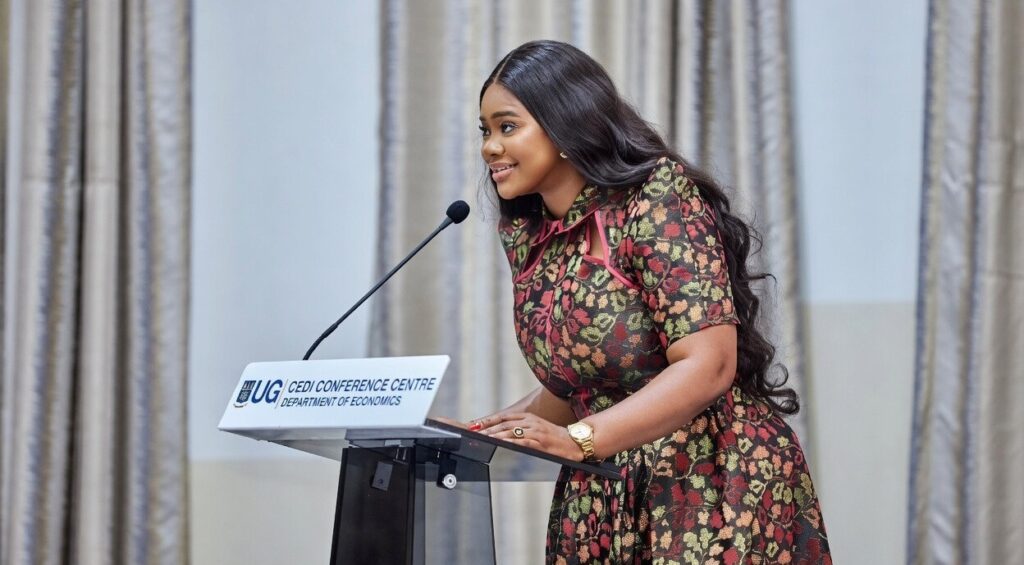
The Executive Secretary of the National Film Authority Kafui Danku-Pitcher has issued a clarion call to investors, corporate institutions, film exhibitors, and strategic partners, urging them to throw their weight behind efforts to rebuild and modernise Ghana’s crumbling film infrastructure — warning that the industry’s long-term survival depends on it.
Kafui Danku-Pitcher made the impassioned appeal while addressing the future of Ghana’s creative arts sector, painting a sobering picture of an industry rich in storytelling talent but starved of the physical and institutional foundations needed to translate that talent into a thriving, globally competitive film economy.
“Ghana possesses enormous storytelling talent and creative potential,” she said, “but the industry cannot thrive without the right infrastructure and long-term investment.” Her message was unambiguous: talent alone is not enough.
At the heart of her concern is the systematic collapse of cinema culture across the country. Many of the exhibition centres that once served as vital arteries of Ghana’s film distribution network have shut down or fallen into disuse over the years, leaving filmmakers with diminishing outlets to reach local audiences and curtailing the kind of consistent public engagement that sustains a healthy film industry.
The ripple effects — on revenue, on audience habits, and on the motivation of creative professionals — have been significant.
Danku-Pitcher called for collective responsibility in reversing this decline, stressing that rebuilding the sector is not a task government can accomplish alone. She appealed directly to private investors and corporate Ghana to recognise the film industry not as a cultural afterthought but as a serious economic engine — one capable of generating substantial employment for young Ghanaians and contributing meaningfully to national revenue.
Her vision for the sector is both ambitious and practical. Modernised production facilities would give filmmakers the technical environment needed to produce content of international standard. Restored and newly built cinemas, spread across the country and not concentrated solely in major cities, would widen audience access, revive cinema-going as a cultural habit, and provide the distribution infrastructure local content desperately needs. Together, these investments would elevate the quality and global visibility of Ghanaian films.
Ama K. Abebrese Lands Role In A New Hollywood Film
Technology and innovation featured prominently in her address as well. Danku-Pitcher stressed that Ghana must actively position itself to compete within the rapidly evolving global film market, where streaming platforms and digital distribution have fundamentally reshaped the rules of engagement. Failing to modernise, she implied, is not a neutral choice — it is a decision to be left behind.
The Executive Secretary’s appeal is directed at a broad coalition: development partners with an interest in Africa’s creative economy, corporate sponsors seeking meaningful brand alignment, entertainment industry stakeholders, and institutional investors who may not yet see film as a serious asset class. Her message to all of them is the same — the window to shape Ghana’s film future is open, and the National Film Authority is ready to build partnerships that will make a lasting difference.
The Authority, she affirmed, remains committed to championing policies and professional standards that strengthen the sector and ensure that Ghanaian stories — told by Ghanaian voices, on world-class platforms — reach the global audiences they deserve.