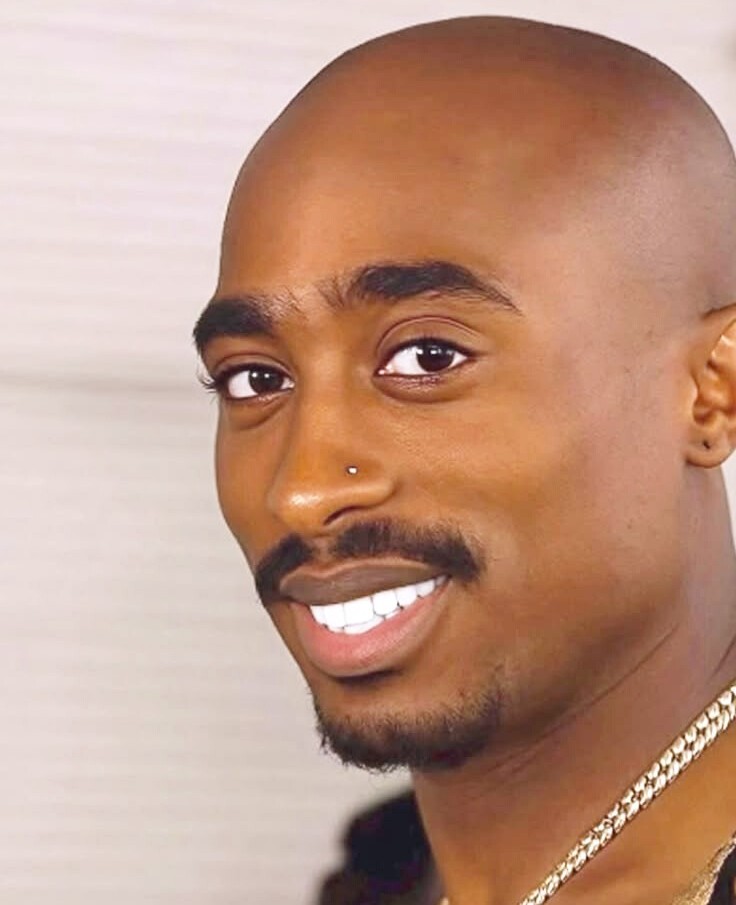
Before the icon, before the legend, before the myth — there was a sensitive, artistically gifted young man whose full story has never quite been told.
Tupac Amaru Shakur was many things. Rapper. Actor. Revolutionary. Provocateur. Martyr. In the nearly three decades since his death on September 13, 1996, the world has done what it always does with icons — it has flattened him. Reduced him to a greatest hits package of quotable lines, conspiracy theories about his death, and a aesthetic that has been endlessly imitated but never truly replicated.
But there was another Tupac. One that existed long before Death Row Records, long before the beef with Biggie, long before the bullet wounds and the prison sentence and the increasingly hardened public persona. And that version of Tupac Shakur — tender, expressive, emotionally fluent — deserves a more honest conversation.
Baltimore: Where It All Began
To understand the full picture, you have to go back to Baltimore in the late 1980s. A teenage Tupac Shakur enrolled at the Baltimore School for the Arts, where he studied ballet, theatre, and poetry. He performed in Shakespeare productions. He moved his body with discipline and grace. He immersed himself in the kind of artistic education that most of his future rap peers never had access to.
His classmates from that period remember a young man who was thoughtful, creative, and deeply feeling — someone who wore his emotions openly and without apology. His closest friend at the time was Jada Pinkett, now Jada Pinkett Smith, who has spoken repeatedly over the years about the Tupac she knew — not the icon the world inherited, but the boy who wrote her letters and talked about life with a tenderness that never fully left him even as his public image hardened.
It was in Baltimore that Tupac first began writing poetry seriously. Those poems — later published posthumously in the collection The Rose That Grew from Concrete — reveal an interior world of startling emotional depth. Love, longing, beauty, pain, the fragility of life. Not the subjects most people associate with the man who would later tattoo “Thug Life” across his stomach.
The Contradiction That Wasn’t:
Here is what made Tupac genuinely singular: he never fully abandoned that sensitivity, even as his image evolved into something harder and more dangerous.
Listen closely to his catalogue and it is all still there. Dear Mama remains one of the most moving tributes to motherhood in the history of popular music. Keep Ya Head Up was a direct address to Black women — their struggles, their worth, their pain — delivered with an empathy that felt personal rather than performed. Even in his most aggressive records, there were flashes of something raw and unguarded — a man processing grief, fear, and confusion in real time, in front of the world.
He cried in interviews. He spoke openly about trauma. He talked about his mother’s struggles with addiction with a vulnerability that was, for a young Black man at the height of gangsta rap’s cultural dominance, almost revolutionary.
The contradiction people often point to — the poet versus the thug, the romantic versus the provocateur — was never really a contradiction at all. It was the full picture of a complicated human being navigating impossible pressures, and expressing himself the only way he knew how.
A Different World, A Different Conversation
Which brings us to the question that some cultural commentators and fans have begun asking in recent years: if Tupac were alive today, in 2026, who would he be?
It is, by definition, unanswerable. Speculation about the inner life of someone who died at 25 — someone who never had the chance to grow, evolve, and define himself on his own terms beyond that age — carries obvious limitations. It should be approached with care. But the conversation is not without foundation.
We live in a cultural moment where definitions of gender, identity, and expression have opened up in ways that were almost unimaginable in the mid-1990s. Artists today exist on a broad, fluid spectrum of self-expression — in the way they dress, the way they speak, the pronouns they use, the identities they claim. And in that context, some have wondered aloud whether Tupac — a man who studied ballet, wrote love poetry, openly wept, and consistently defied the rigid masculine codes of his era — might have found language in today’s world that simply wasn’t available to him then.
Sarkodie Makes History At The Royal Albert Hall
Whether he might, in 2026, have identified as gender-fluid, or non-binary, or simply as someone who refused any label at all.
It would be dishonest to state this as fact. Tupac never said anything that constitutes direct evidence of a gender-fluid identity. He was, by all accounts, heterosexual and never publicly questioned his gender identity in terms that have been recorded.
But identity is complex, and the vocabulary available to any individual is shaped by the world they inhabit. In the 1990s, the space for a young Black male rapper to explore or express anything outside of narrow masculine norms was virtually nonexistent — socially, commercially, and in many cases physically dangerous.
What we can say with confidence is this: Tupac Shakur possessed a quality of emotional openness, artistic sensitivity, and resistance to being defined that, in today’s cultural landscape, would read very differently than it did in his own time. He was someone who existed in the spaces between categories — between hard and soft, between rage and tenderness, between the street and the stage.
Whether that amounts to gender fluidity in any clinical or personal sense, only Tupac could have answered. But the question itself — the willingness to look at him whole, rather than as a caricature — feels like the most honest tribute we can offer.
The Legacy, Reconsidered
Tupac Shakur was shot four times on the Las Vegas Strip on September 7, 1996, and died six days later. He was 25 years old. In the years since, his image has been commercialised, mythologised, and in some cases deliberately narrowed to fit whatever narrative is most convenient.
The real tribute to his legacy might be something simpler: taking seriously the full range of who he was. The ballet student and the battle rapper. The poet and the provocateur. The man who wrote about roses growing from concrete and meant every word.
That Tupac — complicated, feeling, and impossible to reduce — was always the most interesting one. And in a world that finally has more room for complexity, perhaps it is time to let him be fully seen.
Tupac Shakur released five studio albums during his lifetime. His posthumous collection of poetry, The Rose That Grew from Concrete, was published in 1999. He was inducted into the Rock and Roll Hall of Fame in 2017.
Credit: Jeff Pearlman, Classmates And Family
One thought on “The ‘Strange’ Side Of Tupac Shakur That History Often Forgets”