Global heads of state are converging across Asia this week for a series of high-stakes diplomatic gatherings, unfolding amidst an intensifying tug-of-war for regional dominance between Washington and Beijing.
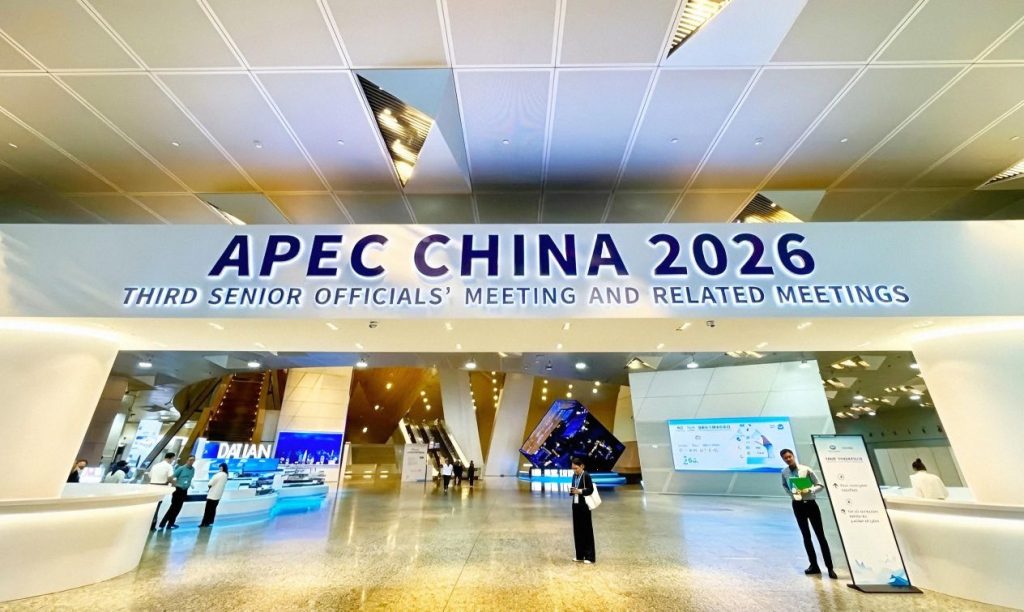
Serving as the centerpiece of this diplomatic marathon, China is welcoming international leaders—including U.S. President Donald Trump—to Shenzhen, its sprawling southern tech capital, for the annual Asia-Pacific Economic Cooperation (Apec) summit. The event kicks off just two weeks after Trump suffered a setback in the U.S. midterm elections, placing him in a complex domestic political position as he steps onto the global stage.
Adding a layer of geopolitical intrigue to the gathering is a recent, deeply uncomfortable scandal in Silicon Valley: revelations that the chief executive of Nvidia—the American semiconductor giant that long held the title of the world’s most valuable corporation—was involved in a personal relationship with a woman suspected by U.S. intelligence agencies of operating as a Chinese espionage agent.
Historically, Apec—whose member economies account for over 60% of the world’s gross domestic product—has served as a forum to champion open commerce and multilateral cooperation. Yet, this year’s economic agenda risks being overshadowed by a confirmed three-way sit-down between Trump, Chinese President Xi Jinping, and Russian President Vladimir Putin.
Xiaoyu Pu, an associate professor of political science at the University of Nevada, suggests that this high-profile trilateral summit “might be more symbolic than substantive, although symbolism itself matters in great-power diplomacy.” According to Pu, each leader arrives at the table with distinct strategic calculations:
- Donald Trump: Focused heavily on advancing nuclear arms control and broader denuclearization initiatives.
- Xi Jinping: Aiming to walk a tightrope by keeping bilateral ties with Washington on an even keel without compromising Beijing’s vital strategic alignment with Moscow.
- Vladimir Putin: Looking to protect and maximize his diplomatic and territorial leverage regarding the conflict in Ukraine.
The Shenzhen Apec summit officially opens on Wednesday, capping off a whirlwind week of regional diplomacy that begins Sunday in the Philippines with the Association of Southeast Asian Nations (Asean) summit, which Trump is also scheduled to attend. While on the ground in Manila, American diplomats will additionally convene a side session of the Quad—the strategic security dialogue uniting the United States, Australia, India, and Japan.
France Remains The Most Visited Country In The World
Across these overlapping forums, leaders face a dense slate of urgent global and regional challenges. High-level discussions will center on securing artificial intelligence supply chains and establishing AI governance, negotiating tariff relief, and accelerating the shift toward green energy, alongside Trump’s push for denuclearization.
Closer to home, regional security talks will confront Beijing’s construction of heavily fortified military installations across contested waters in the South China Sea, as well as the severe transboundary haze crisis triggered by massive forest fires in Indonesia.
For more than fifteen years, American foreign policy in the Indo-Pacific has been driven by anxieties over Beijing’s expanding footprint. This trajectory began in earnest during Barack Obama’s presidency—crystallized by his 2011 declaration to the Australian parliament that the U.S. was “a Pacific power, and we are here to stay,” a doctrine dubbed the “pivot to Asia.”
Joe Biden subsequently built upon that framework, leaning into aggressive coalition-building and economic agreements to rally regional partners eager to hedge their bets between the two superpowers.
While certain foreign policy observers view Trump’s deal-making, transactional approach as merely another evolution of that long-standing Pacific strategy, his abrupt policy shifts and erratic rhetoric have left smaller regional nations on edge. Increasingly, many of these countries have come to view Beijing—despite its assertiveness—as a steadier, more foreseeable counterpart.
Once this intensive week of Asian diplomacy wraps up, the geopolitical spotlight will shift back across the Pacific next month for the G20 summit in Miami, Florida—an event Xi Jinping is slated to attend, provided that the delicate equilibrium between Washington and Beijing remains intact.
One thought on “APEC 2026 In Shenzhen: The Big Gathering With World Leaders”