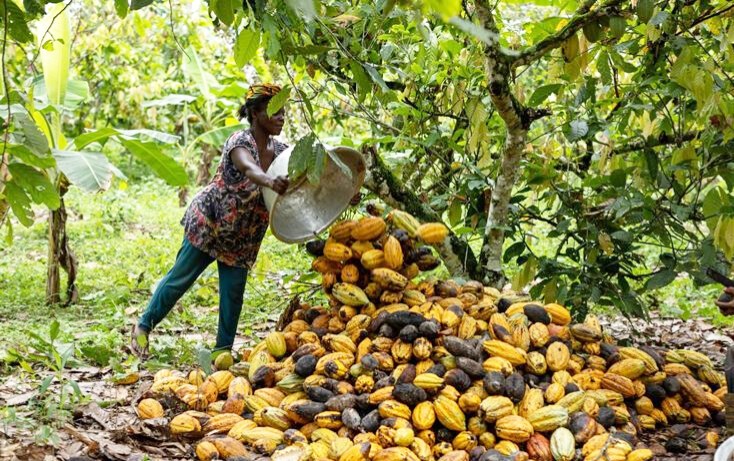
A deepening crisis is unfolding across Ghana’s cocoa belt, as growing numbers of farmers face pressure to surrender their land to illegal small-scale gold mining — a practice locally known as galamsey. Recent reports and farmer testimonies paint a troubling picture of economic desperation meeting coercive tactics, with Chinese operators frequently cited for their prominent role in mechanized mining operations.
At the heart of the crisis is a cocoa sector that many farmers say no longer pays. The producer price for the 2025/2026 season was slashed from roughly GH¢3,625 to GH¢2,587 per 64kg bag, a cut that, compounded by chronic payment delays from COCOBOD, rising input costs, inflation, and falling yields, has made livelihoods increasingly untenable. For many, a lump-sum offer from a miner — however coercive — has become more attractive than another uncertain harvest.
Chinese nationals have been linked to galamsey operations since Ghana’s mid-2000s gold rush, credited with introducing the heavy machinery — excavators, wash plants — that allows rapid, large-scale land clearance. Farmers describe miners approaching them directly, sometimes with promises of compensation or partnership arrangements, and sometimes with intimidation. In documented cases, agreements have been reached under duress, with farmers later realizing they had little recourse.
A recent academic study on the conversion of cocoa farms into gold mines found that these negotiations are frequently shaped by information asymmetry, intimidation, collusion, and social pressure, producing outcomes that are consistently disadvantageous to farmers. Formal compensation tends to fall below market value; informal payments may be higher but come with significant risk.
It bears noting that Ghanaian law reserves small-scale mining for citizens, meaning Chinese operators often work through local fronts — making accountability harder and legal protections weaker for affected farmers.
Sefwi Wiawso Cocoa Farmers Rally Against New Producer Price Policy
The cumulative damage is significant. Estimates suggest galamsey has destroyed anywhere from 50,000 to over 100,000 acres of cocoa farmland in recent years, contributing to a steep decline in Ghana’s cocoa output at a time when global prices are already under pressure. The pattern has prompted comparisons to a structural shift in the economy — gold exports rising as cocoa contracts, with Ghana effectively trading one for the other.
Not everyone is resigned. Groups like the Concerned Farmers Association, led by figures including Nana Oboadie Boateng Bonsu, have publicly warned farmers against entering deals with galamsey operators, threatening to report those who do to police for potential prosecution.
Meanwhile, advocacy groups and farming communities are calling for urgent government intervention — including direct engagement with President Mahama — to protect agricultural land and curb the advance of illegal mining before further damage is done to Ghana’s food security and rural economy.