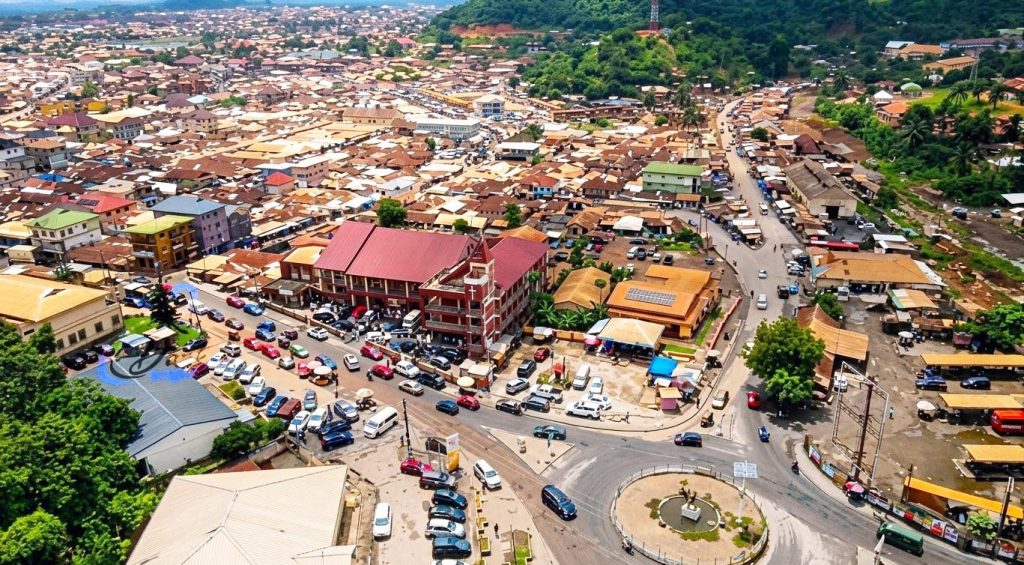
Obuasi is celebrated as one of Ghana’s most important gold mining towns. For decades, this city in the Ashanti Region has been synonymous with gold, with mining and with the wealth drawn from the nation’s mineral endowment. Yet one question still demands national attention: why has Obuasi not been transformed into a beautiful, modern and inviting destination that matches the enormous value of the gold beneath its soil?
If gold gives Obuasi its international identity, shouldn’t the town’s appearance, infrastructure and tourism potential reflect that identity?
It is hard to understand why a town with such a rich mining heritage and global recognition has not been deliberately shaped into one of the country’s most attractive cities. Obuasi has the name, the history, the natural and cultural attractions and the economic weight to be far more than a place people link to underground operations.
The real question is not whether Obuasi could become a tourism destination. It is why successive governments have never made its transformation a serious national development priority.
Around the world, communities once known mainly for mining have turned their industrial past into major tourism draws.
Kiruna in Sweden is one example, where mining heritage, distinctive architecture and tourism development have combined to create an internationally recognised destination. Banff in Canada shows how a town can build a strong tourism identity around its natural surroundings, appealing public spaces and carefully planned growth. Salzburg in Austria has also turned history, architecture and cultural heritage into major tourism assets.
Their circumstances differ, but the lesson is shared: a town’s identity need not be confined to the activity that first made it famous. Mining towns can reinvent themselves. Industrial heritage can become part of their appeal, while modern infrastructure, environmental restoration, recreation and cultural attractions open up new economic opportunities.
Why Can’t Obuasi Pursue A Similar Vision?
For many years, Obuasi’s name has been tied closely to the mining industry, particularly the operations of AngloGold Ashanti. The town has played a vital part in Ghana’s mining economy, but its development should not be measured only by the volume of gold pulled from its land. A town that contributes so much to national wealth deserves surroundings that reflect its importance.
Picture arriving in Obuasi and being greeted by beautifully landscaped roads, handsome roundabouts, well-kept green spaces, modern streetlights, clean surroundings, striking public monuments and recreational facilities.
Picture a city centre with elegant architectural features, attractive commercial districts, well-organised markets, clean pedestrian walkways and thoughtfully designed public spaces.
Picture mining heritage sites reborn as educational and tourist attractions, where visitors learn the story of gold mining in Ghana.
These are not fantasies. They are achievable goals that call for proper planning, political commitment and investment. Obuasi could become a city people visit not only for business or family, but to experience its history, culture, hospitality and attractions.
A Tourism Asset Hiding in Plain Sight
Obuasi’s mining history is among its greatest advantages. Instead of leaving that history locked inside industrial operations, the town could build a comprehensive mining heritage tourism programme.
Where safe and appropriate, former mining facilities could be preserved and converted into museums, educational centres and heritage attractions. Guided tours could walk visitors through the story of gold mining, the evolution of mining technology and the industry’s contribution to Ghana’s economy.
Raw, Untouched And Beautiful — How Adaklu Mountain Is Reshaping Ghana’s Tourism Landscape
The town could also host annual gold and mining festivals that draw investors, researchers, tourists and members of the Ghanaian diaspora.
Such initiatives would open opportunities for hotels, restaurants, tour operators, transport businesses, artisans and young entrepreneurs, spreading the benefits well beyond the mining sector.
What Is Holding Back Successive Governments?
Here the conversation must become more serious. Why has Obuasi never received a comprehensive beautification and urban redevelopment programme capable of changing its image?
Is it a lack of political will? Weak urban planning? Poor collaboration between central government, the Obuasi Municipal Assembly, traditional authorities and the private sector? Or have administrations simply failed to see the tourism and economic opportunities buried in the town’s mining identity?
Whatever the reason, Obuasi should not be left to grow without a clear long-term vision. Beautification cannot mean an occasional coat of paint on public buildings, a few planted flowers or the repair of selected roads. It must be part of a broader strategy covering sanitation, drainage, road networks, street lighting, landscaping, housing, public safety, environmental protection and tourism infrastructure.
Crucially, that vision must outlast changes in government. Obuasi needs a long-term master plan that each incoming administration builds on rather than abandons.
The Role of AngloGold Ashanti And The Private Sector
Government carries major responsibility for urban development, but the transformation of Obuasi should not rest on its shoulders alone. AngloGold Ashanti, a central player in the town’s mining story, has a chance to help build a lasting urban legacy.
Mining companies operating in resource-rich communities should look beyond their immediate commercial duties and back initiatives that deliver lasting benefits to residents. Public-private partnerships could help finance recreational parks, cultural centres, environmental restoration, improved public spaces and tourism facilities.
Why Tourists And Vacationists Should Make Ghana Their Ultimate Holiday Destination
Traditional authorities, businesses, civil society groups and residents must also have a seat at the table. A beautiful Obuasi would benefit everyone, the mining industry included.
Obuasi Can Become One of Ghana’s Most Attractive Destinations
Ghana continues to promote tourism as a source of jobs, foreign exchange and economic diversification. But tourism growth should not be concentrated only in the country’s established destinations. Many towns and cities have histories, cultures and identities that remain largely unexplored. Obuasi is one of them.
With the right investment, it could develop a distinctive tourism identity rooted in gold mining heritage, Ashanti culture, hospitality, environmental attractions and modern urban recreation. A well-planned tourism corridor, attractive public gardens, cultural exhibition centres, well-maintained roads and modern hospitality facilities could give visitors compelling reasons to linger. The town could also become a hub for educational tourism, drawing students, researchers and international visitors curious about Ghana’s mining industry.
Ultimately, beautifying Obuasi is not only about pleasing tourists. It is about improving life for the people who live there. Residents deserve clean neighbourhoods, well-kept roads, working drainage systems, recreational spaces and a pleasant urban environment.
A town should not have to rely on extracting its natural resources to justify its existence. It must also build institutions, infrastructure and economic opportunities that will keep serving future generations, even when mining eventually winds down. That matters especially for a mining town whose future must stretch beyond the life of its minerals.
Obuasi has an identity many towns would envy. It is tied to one of the world’s most valuable natural resources and holds a mining history that gives it a distinctive place in Ghana’s economic story. But having gold underground is not enough. The wealth and reputation that come with it should inspire a bigger vision for the town.
Successive governments, the Obuasi Municipal Assembly, traditional leaders, AngloGold Ashanti and the private sector must begin to think seriously about a coordinated transformation agenda. The ambition should be to make Obuasi one of the cleanest, best-planned and most attractive cities in the Ashanti Region, with a tourism identity that can draw visitors from across Ghana and beyond.
Ghana must stop seeing Obuasi only as a place where gold is dug out of the ground. It is also a place where tourism, investment, culture and sustainable development can flourish.
The gold beneath Obuasi’s soil has already made history. It is time to build a beautiful city above it.