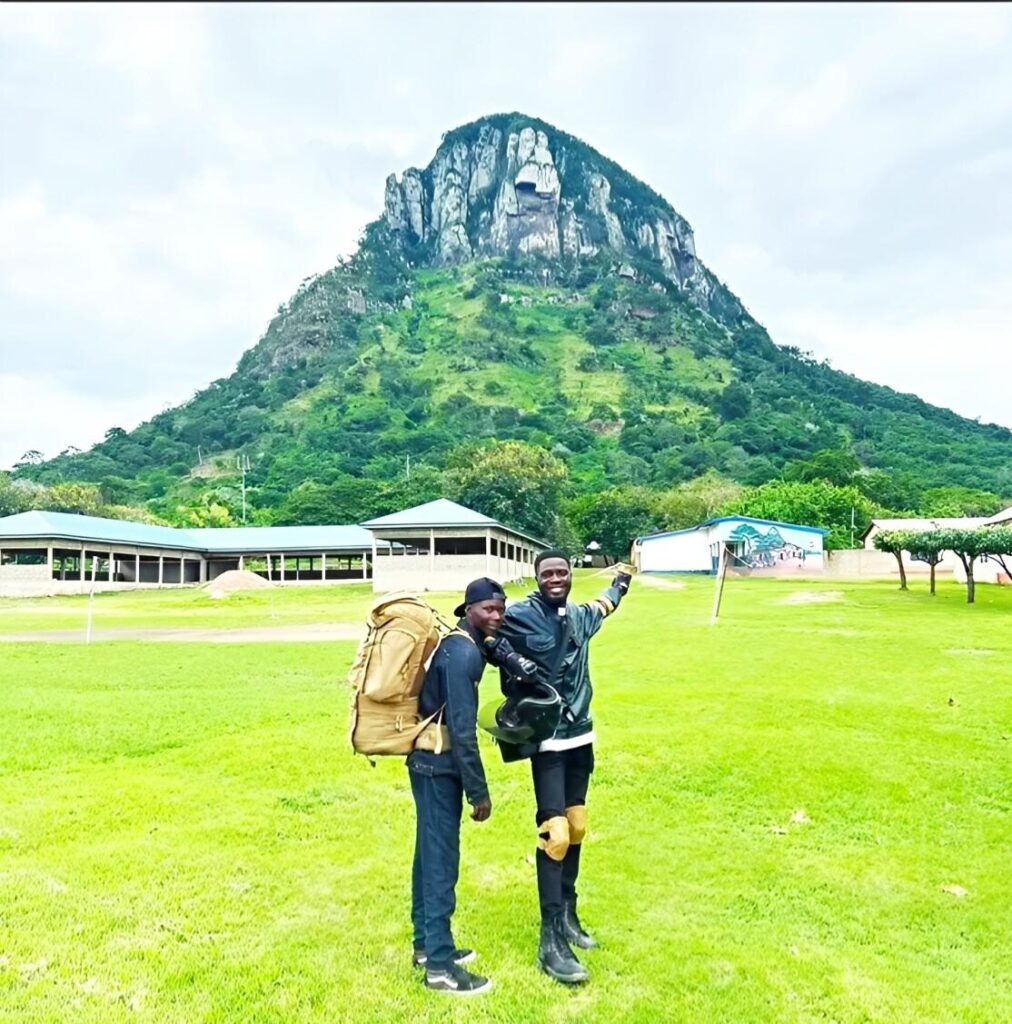
Ghana’s tourism ambitions are reaching new heights — literally. Following years of success at Kwahu Mountains, the Ghana Tourism Authority has set its sights on a new frontier: the striking and largely undiscovered Adaklu Mountain in the Volta Region, which authorities believe could become the country’s next world-class paragliding destination.
The announcement came at the official launch of the 2026 Kwahu Paragliding Festival, where Ghana Tourism Authority Chief Executive Maame Efua Houadjeto revealed that feasibility studies are currently underway to assess Adaklu’s potential as a premier adventure tourism hub. It is a declaration of intent that signals a deliberate shift in how Ghana thinks about its natural assets — and who gets to benefit from them.
Nestled near Ho in the Volta Region, the Adaklu Mountain range is one of Ghana’s most visually arresting yet commercially underutilised landscapes. Dominated by Mount Adaklu — known locally and evocatively as Heaven’s Gate — the area offers panoramic views, rolling valleys, dramatic rock formations, and rural settlements that together create a natural canvas unlike anything else in the country.
Where Kwahu presents lush, forested ridges, Adaklu delivers something altogether different: a sweeping savannah-meets-highland panorama that would offer paragliders an entirely distinct aerial experience. Raw, authentic, and largely untouched by commercialisation, it is precisely the kind of destination that discerning adventure tourists — and sustainability-conscious developers — find most compelling.
Why Adaklu Makes Sense for Paragliding
The selection of a paragliding site is never arbitrary. Elevation, wind patterns, slope gradients, landing conditions, and surrounding infrastructure all play a role — and preliminary assessments suggest Adaklu ticks every critical box. The mountain’s natural elevation and slope profiles provide strong take-off and landing conditions, while its open ridgelines and gradual descents create a flying environment suitable for both first-time participants and seasoned pilots. Crucially, the area appears to benefit from stable and predictable wind patterns — an non-negotiable requirement for safe, consistent paragliding operations throughout the year.
Its proximity to Ho and accessibility from Accra further strengthen the case, providing a realistic foundation for the road infrastructure, hospitality facilities, and support services that any serious tourism destination requires.
The GTA’s vision for Adaklu extends well beyond simply adding a second location to Ghana’s adventure tourism map. Developing Adaklu as a paragliding hub addresses a strategic need: decongesting Kwahu during peak periods while simultaneously creating an entirely new tourism growth pole in the Volta Region — one capable of stimulating local economies, generating employment, and delivering a more geographically balanced spread of tourism’s economic benefits.
What Are Space Capsule Homes? Everything You Need To Know About The Future Of Compact Living
The broader ambition is to cement Ghana’s position as West Africa’s leading adventure tourism destination — diversifying the country’s offering, encouraging year-round visitation, extending the average length of tourist stays, and unlocking the economic potential of regions that have historically sat at the margins of the tourism conversation.
As the feasibility process advances, the GTA has been explicit that development at Adaklu must proceed on the right terms. International safety standards, environmental sustainability, and meaningful community inclusion are not optional considerations — they are foundational commitments that will shape every stage of the site’s development.
The goal is not to replicate Kwahu at a different location. It is to create something new: a world-class paragliding destination with its own identity, its own visual drama, and its own story — one that preserves the natural beauty and cultural significance that makes Adaklu worth visiting in the first place.
The Time to Discover Adaklu Is Now
For travellers with an appetite for exploration, the window to experience Adaklu in its unspoiled state is open — but it will not remain so indefinitely.
Before the infrastructure arrives, before the festival crowds gather, and before the aerial photographs begin circulating on international travel feeds, there is an opportunity to encounter Heaven’s Gate on its own quiet terms: a hiker’s paradise, a photographer’s dream, and a glimpse of what Ghana’s next great tourism chapter looks like before the curtain fully rises.
Adaklu is not simply the next paragliding site. It is the next bold expression of what Ghana’s tourism story can become.