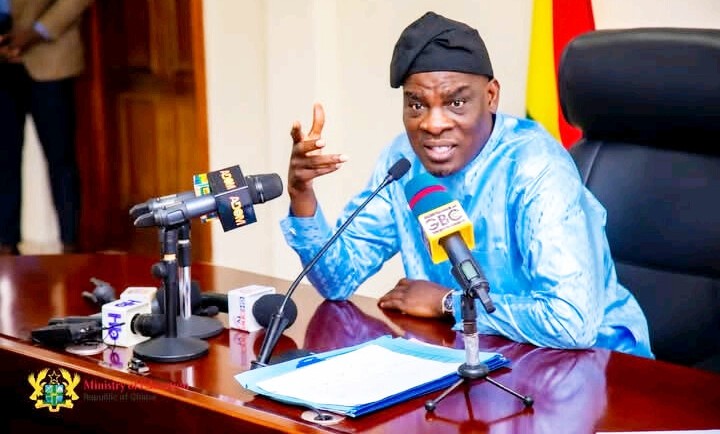
Ghana’s Parliament has enacted the Education Regulatory Bodies (Amendment) Bill, 2026, revising Act 1023 of 2020 to make Presidential Charters optional rather than compulsory for private universities. Previously, institutions were required to obtain one within six years of affiliation or establishment.
Education Minister Haruna Iddrisu, speaking during the bill’s second reading on March 13, 2026, argued that the prior mandate imposed undue financial and operational burdens on many private institutions. He noted that charters had historically functioned as an optional milestone — as was the case under the former National Accreditation Board framework — and that the reform restores that flexibility, allowing institutions to pursue one only when genuinely prepared to operate independently, confer their own qualifications, and satisfy the requisite standards.
University Of Ghana Emerges As One Of The Best In The World
The amendment sits within President John Dramani Mahama’s broader “Reset Agenda,” which seeks to balance tighter regulatory oversight with greater institutional flexibility, foster innovation, widen access to higher education, and bolster the long-term viability of the private tertiary sector — a segment comprising more than 79 institutions that collectively make a substantial contribution to Ghana’s higher education landscape.
Crucially, the change does not dismantle existing oversight structures. Private universities remain subject to accreditation requirements and supervision by the Ghana Tertiary Education Commission (GTEC) and related bodies; what has been removed is only the fixed chartering deadline and the obligation to obtain a charter as a condition of continued operation.