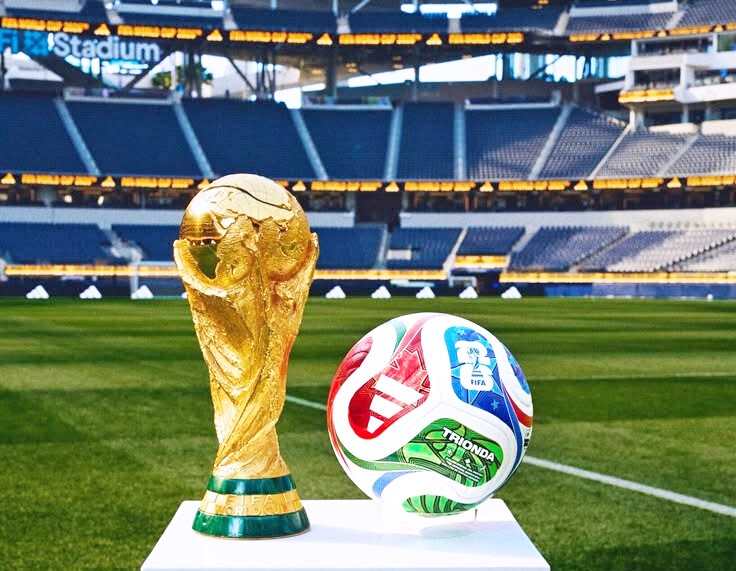
Football’s lawmakers are shaking up the game ahead of the 2026 FIFA World Cup, announcing a series of rule adjustments designed to make matches faster, fairer, and more enjoyable to watch.
FIFA and the International Football Association Board (IFAB) have confirmed that the new measures will be in place for the tournament, targeting three areas that have increasingly frustrated fans and officials alike: time-wasting, refereeing inconsistency, and the exploitation of grey areas in the laws of the game.
Cracking Down on Time-Wasting
Perhaps the most visible change will be felt in how referees manage game flow. Officials will take a stricter line on delays during throw-ins, free kicks, and goal kicks — routine moments that have quietly eaten into playing time across the modern game. Goalkeepers, too, could face tighter restrictions on how long they hold the ball, closing off one of the most commonly used — and most complained about — methods of running down the clock.
The updates also aim to address one of football’s most persistent headaches: the sense that the same foul or incident can produce entirely different outcomes depending on the referee or the competition. New guidance and clearer interpretations of the laws will be issued to help officials make more uniform decisions. Communication between match officials and the use of video technology will also be refined to reduce the margin for error and disagreement.
CAF Strip Senegal Of AFCON Title — Morocco Are Africa’s New Kings
Beyond the whistle, the reforms take aim at the tactical grey areas that sides have long exploited to gain an edge — deliberate delays, technical infringements that go unpunished, and other tactics that slow the game without technically breaking the rules. The adjustments are intended to ensure that such approaches yield fewer rewards.
Football’s governing bodies have acknowledged that the modern game has become increasingly interrupted — a product of evolving delay tactics and the complex mechanics of video review. With the eyes of the world fixed on the 2026 World Cup across the United States, Canada, and Mexico, FIFA and IFAB have chosen the tournament as the stage to reset expectations and restore a more fluid, entertaining spectacle.
The goal, in short, is simple: more ball, less theatre.