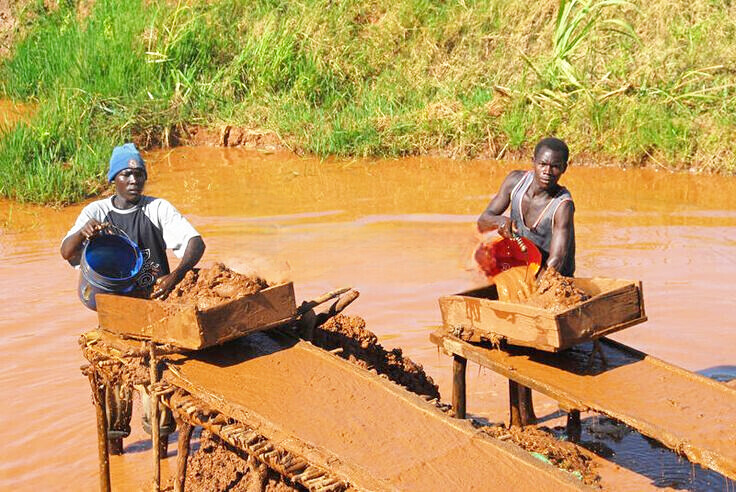
The issue of galamsey (illegal small-scale mining) in Ghana hasn’t truly vanished—it’s just become less prominent in daily headlines and public outcry as of March 2026. Many people are wondering why the once-dominant topic feels “mute” or “laid to rest,” but recent developments show the government under President John Dramani Mahama is actively addressing it through a noticeable policy shift, emphasizing regulation, formalization, and targeted enforcement over high-profile crackdowns.
Key changes include:
- Revocation of controversial laws: The government revoked Legislative Instrument (L.I.) 2462 in late 2025, which had previously allowed mining in forest reserves. This move bans such activities in protected areas, closing a legal loophole that critics said enabled environmental harm under the guise of regulation.
- Focus on formalizing artisanal and small-scale mining (ASM): Efforts center on channeling ASM production into a regulated system. The Ghana Gold Board (GoldBod), established in 2025, now plays a central role in buying and exporting ASM gold, aiming to capture around 127 tonnes annually from the sector. This seeks to reduce smuggling, boost foreign exchange, and integrate legitimate small-scale miners while curbing illegal operations.
- Shift in enforcement strategy: In his February 2026 State of the Nation Address (SONA), President Mahama highlighted over 114 pending galamsey cases in courts involving hundreds of accused persons. The approach has pivoted toward prosecuting “kingpins,” financiers, and organized networks rather than solely low-level operators. Officials are preparing special anti-galamsey courts to speed up justice, alongside multi-agency operations like NAIMOS (National Anti-Illegal Mining Operations Squad) to clear forest reserves and river catchments.
- Digital and technological tools: There’s mention of introducing digital monitoring systems to enhance oversight and reduce illegal activities, though implementation details are evolving.
Despite these reforms, critics—including civil society groups, opposition voices, academics, and figures like Prof. H. Kwasi Prempeh—argue that galamsey persists because enforcement remains inconsistent, selective, or weak on high-level perpetrators. There’s limited visible progress on widespread convictions, corruption in the sector, and “big fish” escaping accountability.
NPP Performed Far Better on Galamsey Than NDC – Kwame Owiredu
Some describe it as “high-tech galamsey” that’s evolved and less overt, with ongoing environmental and health threats (e.g., mercury pollution affecting children’s brain development, as warned by the Paediatric Society of Ghana). Calls persist for stronger measures, like a targeted state of emergency in hotspots or applying the “polluter pays” principle to fund restoration.
In essence, the quieter public discourse stems from this pivot: away from dramatic, enforcement-only raids toward regulatory reforms, economic integration of legitimate mining, and institutional changes like GoldBod.
The problem isn’t solved—it’s being managed differently, with mixed results and ongoing debate about whether these steps will deliver lasting impact or merely make the crisis less visible. Officials insist the fight continues through sustained, multi-dimensional efforts, while skeptics demand more decisive action against root causes like impunity and economic incentives for illegal operations.