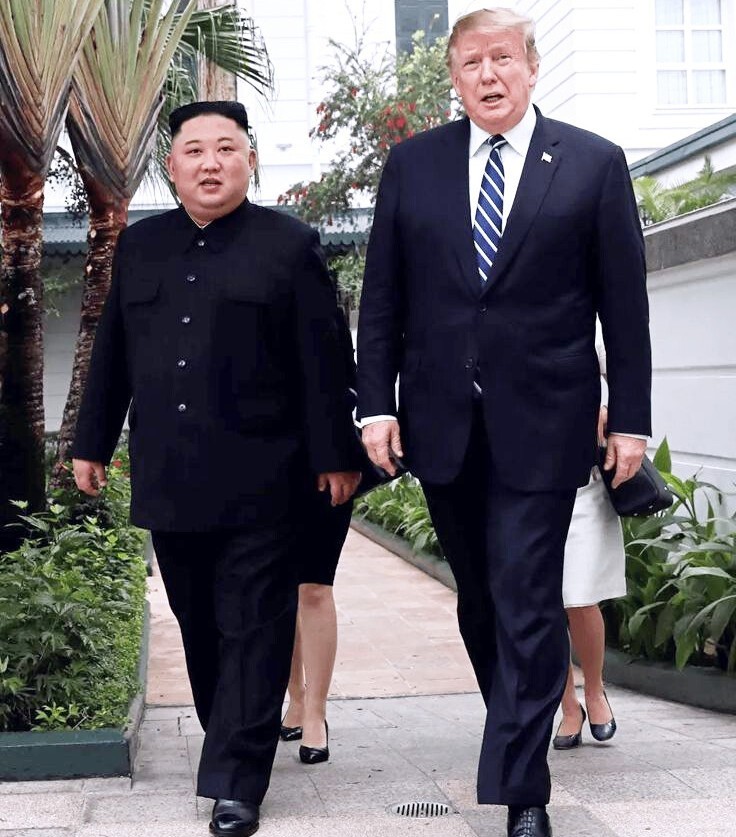
North Korean leader Kim Jong Un has extended a conditional olive branch to the United States, signalling openness to improved relations while making clear that any rapprochement would require Washington to fundamentally change its approach toward his country.
The remarks were delivered during the closing session of the Ninth Congress of the Workers’ Party of Korea, held in Pyongyang from February 19 to 25, 2026, and reported by state media outlet KCNA on February 26.
The Offer — and Its Conditions
Kim stated that North Korea could “get along well” with the United States and pursue peaceful coexistence — but attached two firm conditions. First, Washington must recognise the DPRK’s status as a nuclear-armed state, a designation now enshrined in North Korea’s constitution and which Kim described as irreversible.
Second, the US must abandon what Pyongyang calls its “hostile policy” — a term the regime uses to encompass American-led sanctions, the US military presence in the region, and longstanding demands for denuclearisation.
The future of relations between the two countries, Kim said, “depends entirely on the U.S. attitude.” The choice, as he framed it, is binary: peaceful coexistence or permanent confrontation.
Nuclear Expansion, Not Retreat
Despite the diplomatic language, Kim paired his outreach with an unambiguous commitment to expanding North Korea’s nuclear arsenal — strengthening its operational capabilities and cementing the country’s identity as a nuclear power. There was no suggestion of any willingness to negotiate away the programme that Washington has long insisted must be dismantled.
His tone toward South Korea was sharply different — and considerably more hostile. Kim rejected any prospect of dialogue with Seoul, declared South Korea a “permanent enemy,” and warned that North Korean forces were capable of completely destroying the South if Pyongyang perceived itself to be under threat.
Trump To Move Weed To Schedule III This Year
The congress — the party’s first major gathering in five years — concluded with a military parade that featured Kim’s daughter, widely watched as a potential signal about succession, alongside vows to implement a new five-year military development plan.
Analysts interpreted Kim’s overture to the US as a carefully calibrated move, likely directed at the Trump administration — an attempt to secure tacit American acceptance of North Korea’s nuclear status in exchange for a reduction in tensions, while firmly closing the door on any denuclearisation framework.
The White House, responding to the remarks around February 26–27, reaffirmed its openness to dialogue without preconditions, but held firm to the long-standing US position: the goal remains the complete denuclearisation of the Korean Peninsula.