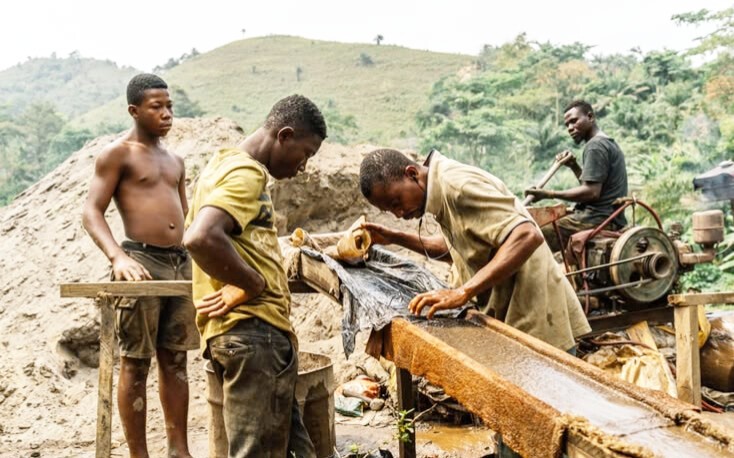
Few issues test Ghana’s governance and national conscience quite like galamsey. Illegal small-scale mining has carved a path of destruction across the country for years — poisoning rivers with mercury, stripping forests bare, swallowing up farmlands, and hollowing out the livelihoods of communities that once depended on those ecosystems. The frustration is entirely warranted. And it is not new.
What has made galamsey so stubbornly resistant to resolution is not simply the scale of the problem, but the political economy surrounding it. Across successive administrations, credible accusations of complicity, protection rackets, and selective enforcement have dogged the response. The pattern is familiar: crackdowns announced, task forces deployed, arrests made — and then the “big fish,” the wealthy financiers, politically connected sponsors, and influential chiefs who bankroll the operations, somehow slip through the net.
Where Things Stand Now:
Under President John Dramani Mahama, who returned to office in January 2025, there are signs of more sustained — if still incomplete — action. In 2025 alone, authorities arrested around 1,486 illegal miners and seized hundreds of excavators, with figures ranging from 443 to over 500 units impounded. The National Anti-Illegal Mining Operations Secretariat (NAIMOS), working alongside the Ghana Armed Forces and other security agencies, has conducted raids across hotspots, dismantled camps near rivers and forest reserves, and deployed over 1,600 personnel nationwide, with further reinforcements planned.
There are measurable environmental signals too. Turbidity levels — a key pollution indicator — dropped sharply in several water bodies, with the River Tano recording an 89 percent improvement between 2024 and 2025. Similar recoveries have been noted along the Barekese, Ankobra, and Densu rivers, suggesting that concentrated enforcement in certain areas is producing real, if fragile, results.
The government has framed its approach around a five-pronged strategy: enforcement, ecosystem restoration, community involvement, technology-assisted surveillance, and the formalisation of small-scale mining through responsible cooperative models. Notably, regulations that had controversially permitted mining activity inside forest reserves were revoked in late 2025 — a significant policy reversal. While calls for a full state of emergency have been rejected on the advice of the National Security Council, the Mahama administration has insisted that pursuing high-level financiers and masterminds is central to the strategy. In his 2026 State of the Nation Address, the President specifically pledged to fast-track prosecutions through specialised teams and go after, in his words, the “big fishes who never get caught.”
President Mahama Names The Galamsey Network — And His Own Party Is on The Big List
The Depth of the Problem:
Rhetoric, however, must be measured against a deeply entrenched reality. A late-2025 survey by the Institute of Economic Affairs ranked galamsey as Ghanaians’ second-biggest national concern — trailing only unemployment — with roughly 30 percent of respondents describing it as critical. That figure reflects not just environmental anxiety but accumulated disillusionment with the state’s ability or willingness to act decisively.
The dangers are also visceral. Security teams have faced violent resistance in the field. Journalists covering operations have been attacked. And in one of the most sobering episodes of 2025, a military helicopter conducting an anti-galamsey operation crashed — a tragedy that underscored just how hazardous and contested this fight has become.
Fuseini Pushes For Direct DCE Performance Targets In Anti-Galamsey Drive
Civil society organisations continue to push for measures that go beyond arrests and seizures, including the introduction of ecocide legislation that would treat large-scale environmental destruction as a serious criminal offence, and stronger accountability mechanisms for officials found to be shielding operators.
The honest assessment is this: Ghana is doing more than it has done in some previous cycles, but the conditions that sustain galamsey — persistent poverty in mining communities, elevated global gold prices, weak local governance structures, and alleged elite patronage networks — have not been dismantled. Without impartial enforcement that genuinely reaches the sponsors and financiers at the top of the chain, and without credible economic alternatives for the communities drawn into illegal mining by necessity, progress will remain partial and reversible.
The current momentum is more sustained than past episodic task forces suggested. But sustained is not the same as sufficient. The road from here to a Ghana where rivers run clean and forests are protected is long — and it runs directly through the political will to hold the powerful accountable, not just the vulnerable.