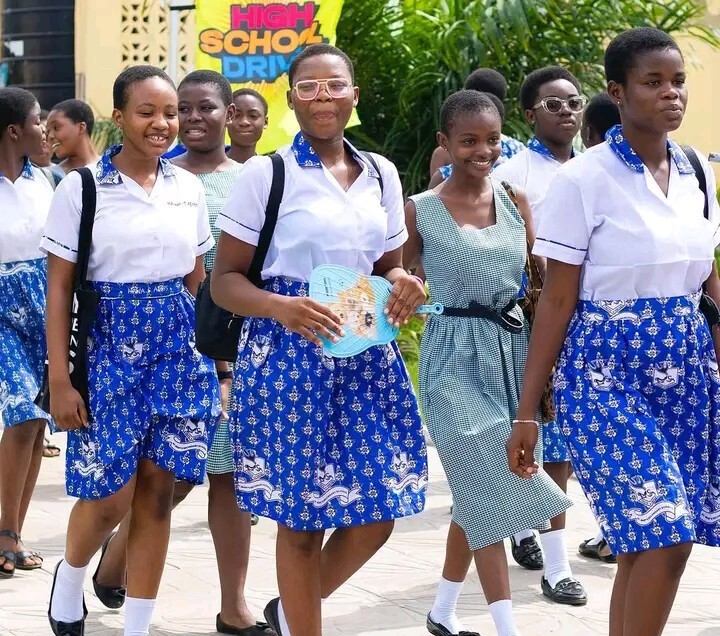
Ghana’s education system stands at a crossroads. For decades, it has been a beacon of hope and mobility in West Africa, with policies like the Free Senior High School (Free SHS) initiative dramatically expanding access and sending hundreds of thousands more young people into classrooms.
Yet beneath the surface of rising enrolment lies a deeper crisis: too many students are attending school but learning far too little. In 2025, national examination results painted a sobering picture, with sharp declines in core subjects like English, Mathematics, and Science, and reports of incoming senior high school students struggling with basic literacy and numeracy.
This is not merely a story of failure but a call to action.
Ghana’s education system, rooted in a colonial-era model that prioritizes rote memorization and high-stakes exams, is increasingly mismatched with the demands of the 21st century. It produces graduates who can recite facts but often lack the critical thinking, creativity, digital skills, and problem-solving abilities needed in a global economy driven by technology, innovation, and adaptability. A comprehensive revamp is not optional—it is essential for unlocking the nation’s human potential and building a prosperous, equitable future.
Ghana has much to be proud of. The introduction of Free SHS in 2017 removed financial barriers for many families, boosting senior secondary gross enrolment from around 60% to over 80% in subsequent years. Basic education enrolment has also expanded, with gross primary rates hovering above 100% in some periods. Initiatives like capitation grants, school feeding programs, and efforts to address gender parity have brought more girls and children from disadvantaged backgrounds into the system. Literacy rates remain relatively high for the region, and private schools often demonstrate stronger outcomes, showing what is possible with better resources and management.
These gains reflect the ambition and resilience of Ghanaian parents, teachers, and policymakers who view education as the surest path out of poverty.
The Cracks in the Foundation:
Despite increased access, quality has lagged alarmingly. Foundational learning is weak: in many rural and under-resourced schools, a significant portion of students reach senior high school unable to read proficiently or handle basic mathematics. This “learning crisis” cascades upward, contributing to poor performance in the Basic Education Certificate Examination (BECE) and West African Senior School Certificate Examination (WASSCE). In 2025, failure rates in core subjects spiked, with mathematics and English particularly hard hit.
Interconnected Challenges explain this:
Overemphasis on Access Over Quality: Free SHS succeeded in enrolment but strained infrastructure, leading to overcrowded classrooms (sometimes 70+ students), the double-track system that reduced contact hours, and teacher burnout. Basic education, the critical foundation, has suffered from relative neglect, with high pupil-teacher ratios, inadequate learning materials, and schools still operating under trees in some areas.
Outdated Curriculum and Teaching Methods: The system remains heavily exam-oriented, rewarding memorization rather than understanding, application, or creativity. It pays limited attention to digital literacy, entrepreneurship, vocational skills, or 21st-century competencies like critical thinking and collaboration. Many teachers, while dedicated, lack sufficient training, resources, or support for modern pedagogies.
Inequities and Resource Gaps: Stark urban-rural and regional divides persist. Schools in Greater Accra, Ashanti, and other southern regions often outperform those in the north. Teacher deployment favors urban areas, leaving rural schools with unqualified or absent staff. Infrastructure deficits, including labs, libraries, and digital tools, widen the gap between public and private institutions.
Teacher Welfare and Morale: Low salaries relative to living costs, heavy workloads, and limited professional development drive brain drain and demotivation. Political interference in governance and inconsistent funding further undermine stability.
Funding and Sustainability: A large share of the education budget goes to salaries and Free SHS, leaving less for infrastructure, materials, and innovation. Economic pressures and fluctuating government priorities exacerbate this.
Ghana’s Graduate Crisis: 300,000 New Graduates vs Limited Jobs
These issues are not unique to Ghana, but they are particularly urgent in a youthful nation where demographic dividends depend on a skilled workforce.
Why a Revamp Is Urgent:
An unreformed system risks perpetuating cycles of underachievement, youth unemployment, and lost economic potential. Ghana’s young population is an asset only if equipped to innovate, compete globally, and solve local challenges like agriculture modernization, climate resilience, and technological adoption. Weak foundational skills today mean weaker innovation tomorrow. Moreover, persistent inequities undermine social cohesion and national development goals aligned with the Sustainable Development Agenda.
A revamp would shift the focus from quantity to quality, from rote learning to holistic development, and from short-term access to long-term empowerment.
A Vision for Transformation:
Reforming Ghana’s education system requires bold, sustained leadership across government, educators, parents, and the private sector. Key pillars could include:
Strengthen the Foundation: Prioritize early childhood and basic education with targeted investments in literacy, numeracy, and play-based learning. Reduce class sizes, provide age-appropriate materials, and ensure every child masters foundational skills before advancing.
Curriculum Overhaul: Move toward a competency-based curriculum that integrates STEM, digital skills, critical thinking, entrepreneurship, and Ghanaian values. Reduce exam pressure by incorporating continuous assessment, projects, and practical learning. Draw inspiration from successful models: Finland’s emphasis on teacher autonomy, equity, and holistic development, or Singapore’s rigorous yet adaptive approach blending academics with skills for a knowledge economy.
Empower and Support Teachers: Treat teaching as a high-status profession. Invest in rigorous training, competitive salaries, ongoing professional development, and better deployment incentives for rural areas. Give teachers more autonomy in the classroom while holding systems accountable for outcomes.
Bridge Inequities and Infrastructure Gaps: Accelerate school building, digital connectivity, and resource distribution. Leverage public-private partnerships to expand facilities and introduce e-learning that reaches remote areas. Phase out unsustainable elements of Free SHS (like double-tracking) while maintaining access through targeted support for vulnerable students.
Presidential Charter Now Optional For Private Universities In Ghana
Align with the Future Economy: Expand technical and vocational education (TVET) with strong industry links. Foster innovation hubs, coding, AI basics, and green skills. Encourage partnerships with universities and the private sector to make education relevant to job creation.
Sustainable Funding and Governance: Increase and ring-fence education spending with a focus on efficiency and outcomes. Reduce political interference, enhance data-driven monitoring (tracking learning—not just enrolment), and involve communities in school management.
Implementation will demand political will, phased rollouts with pilots, and continuous evaluation. Recent government efforts under the current administration to “reset” Free SHS toward quality, address debts, and invest in infrastructure signal promising momentum—but these must be deepened and sustained.
A Brighter Tomorrow for Ghana’s Children:
Imagine a Ghana where every child, regardless of where they are born, receives an education that ignites curiosity, builds character, and equips them to thrive. Where classrooms buzz with hands-on experiments, collaborative projects, and discussions that connect learning to real life. Where teachers are celebrated as nation-builders, and graduates drive innovation in agriculture, technology, healthcare, and the arts.
This vision is achievable. It requires moving beyond incremental tweaks to a fundamental reimagining of what education means in independent Ghana—one rooted in our rich cultural heritage yet boldly oriented toward the future.
The time for a revamp is now. Our children’s potential, and the nation’s destiny, depend on it. By investing wisely in quality, equity, and relevance, Ghana can transform its education system from a source of concern into a global model of excellence. The seeds of greatness are already in our classrooms; it is up to us to nurture them into a flourishing harvest.