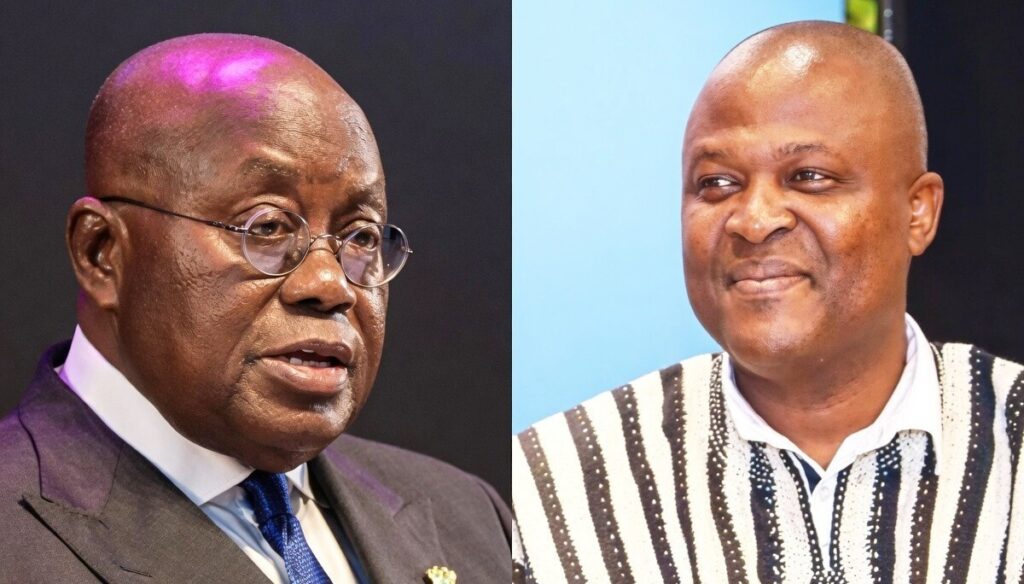
When the Damang Mine officially changed hands on Saturday, April 18, 2026, it marked more than the expiration of a mining lease. It signalled a potentially defining moment in Ghana’s long-running effort to bring its most valuable mineral assets under indigenous ownership — and one of the men at the centre of it made a point of crediting an unlikely source of leverage: a document from a former president.
Speaking at the handover ceremony held at the mine site in Ghana’s Western Region, businessman Ibrahim Mahama offered a pointed expression of gratitude to former President Nana Akufo-Addo. His remarks were brief but revealing.
“I must thank our former President Nana Akufo-Addo. He gave me a document to sit with Gold Fields and negotiate and keep the mine going,” Mahama told those gathered.
The disclosure shed light on the behind-the-scenes architecture of the transition. According to Mahama, Akufo-Addo had furnished him with an official document that granted him the standing to formally engage Gold Fields — the South African mining giant that had operated Damang for years — in negotiations aimed at sustaining the mine’s operations through the transition period. That access, Mahama suggested, was not incidental. It was the door through which a deal became possible.
The Handover:
Gold Fields’ exit from Damang had been anticipated for some time. The company’s lease had run its course, and after a one-year extension — granted specifically to allow for an orderly transition that would shield workers and surrounding communities from disruption — the mine formally reverted to the Government of Ghana on Saturday.
Into that space steps Engineers and Planners Limited, Ibrahim Mahama’s company, which has spent several years positioning itself to take over operations. The firm engaged both the government and Gold Fields across that period, navigating the approvals and negotiations required to make the transfer viable. Saturday’s ceremony represented the culmination of that sustained effort.
The Damang Mine is not a peripheral asset. Located in the Western Region, it is one of Ghana’s major gold-producing sites, carrying substantial reserves and contributing meaningfully to the country’s export revenues. Its significance extends well beyond output figures. The mine supports thousands of direct and indirect jobs, anchoring livelihoods across the surrounding communities that have grown up alongside it.
Maintaining continuity of operations through the ownership transition has therefore been treated as a priority — not merely an operational preference but an economic and social imperative. Any extended disruption would ripple outward, affecting workers, contractors, local businesses, and the regional economy.
GoldBod And Geological Survey Authority Sign A Big Deal To Map Mining Zones
Analysts watching Ghana’s mining sector will see in Damang’s transfer a potential template. The country has long grappled with the tension between the foreign capital and technical expertise that large-scale mining requires and the desire to ensure that Ghanaian entities — not just the state as royalty collector, but private Ghanaian firms as operators — capture a greater share of the value generated by the country’s mineral wealth.
If Engineers and Planners Limited demonstrates that an indigenous firm can manage a major gold mine competently and profitably, it could lower the perceived risk of future transfers and open the door to deeper local participation across the sector. That is the argument analysts have begun to make — and it is one that Ghana’s political class, across party lines, has reason to amplify.
Mahama’s acknowledgement of Akufo-Addo — a former president whose party is now in opposition — was itself notable. It was a quiet signal that the architecture of the Damang deal was built across administrations, with public and private actors playing interlocking roles. Whatever political credit is eventually allocated, the work, as Mahama framed it, was collaborative.
The mine now belongs to Ghana. What Ghana does with it is the question that follows.