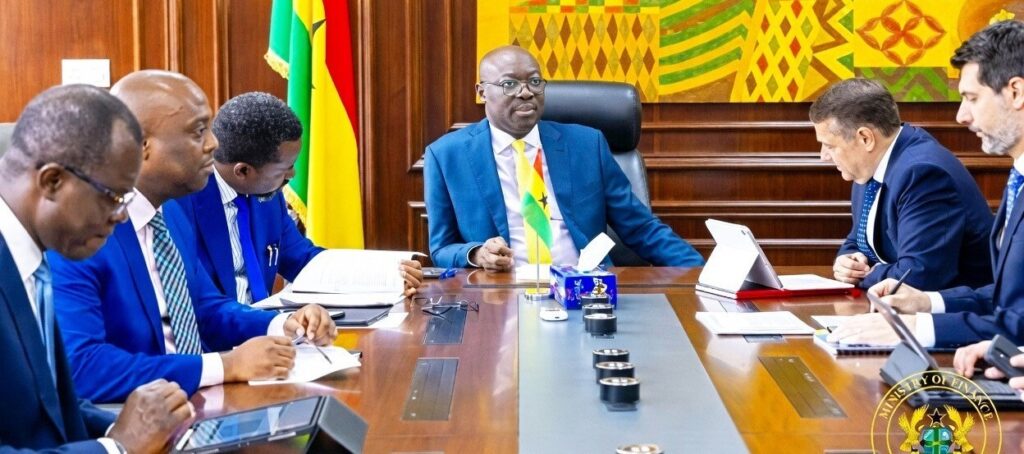
Ghana’s Ministry of Finance has formally received a delegation from the International Monetary Fund (IMF), marking the commencement of the Sixth Review of the country’s ongoing programme under the Extended Credit Facility (ECF) — a critical milestone that will determine the release of the next tranche of financial support under the bailout arrangement.
The IMF mission, led by senior official Ruben Atoyan, touched down in Accra to conduct a comprehensive assessment of Ghana’s economic performance, fiscal discipline, and adherence to the structural reform benchmarks agreed under the programme. The visit signals another important checkpoint in Ghana’s painstaking journey back to macroeconomic stability.
What the Sixth Review Entails:
Periodic IMF reviews under the ECF are far more than routine check-ins — they serve as high-stakes evaluations that determine whether a programme country continues to access the financial lifeline it has come to depend on. For Ghana, the Sixth Review will scrutinise progress across several key areas: fiscal consolidation efforts, the trajectory of the country’s debt restructuring process, the effectiveness of inflation control measures, and the pace of structural reforms in revenue mobilisation and public financial management.
A satisfactory outcome would unlock the next disbursement under the ECF — funds that remain vital to stabilising government operations and maintaining the fragile economic equilibrium Ghana has worked to achieve since entering the programme.
Minister of Finance Casiel Ato Forson greeted the mission with measured optimism, pointing to a set of improving macroeconomic indicators as evidence of Ghana’s reform commitment. Chief among the positive signals cited were easing inflationary pressures and a relatively stable cedi compared to the turbulent earlier phases of the programme period.
The Ministry reiterated the government’s unwavering commitment to fiscal discipline and the implementation of reforms designed to build long-term economic resilience — a posture that Accra hopes will satisfy the IMF team’s scrutiny and secure a positive review outcome.
IMF to Cast a Wide Net in Stakeholder Consultations:
Beyond its formal engagements with the Finance Ministry, the Atoyan-led mission is expected to hold wide-ranging consultations throughout its time in Ghana. The IMF team will meet with officials from the Bank of Ghana, private sector representatives, and civil society organisations — a broad cross-section of stakeholders whose perspectives will collectively inform the Fund’s assessment of Ghana’s economic trajectory and reform implementation.
Washington To Host World Bank Group Spring Meetings This Year
This multi-stakeholder approach reflects the IMF’s standard methodology of building a rounded, ground-level picture of a programme country’s economic realities, beyond what official data alone can convey.
Ghana’s enrolment in the IMF-supported programme was itself a reflection of the severity of the economic crisis the country faced — characterised by unsustainable debt levels, runaway inflation, and acute external financing pressures. The ECF framework has since provided the structural scaffolding for Ghana’s recovery, anchoring policy discipline and unlocking critical external support.
The outcome of this Sixth Review will be parsed closely by investors, development partners, credit rating agencies, and ordinary Ghanaians alike. A positive verdict would not only release fresh financial support but would also send a powerful signal to international markets that Ghana’s recovery is on track — reinforcing confidence in the country’s path toward sustained economic growth and long-term stability.