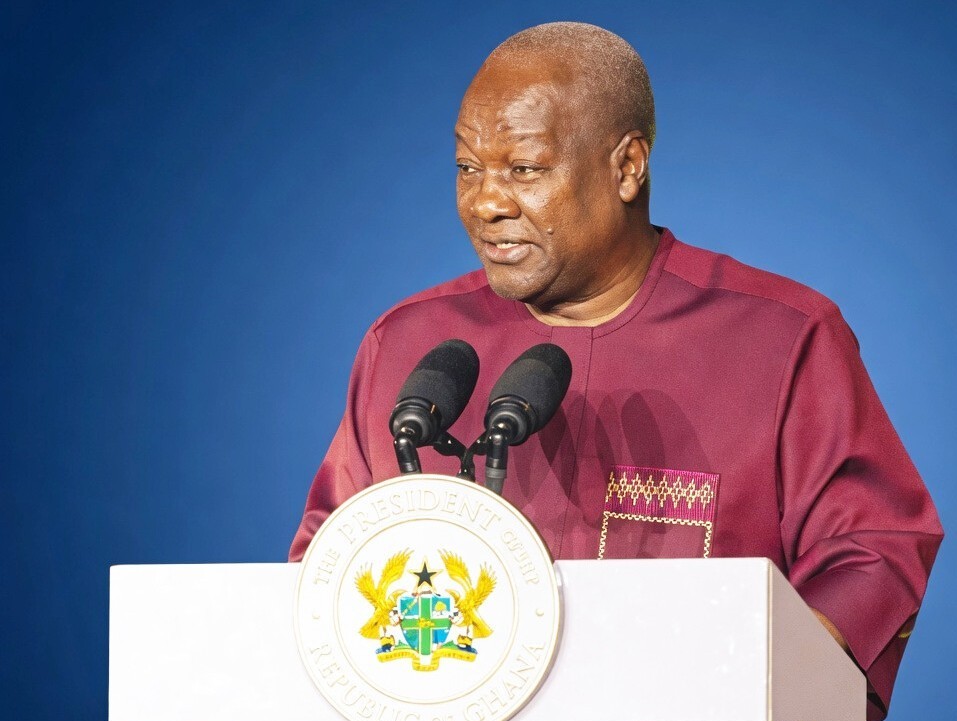
In a watershed moment for Ghana’s legal profession, President John Dramani Mahama has appended his signature to the Legal Education Reform Bill, 2025 — a landmark piece of legislation that fundamentally dismantles one of the most entrenched bottlenecks in the country’s academic and professional landscape.
The new law does what decades of student protests, academic advocacy, and civil society pressure could not achieve alone: it breaks the 66-year stranglehold the Ghana School of Law has held over professional legal training, throwing open the gates to accredited universities across the nation.
Since its establishment, the Ghana School of Law has functioned as the sole gateway through which law graduates must pass before gaining admission to the Bar. The institution’s limited capacity, however, created a chronic mismatch between supply and demand — one that has blighted the ambitions of thousands of qualified LLB holders year after year.
The drama surrounding Ghana School of Law admissions became an annual national spectacle. Graduates who had spent years earning their law degrees would sit fiercely competitive entrance examinations, only to be turned away in droves — not for lack of merit, but for lack of space. The resulting frustration spilled repeatedly into public protests, heated parliamentary debates, and sustained demands for structural reform.
What the Law Changes:
The Legal Education Reform Bill, 2025 ends that era. Under its provisions, accredited universities are now empowered to offer professional legal education programmes — the critical final stage of training that qualifies a graduate to practise law in Ghana. No longer will aspiring lawyers be funnelled through a single institution operating well beyond its practical capacity.
The shift is seismic. At a stroke, it decentralises professional legal training, expands overall national capacity, and creates the conditions for greater competition and innovation in how Ghana trains its lawyers.
For students, academics, and legal analysts who have championed this reform, the presidential assent marks a historic breakthrough. Many believe the move will ease admission pressure, clear the long-standing backlog of qualified graduates unable to progress to professional school, and ultimately produce more lawyers to serve Ghana’s growing population and economy.
Legal education advocates have further argued that exposing professional training to multiple institutions could accelerate modernisation, align Ghana’s framework more closely with international standards, and spur creative approaches to legal pedagogy.
Yet not all voices in the legal fraternity are celebrating without reservation. Senior practitioners and some legal experts have raised pointed concerns about the risk of diluting professional standards if accreditation and quality assurance mechanisms are not robust, transparent, and rigorously enforced.
Why Ghana’s Education System Needs an Urgent Revamp Now!
Their caution carries weight: the value of a legal qualification rests on the credibility of the system that confers it, and any perception of weakened standards could ultimately undermine the very profession the reform seeks to strengthen.
The signing of the Legal Education Reform Bill, 2025 stands as one of the most consequential policy decisions in Ghana’s legal history — a moment that closes a chapter defined by exclusion and opens one defined, at least in aspiration, by broader access and opportunity.
Whether that promise is fully realised will depend heavily on implementation: the rigour of accreditation processes, the seriousness with which universities invest in qualified faculty and infrastructure, and the vigilance of regulatory bodies tasked with upholding standards.
For now, however, thousands of law graduates who once stared down a wall now glimpse a door — and for many, that alone represents a profound change.