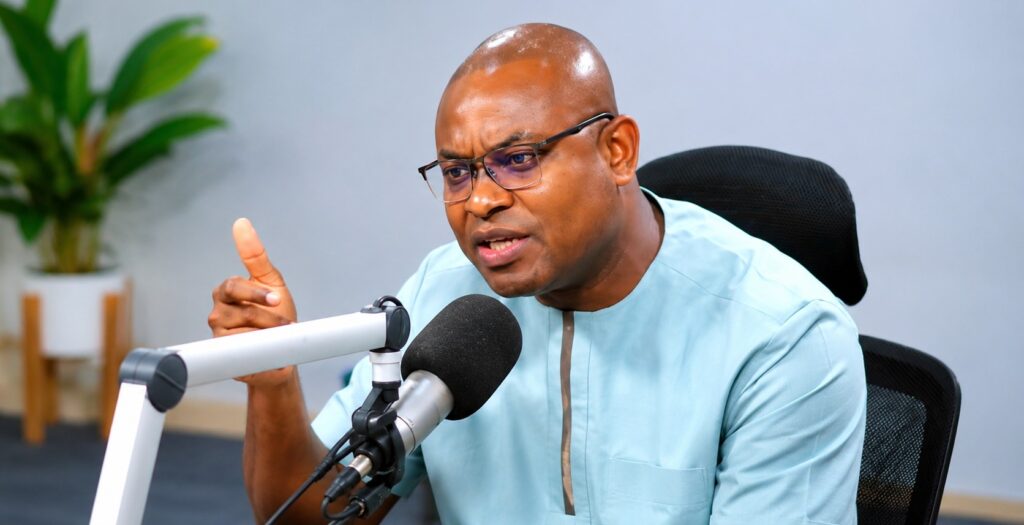
Ghana’s exit from its three-year Extended Credit Facility (ECF) programme with the International Monetary Fund on May 15, 2026, has been celebrated by the government as a landmark economic achievement. But for Richard Ahiagbah, Director of Communications of the New Patriotic Party (NPP), the milestone raises as many questions as it answers — chief among them: where are the jobs?
Speaking on Channel One TV on Saturday, May 16, Ahiagbah delivered a measured but pointed critique of the country’s economic trajectory, warning that Ghana risks celebrating numbers that ordinary citizens cannot feel in their daily lives.
At the heart of Ahiagbah’s concern is what he described as a dangerous disconnect between Ghana’s macroeconomic performance and the lived realities of its workforce. Despite improving fiscal indicators, he argued, the economy has failed to generate the kind of meaningful employment that would allow Ghanaians to benefit directly from the recovery.
His remarks echo a broader anxiety among economists and civil society observers who have long cautioned that GDP growth and headline stability figures can mask deep structural weaknesses — particularly in an economy where youth unemployment remains persistently high and the informal sector absorbs the bulk of the labour force.
For Ahiagbah, bridging this gap requires more than celebrating exits from IMF programmes. It demands a coordinated national effort to align economic growth with sustainable job creation — a challenge he described as central to Ghana’s productivity problem.
Still In The IMF’s Shadow
Perhaps equally striking was Ahiagbah’s assertion that Ghana has not truly stepped out from under the IMF’s influence, despite the programme’s official conclusion. He maintained that the country’s policy direction continues to reflect the commitments made under the ECF arrangement — and that this is not necessarily a bad thing.
IMF Exit: Senyo Hosi Calls On Ghana To Prioritise SMEs And Industrial Growth
He argued that IMF-backed frameworks serve a function that extends well beyond their formal duration: they signal to markets and investors that a country is fiscally disciplined and consistent in its economic management.
“These reviews signal to the market what your discipline is in terms of fiscal management and monetary policy,” he said, adding that countries which sign onto such programmes are bound by agreed conditions and are expected to sustain those reforms.
“So we need to first of all ensure that whatever the programme becomes, we operate by it,” Ahiagbah stated — a remark that suggests he views continued adherence to IMF-aligned principles not as a constraint, but as a credibility-building necessity.
Ultimately, Ahiagbah’s intervention reframes the post-IMF conversation away from the celebration of macro-level indicators and toward the harder question of economic inclusion. Stability, he implied, is a means to an end — and that end must be jobs, productivity, and opportunities that reach beyond the headlines.
His call for a more deliberate national strategy to convert growth into employment adds a critical opposition voice to what is becoming an increasingly urgent national debate: not just whether Ghana has stabilised, but whether it is growing in ways that matter to its people.