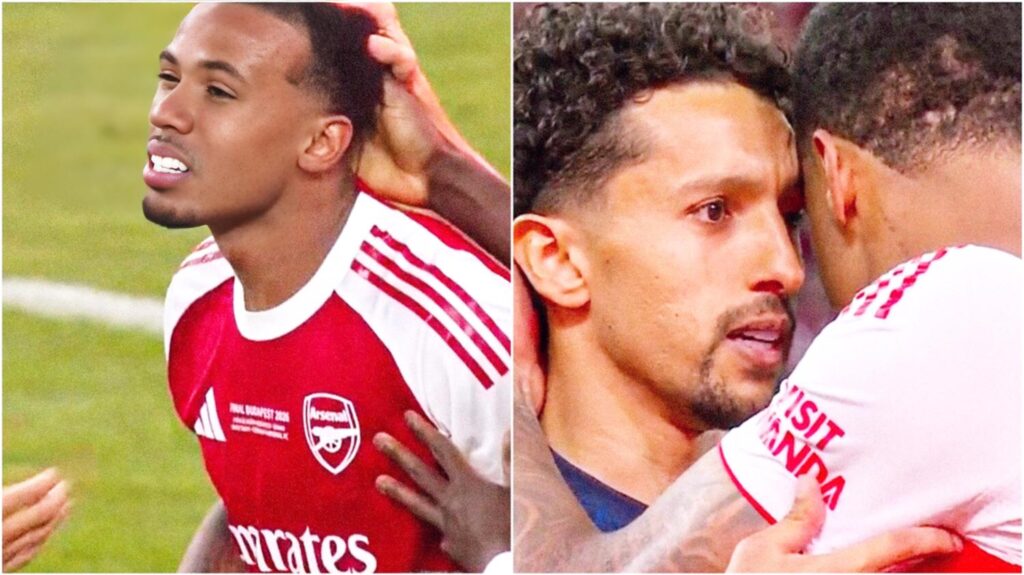
Paris Saint-Germain are champions of Europe. But in the bowels of the Puskás Aréna on Saturday night, as red and white confetti rained down on Budapest and PSG’s players celebrated wildly around them, Arsenal’s finest simply wept.
It was one of the most emotionally charged scenes in recent Champions League final memory — and it was entirely deserved. Because what unfolded on May 30, 2026, was not merely a football match. It was the culmination of an extraordinary season, a statement campaign, a generation’s worth of promise — all of it reduced, in the cruellest possible fashion, to a penalty shootout.
Final score: 1-1 after extra time. PSG win 4-3 on penalties. Arsenal’s dream dies on the spot.
The match itself was tightly contested, nervy, and rich with quality. Arsenal struck first and did so emphatically, with Kai Havertz — composed, clinical, and perfectly placed — converting early to hand the Gunners a lead that seemed, momentarily, like destiny fulfilling itself.
But PSG, as they have done so often on the grandest stages under their evolution into genuine European royalty, refused to fold. Ousmane Dembélé drew them level from the penalty spot, his composure from twelve yards standing in stark contrast to the mounting tension around him. From that moment, the match stretched deep into extra time — each side probing, each goalkeeper rising to the occasion — before the contest was handed over to football’s most merciless arbitrator.
The shootout began with the weight of the entire season pressing down on every player who stepped forward. For PSG, it ended in triumph. For Arsenal, it ended in tears.
Three Arsenal players will carry the memory of Saturday night for the rest of their careers — not as a source of shame, but as the kind of wound that defines and eventually forges great athletes.
Gabriel Magalhães stepped up with the shootout in the balance and blazed his penalty over the bar. The Brazilian defender, imperious across the season in the heart of Arsenal’s Premier League-winning defence, crumpled. He did not need to say anything. His body said everything. Teammates rushed to console him before he had even finished turning away from goal.
Eberechi Eze, one of the most gifted players in English football and a man who had contributed enormously to Arsenal’s campaign, also missed his spot-kick. The look on his face as he walked back was of someone processing a reality he had not yet fully accepted.
Noni Madueke, similarly, could not find the net when it mattered most. Three players. Three misses. One European dream extinguished.
The images that followed — Gabriel in tears, Eze struggling to compose himself, Madueke inconsolable — swept across social media within minutes of the final whistle, capturing the raw and unfiltered human cost of football’s most pitiless format.
Captain Martin Ødegaard, who had led Arsenal with intelligence and quiet authority throughout a season of genuine greatness, could not disguise his devastation. The Norwegian, so often the composed heartbeat of this team, wore the pain openly — a reflection not of weakness, but of how deeply this group had invested in the pursuit of this moment.
Official: Semenyo In Premier League 2025/26 Fans Team Of The Season
Mikel Arteta, the architect of Arsenal’s transformation from nearly-men to Premier League champions and Champions League finalists, chose his words with the deliberate care of a man still processing the enormity of what had just slipped away.
“Pain,” he said. “Devastating.” But in the same breath, he urged his players to convert that anguish into fuel — to let the hurt of Budapest become the engine that drives what comes next. It is the language of a manager who has not given up on the destination, even as the road has temporarily broken his heart.
Declan Rice, one of the squad’s most influential voices, called it “gutting” and “cruel” — two words that require no elaboration for anyone who watched the shootout unfold. He was also, however, quick to speak of pride. And rightly so.
Arsenal arrived in Budapest not as fortunate finalists who had scraped through on luck, but as the best team in England. They are Premier League champions this season — a title that represents the core of what Arteta has built and proof that this is a club no longer merely aspiring to elite status, but inhabiting it.
The preparations for the final had not been without difficulty. Ben White was ruled out with a knee injury, while several other players managed fitness concerns accumulated over a long and demanding campaign.
The physical and mental toll of competing at the top of two competitions simultaneously was real — and while it did not cost Arsenal in terms of effort or intensity on the night, it formed part of the invisible backdrop to a group that had given everything over ten months of football.
FIFA Makes New Football Laws Ahead Of 2026 World Cup
Disputed moments added to the frustration for the Arsenal camp. Penalty appeals that went unheard, a debated handball on Bukayo Saka — small controversies that, in the context of a final decided by the finest of margins, felt anything but small in the moment.
Finals Heartbreak: Football’s Most Brutal Tradition
There is a specific kind of grief that only penalty shootout losers in major finals understand. It is not the grief of a poor performance, or a heavy defeat, or a season that fell away gradually. It is the grief of having done almost everything right — of standing on the summit, reaching for the trophy — and then watching it disappear in the space of a few seconds, through no collective failing but the individual pressure of a single moment.
Gabriel Magalhães did not have a bad season. He had a brilliant one. Eberechi Eze did not fail his club across forty-plus games. He served it magnificently. Noni Madueke did not let Arsenal down over the course of a campaign. He contributed to something genuinely special. But in Budapest, on a warm May evening, in front of the world, they missed. And football, as it always has and always will, offered no grace for the timing. PSG celebrate. Arsenal mourn.
And somewhere in the days and weeks ahead, when the tears have dried and the hurt has settled into something more permanent and purposeful, this group of players will begin to understand that what they built this season was not a failure. It was a foundation.
The summit is still there. And Arsenal, for the first time in a very long time, know exactly what it looks like from this close.
The 2026 UEFA Champions League final was played at Puskás Aréna, Budapest, on Saturday, May 30, 2026. PSG won 4-3 on penalties after a 1-1 draw.