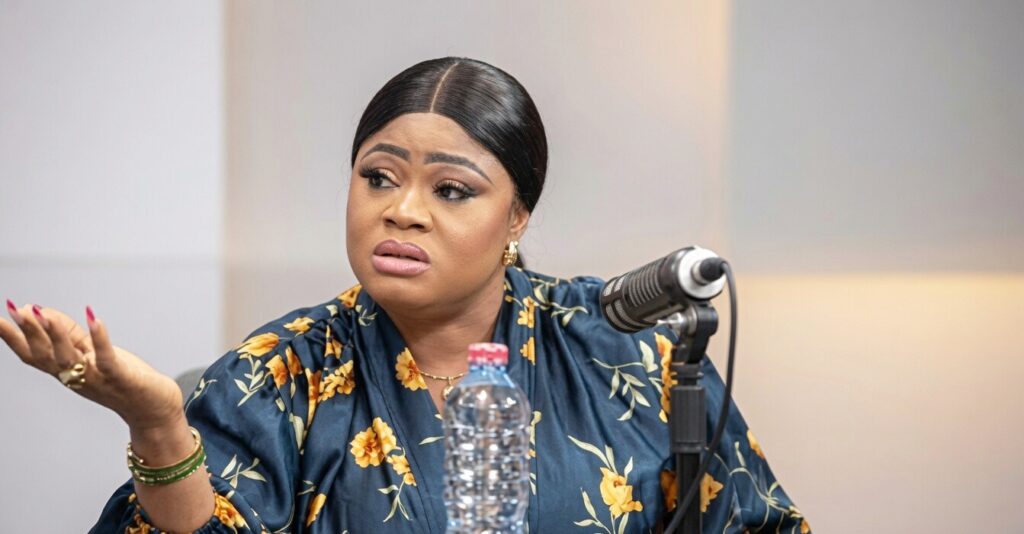
NPP communications member Jennifer Queen has levelled a sharp critique at the ruling National Democratic Congress, declaring that after one and a half years in office, the Mahama administration has fallen woefully short on one of its most critical campaign promises — job creation.
Speaking on recent political developments, Queen pulled no punches in her assessment of the NDC’s economic record, arguing that the government has had ample time to demonstrate meaningful progress on employment but has produced little to show for it.
“It has been one and a half years since the NDC came into government. I was expecting at least a significant achievement in job creation, but none of the sort has happened,” she stated pointedly.
For Queen, the jobs question is not a peripheral issue — it sits at the very heart of how Ghanaians evaluate their government. She argued that citizens who rallied behind the NDC’s return to power did so with a clear expectation of visible economic intervention and sustainable employment opportunities. Those expectations, she insists, remain unmet.
Her remarks land in the middle of an increasingly charged political environment, as Ghana’s two dominant parties continue to trade blows over economic management and governance delivery. The NDC, for its part, has maintained that structural reforms and policy interventions are still unfolding, and that the full impact of its economic agenda will take time to materialise.
But Queen’s broadside reflects a wider opposition narrative that has been building momentum — that the window for excuses is narrowing, and Ghanaians deserve to see tangible results in the labour market. The unemployment debate is hardly new to Ghanaian politics.
Oppong Nkrumah To Government: Your Job Programmes Are Failing Ghana’s Youth
Both the NPP and NDC have long positioned job creation as a flagship priority, making it one of the most politically sensitive metrics by which any administration is judged. When promises are made loudly on the campaign trail, critics are quick to measure them against the reality on the ground.
However, some political observers, have divided opinions on whether eighteen months represents a fair timeframe to demand measurable labour market progress — or whether the government’s pace of delivery is genuinely cause for concern.
What is not in dispute, however, is that unemployment remains one of the most urgent conversations in Ghana’s public discourse. With citizens watching closely and opposition voices growing louder, the pressure on the NDC to translate policy rhetoric into real, visible job opportunities is only set to intensify in the months ahead.
2 thoughts on “Jennifer Queen Challenges NDC On Promised Employment Opportunities”