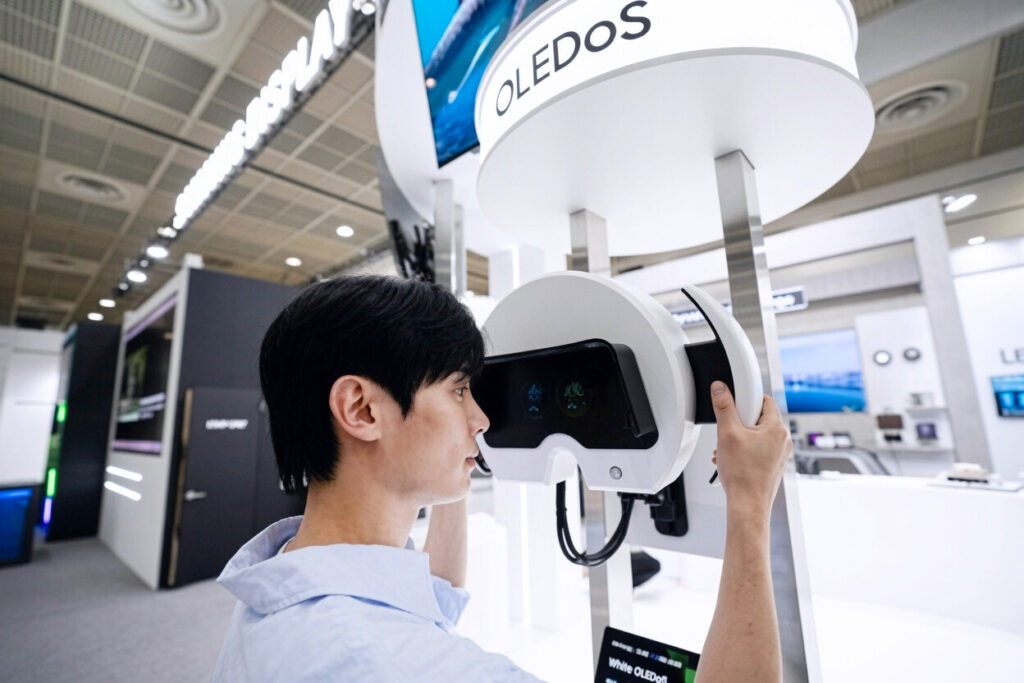
Samsung used the stage at Augmented World Expo 2026 (AWE) in Long Beach, California, to unveil what could become the next major leap in microdisplay technology: RGB OLEDoS, or OLED on Silicon, built specifically for smart glasses and other extended reality devices.
At its core, RGB OLEDoS works by depositing light-emitting material directly onto a silicon wafer, creating individual red, green, and blue subpixels without the need for a colour filter. That single design choice unlocks a cascade of benefits: greater luminance, a simpler manufacturing process, and a single-panel structure that strips away much of the complexity found in competing display technologies.
For Samsung, that simplicity translates directly into cost competitiveness and easier scaling for mass production, advantages that matter significantly as the company looks to dominate the next generation of wearable display tech.
Built on Decades of OLED Expertise
Drawing on its established OLED manufacturing experience, Samsung is positioning itself to keep pushing the boundaries of ultra-high-brightness RGB OLEDoS while simultaneously refining production efficiency. The absence of a colour filter, a key differentiator from white OLEDoS, also means higher light efficiency and a longer operational lifespan for the displays.
Tim Cook Reveals What Makes Apple Truly Unique And Irreplaceable
Together, these qualities make RGB OLEDoS particularly well-suited to delivering sharp colour reproduction and strong brightness in the compact, lightweight form factors that XR devices demand, exactly the kind of profile smart glasses need to feel comfortable and look natural on a user’s face.
Samsung didn’t just talk theory at the expo. The company showcased a pair of prototype glasses fitted with a remarkably small 0.62-inch RGB OLEDoS display, offering attendees a tangible look at how the technology might perform in a real product.
That prototype hints at bigger plans on the horizon. Samsung is already developing its own Android XR-powered smart glasses, with an official reveal expected later this year, a launch that could mark the company’s most serious push yet into the wearable AR space.