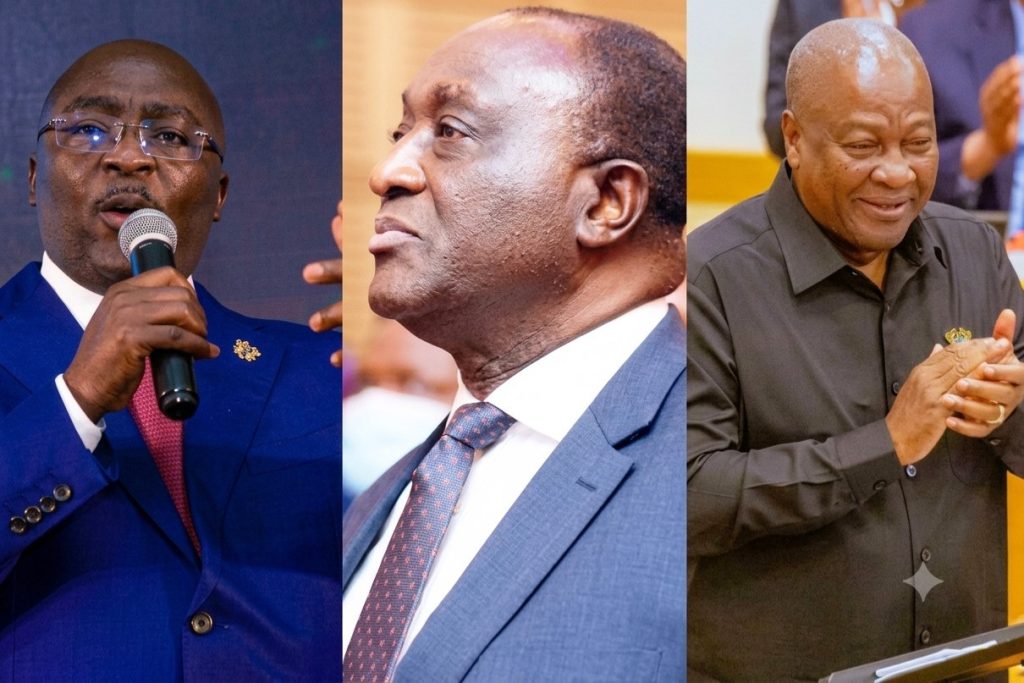
Ghana has become exceptionally good at one thing: building political parties.
Ghanaians build party structures, elect party executives, organise constituency meetings, hold rallies, defend party leaders, attack opponents and prepare almost immediately for the next election.
But there is a more uncomfortable question Ghana must ask itself:
While the country’s political parties are being strengthened, are they strengthening the country at the same pace? This is not an argument against political parties. Political parties are an essential part of a democracy. Ghana’s Electoral Commission formally regulates political parties, and the country’s electoral system is built around partisan competition at the national level.
The concern is what happens when winning political power becomes more important than building institutions that should survive whoever wins power. In Ghana, the end of one election can often feel like the beginning of preparations for another. The governing party concentrates on defending its record. The opposition concentrates on exposing its weaknesses. Party communicators fill the airwaves. Social media becomes another political battlefield.
Meanwhile, ordinary citizens still have to find jobs, pay school fees, access healthcare, build businesses, find affordable housing and navigate a difficult economy.
Of course, Politics is necessary, but politics cannot become the economy. A country cannot develop simply because its political parties have become better organised. One of Ghana’s biggest challenges is the tendency to view national issues through party colours.
A policy can be rejected because it came from the “wrong” party. A government project can be celebrated because it was initiated by one’s party, even when its real value to citizens should be the central consideration.
The reverse also happens: an achievement can be dismissed because acknowledging it might strengthen a political opponent. That mindset creates a dangerous situation in which the political party becomes the lens through which citizens see the nation.
But Ghana existed before the NDC and NPP. And Ghana must exist long after today’s political leaders have left the stage.
Ghana needs institutions, not political personalities: The country needs institutions capable of functioning regardless of who occupies the presidency. It needs public services that do not rise and fall with political administrations. It needs roads, hospitals, schools, energy systems, digital infrastructure and businesses that are planned around decades rather than election cycles. It needs a justice system whose credibility does not depend on which political party is in power. It needs an economy where young people can build careers without believing that political connections are the shortest route to opportunity.
These are not NDC problems nor the NPP. They are Ghanaian problems. Even political parties need reform. Interestingly, the debate about political development is not only about government. Ghana’s political parties themselves are undergoing important questions about internal democracy.
A recent Supreme Court ruling concerning party delegate systems has pushed political parties toward broader participation by members in good standing, creating a wider conversation about how parties choose their leaders and candidates.
The development is significant because a country cannot demand strong democracy from government while tolerating weak democratic practices within political organisations.
Political parties should therefore become laboratories for democracy—not merely machines for winning elections. Perhaps Ghana needs to change the question it asks of its politicians.
Instead of only asking:
“Will this help our party win the next election?”
Ghanaians should also ask:
“Will this make Ghana stronger ten, twenty or thirty years from now?”
That question changes everything. It forces politicians to think beyond four-year electoral cycles. It encourages governments to continue useful projects started by their predecessors rather than abandoning them simply because they carry another party’s fingerprints. It also challenges opposition parties to scrutinise government without automatically opposing everything government proposes.
TI-Ghana Boss Charges Citizens: “Don’t Watch Others Destroy Ghana”
A functioning democracy requires competition. But national development requires continuity. Ghana cannot vote its way out of every problem because elections can change governments.
- They cannot create a productive economy.
- They cannot maintain a hospital.
- They cannot transform agriculture.
- They cannot make institutions trustworthy.
- They cannot, by themselves, build factories.
- They cannot educate a child.
Those things require consistent policies, competent institutions, investment, discipline and citizens willing to demand results beyond political slogans.
Ghana’s democracy has demonstrated its capacity for peaceful political transitions. The Electoral Commission describes the country’s system as one based on partisan national elections and regulated political parties.
The next challenge is ensuring that the strength of that political system translates into stronger development outcomes. The country must become bigger than the party
There is nothing wrong with loving a political party, defending an ideology, or campaigning passionately for a candidate. But there must be a point at which the party ends and Ghana begins.
A government should be able to say,
“This policy was started by the previous administration, but it is good for Ghana, so we will continue it.”
An opposition party should be able to say, “We disagree with the government, but this particular policy deserves support.” And citizens should be able to say, “I support this decision because it benefits Ghana—not because my party made it.”
That is the political maturity the country needs. Ghanaians should build Ghana, not just the next campaign. The greatest legacy of a political party should not be how many elections it won. It should be what it helped build.
- A productive private sector.
- Reliable infrastructure.
- Strong institutions.
- A resilient economy.
- A justice system trusted by citizens.
- A country where opportunity does not depend on political affiliation.
Ghana needs political parties that understand that their ultimate purpose is not simply to capture the state, but to help build a state capable of serving every citizen.
The campaign will eventually end. The party executives will eventually retire. The politicians will eventually leave office. But Ghana will remain.
And that is why the country must never become smaller than the parties competing to govern it.