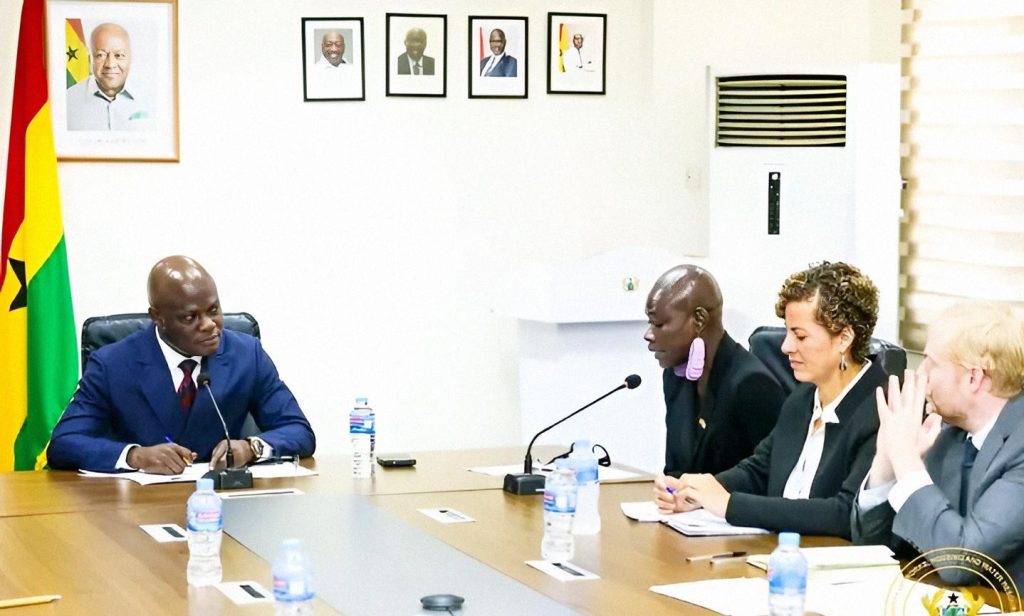
Ghana and France have taken another significant step in consolidating their long-standing bilateral relationship following a high-level diplomatic engagement in Accra. Her Excellency Diarra Dimé-Labille, the French Ambassador to Ghana, met with the Minister for Works, Housing and Water Resources, Hon. Ahmed Ibrahim, to map out a comprehensive strategy aimed at accelerating sustainable development across critical public sectors.
At the heart of the bilateral talks was a mutual commitment to addressing Ghana’s pressing infrastructural and environmental needs. Both leaders focused on creating actionable pathways to advance affordable housing, optimize water resources, upgrade urban and rural sanitation systems, and build robust climate resilience into public infrastructure.
Key Pillars of Bilateral Cooperation
Scaling Sustainable and Affordable Housing: Finding practical, dignified, and cost-effective shelter solutions remains one of Ghana’s primary socio-economic goals. During the summit, Ambassador Dimé-Labille and Minister Ibrahim explored pathways to leverage international technical expertise and strategic development financing to expand the nation’s housing stock.
The strategy emphasizes community-inclusive development—ensuring that lower-income households and underserved urban populations gain access to modern, resilient residential options. By blending French infrastructural innovation with local housing policies, the partnership aims to lower construction costs while upholding safety, energy efficiency, and modern urban planning standards.
Modernizing Water Infrastructure and Sanitation Systems: Reliable access to clean water and effective waste management are directly tied to public health, economic activity, and environmental dignity. The discussion highlighted the urgency of upgrading existing water delivery channels and building modern sanitation networks across both growing cities and rural communities.
Through enhanced institutional partnerships, Ghana seeks to tap into French technological advancements and specialized capacity-building programs. The objective is twofold:
- Infrastructure Expansion: Modernizing networks to guarantee continuous, clean water delivery.
- Institutional Support: Upskilling local municipal authorities and engineers to manage water resources efficiently over the long term.
- Embedding Climate Resilience into Public Projects: As climate volatility increasingly impacts West Africa, both representatives stressed that future infrastructure projects must be designed to withstand extreme weather patterns.
Climate adaptability was established as a cross-cutting mandate for all joint initiatives. Whether building housing complexes or engineering wastewater management facilities, environmental impact assessments and sustainable materials will be integrated from the design phase onward. This approach ensures that public capital investments yield durable benefits for generations to come.
Affordable Housing In Ghana: The Big Promises, Real Projects, And Hard Truths
A cornerstone of this renewed diplomatic push is the active involvement of France’s flagship international development agencies:
Agence Française de Développement (AFD): Acting as the primary bilateral development bank, AFD’s extensive portfolio in Ghana provides a solid financial and structural foundation to fund large-scale infrastructure projects.
Expertise France: As the French public agency for international technical cooperation, Expertise France offers specialized policy guidance, administrative training, and technical knowledge transfer to support Ghanaian ministries in execution.
By aligning the operational frameworks of AFD and Expertise France directly with the policy vision of the Ministry for Works, Housing and Water Resources, both nations aim to streamline project delivery and maximize the real-world impact on local communities.
Expanding Beyond Infrastructure: Cultural and Linguistic Connectivity
While physical infrastructure formed the core of the agenda, the meeting also underscored the broader human and cultural dimensions of the Ghana–France relationship.
A key focus was placed on expanding French language education and cultural exchange programs throughout Ghana. Nestled among Francophone neighbors, Ghana stands to gain immense strategic, economic, and diplomatic advantages by cultivating a bilingual workforce. Promoting French proficiency creates direct pathways for:
- Enhanced cross-border trade and regional commerce within West Africa.
- Educational exchanges, academic scholarships, and institutional research joint ventures.
- Deeper socio-cultural integration and professional networking between citizens of both nations.
The high-level talks between Ambassador Diarra Dimé-Labille and Minister Ahmed Ibrahim reaffirm that modern diplomacy thrives at the intersection of practical infrastructure and human-centered development.
By combining financial support, technical innovation, and linguistic engagement, Ghana and France are building a multi-layered partnership—one that not only equips Ghanaian communities with safer homes, cleaner water, and stronger climate defenses, but also fosters closer cultural ties across borders.
One thought on “France And Ghana Strengthen Cooperation On Affordable Housing”